 Track an order
 Buy It Again
 Favourites
 Manage account
 Rewards
 Subscriptions
 Find a store
 Help centre
Struggling with hay fever? Remedies and ways to help manage symptoms – including at night

Written byAnnabel Francis

Reviewed byEmily Rollason, CMgr MCMI
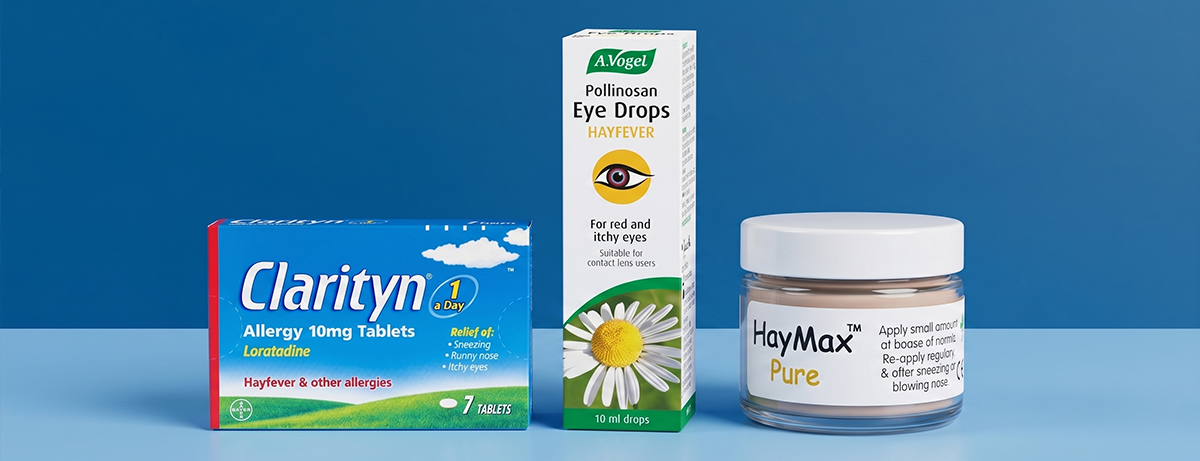
From natural remedies for hay fever to hay fever medications, we asked our in-house expert for ways to help manage the symptoms around the clock
Our top picks
Non-drowsy
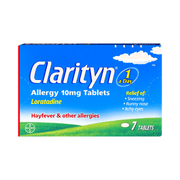
Clarityn
Clarityn Allergy 10mg 10 Tablets
Save up to 1/2 Price
16+
£4.79
£5.99
Eye drops
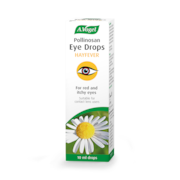
A.Vogel
A.Vogel Pollinosan Hayfever Eye Drops 10ml
3 for 2 Mix & Match
£13.99
Barrier balm
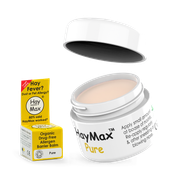
Haymax Ltd
Haymax Pure Organic Drug Free Pollen Barrier Balm 5ml
3 for 2 Mix & Match
£8.49
Itchy eyes, constant sneezing, a blocked nose that won’t shift… hay fever can be draining at the best of times. But for many people, symptoms feel even worse at night – making it harder to relax, switch off and get a good night’s sleep.
So, what can you actually do about it? From everyday hay fever medications to simple lifestyle tweaks, we’ve broken down practical ways to manage your symptoms – with expert insights from Emily Rollason, one of our Senior Nutritionists here at H&B, to help you feel more comfortable day and night.
What is hay fever?
Hay fever, also known as seasonal allergic rhinitis, is a common allergy caused by a reaction to pollen.1 When your body comes into contact with pollen, it releases histamine – a chemical that triggers inflammation and irritation in areas like your nose, eyes, throat and sinuses.1,2
This can lead to symptoms such as:3
Why is hay fever worse at night?
If your symptoms seem to ramp up in the evening, you’re not imagining it. During the day, pollen can build up on your skin, hair and clothing. When you come indoors and settle into bed, this pollen can transfer onto your bedding – increasing your exposure overnight. Showering and changing your clothes after you’ve been out for the day helps wash the pollen off and can reduce evening symptoms.3
Lying flat can also make nasal congestion feel worse, which is why a blocked nose often becomes more noticeable when you’re trying to sleep.8 As Emily explains, managing exposure is key: “the more contact you have with pollen, the more histamine is released by your body – so reducing that exposure, especially in the evening, can help ease symptoms.” Fatigue can also play a role. Hay fever itself can feel draining, and some antihistamines can make you very sleepy, making it harder to feel rested.3
Simple ways to support your sleep with hay fever
If hay fever is affecting your sleep, a few small changes can make a difference:
- shower before bed and change clothes before bed to remove pollen from your skin and hair1
- keep windows and doors shut at night to limit pollen entering your room1
- hide your pillow under the bed covers during the day to prevent pollen from settling on it when the widows are open10
- consider using a nasal air filter10
- apply an allergen barrier balm around the edge of each nostril to trap or block pollens and other allergens11
Popular options for hay fever relief
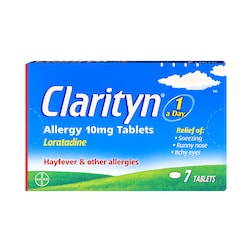
When hay fever strikes, Clarityn Allergy Tablets offer reliable relief you can count on. Formulated with loratadine, they help ease common symptoms like sneezing, a runny nose and itchy eyes, while also supporting relief from allergic skin reactions such as hives. Designed to work for up to 24 hours, they’re a simple, once-a-day option to help you stay comfortable throughout the day. Suitable for adults and children over six years who weigh more than 30kg – just be sure to follow the instructions on the label.
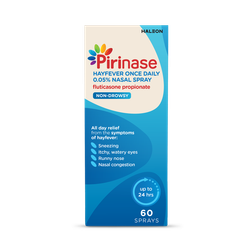
Looking for relief from stubborn hayfever symptoms? Pirinase Hayfever Relief Nasal Spray works directly in the nasal passages to help ease sneezing, a runny nose and itchy, watery eyes. Formulated with fluticasone propionate, it helps reduce inflammation to tackle the source of symptoms.
With once-daily use, it provides long-lasting relief to help you stay comfortable throughout the day. Suitable for adults aged 18 and over – always follow the instructions on the label and consult a doctor if symptoms persist.
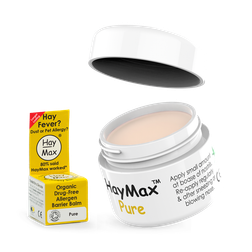
Looking for a natural way to help manage hayfever symptoms? HayMax Organic Allergen Barrier Balm is a simple, drug-free option designed to help trap pollen, dust and pet allergens before they enter the body. Applied around the nostrils, it creates a light, invisible barrier to help reduce exposure to common triggers.
Made with organic ingredients and suitable for adults and children aged 6+, it’s a gentle, non-drowsy choice that can be used alongside other hayfever products. Easy to apply and reapply throughout the day, it’s a handy addition to your daily routine.
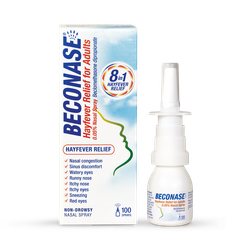
Need help tackling stubborn hayfever symptoms? Beconase Nasal Spray works directly in the nose to help relieve congestion, sneezing and a runny nose. Formulated with a corticosteroid, it helps reduce inflammation at the source for more targeted relief.
When used regularly, it can provide up to 24-hour relief (with twice-daily use) from multiple hayfever symptoms, helping you stay comfortable throughout the day and night. Designed for adults – always follow the instructions on the label and consult a doctor if symptoms persist.
Alternative ways to support hay fever symptoms
Alongside medications, some people explore natural approaches to help manage their symptoms. According to Emily, “there are several sources of natural hay fever support that can help you navigate your symptoms.”
- Herbal remedies – these can come in many forms, from teas and tablets to sprays and powders, and may help support hay fever symptoms, although evidence can vary.5
- Apple polyphenols – found in apples, these compounds have shown promising results in reducing sneezing when consumed before and during pollen season.4
- Probiotics – certain strains such as Lactobacillus and Bifidobacteria have shown potential in supporting immune health and may help support the body’s response to allergens, although more research is needed.4
- Ginger – one study found ginger extract may help reduce nasal symptoms and improve quality of life in people with allergic rhinitis, although larger studies are needed to confirm these findings.6
Hay fever FAQs
One supplement often discussed in relation to hay fever is quercetin. Found naturally in foods like onions, apples and lettuce, quercetin is a plant compound that has been shown to have antihistamine and anti-inflammatory properties. This means it may help support the body’s response to allergens and ease some hay fever symptoms.4,7
Hay fever can feel worse at night because pollen builds up on your skin, hair and clothing during the day. When you go to bed, this can transfer onto your bedding, increasing exposure. Lying down can also make congestion feel more noticeable.
Keeping your bedroom as pollen-free as possible can help, such as showering before bed and keeping windows closed. Using a saline spray or nasal strip may also help make breathing feel more comfortable at night.
The final say
Hay fever can be frustrating – especially when it starts to affect your sleep. As Emily highlights, reducing exposure and finding the right combination of support is key –
“small changes to your routine, alongside the remedies, can make a real difference to how you manage your symptoms.” From antihistamines and nasal sprays to simple solutions like saline rinses or barrier balms, finding what works for you is essential. If night-time symptoms are your biggest challenge, focusing on reducing pollen exposure and supporting easier breathing can help you rest more comfortably.
Looking to feel your best as the seasons change? Explore how to improve your gut after an indulgent summer or discover how to adjust when the clocks change.
Disclaimer – This article is for general information only and is not intended to diagnose, treat or provide medical advice. Always read product labels and follow the instructions for use. If you have a medical condition, are taking medication, or are under medical supervision, speak to your GP or pharmacist before using medicines, supplements or alternative products.
1. NHS Inform. Hay fever [Internet]. Available from: https://www.nhsinform.scot/illnesses-and-conditions/immune-system/hay-fever/.
2. NHS. Overview - Allergic Rhinitis [Internet]. [Cited 2024 Mar 14]. Available from: https://www.nhs.uk/conditions/allergic-rhinitis/.
3. NHS Choices. Hay fever [Internet]. [Cited 2024 Mar 14]. Available from: https://www.nhs.uk/conditions/hay-fever/.
4. Pellow, J., et al. ‘Health supplements for allergic rhinitis: A mixed-methods systematic review.’ Complementary Therapies in Medicine. 2020;51:102425. Available from: https://doi.org/10.1016/j.ctim.2020.102425.
5. Hoang, MP., et al. ‘Herbal Medicines for Allergic Rhinitis: a Systematic Review and Meta-analysis.’ Current Allergy and Asthma Reports. 2021;21(4). Available from: https://doi.org/10.1007/s11882-021-00999-9.
6. Yamprasert, R., et al. ‘Ginger extract versus Loratadine in the treatment of allergic rhinitis: a randomized controlled trial.’ BMC Complementary Medicine and Therapies. 2020;20(1). Available from: https://doi.org/10.1186/s12906-020-2875-z.
7. Kaşıkcı, MB., et al. ‘Bioavailability of quercetin.’ Current Research in Nutrition and Food Science. 2016. Available from: https://www.foodandnutritionjournal.org/vol04nospl-issue-conf-october-2016/bioavailability-of-quercetin.
8. Naclerio R. Pathophysiology of nasal congestion. International Journal of General Medicine. 2010 Feb;3:47.
9. Paduch R, Woźniak A, Niedziela P, Rejdak R. Assessment of Eyebright (Euphrasia Officinalis L.) Extract Activity in Relation to Human Corneal Cells Using In Vitro Tests. Balkan medical journal [Internet]. 2014 Mar 1;31(1):29–36. Available from: https://www.ncbi.nlm.nih.gov/pmc/articles/PMC4115993/#__ffn_sectitle
10. Leeds Teaching Hospitals NHS Trust. Hay fever [Internet]. Leeds: Leeds Teaching Hospitals NHS Trust; 2023. Available from: https://www.leedsth.nhs.uk/wp-content/uploads/2023/06/Hay-fever.pdf
Related to this article


