 Track an order
 Buy It Again
 Favourites
 Manage account
 Rewards
 Subscriptions
 Find a store
 Help centre
How to unclog pores: causes, prevention and the best skincare tips

Written byH&B editorial team
Reviewed byLeila Weller-Kis
Summary
1What are pores?
Those tiny, pinprick holes all over your body are your pores. They hold hair follicles and release sweat and the skin’s natural oil (sebum).
2What are clogged pores and congested skin?
Sometimes pores can get clogged with dirt or excess oil, causing them to become more noticeable than usual or break out into blemishes.
3What ingredients help unclog pores?
Ingredients like salicylic acid and other exfoliating acids can help clear away oil and dead skin cells.
Pores are a completely normal part of your skin, but when oil, dead skin cells and other debris build up inside them, things can start to feel a little congested. The good news? A few simple changes to your routine can help. From everyday cleansing habits to ingredients like salicylic acid, here’s how to unclog pores safely – and help keep them clear.
What are pores?
Those tiny, pinprick openings you can see on your skin? They’re your pores. You have them everywhere, but they might be most noticeable on your face or chest. Pores are tiny openings in your skin. Some are openings for hair follicles, where your skin's natural oil (sebum) can reach the surface, while others release sweat. Sebum helps keep your skin moisturised, while sweat helps your body control its temperature.1,2
What are clogged pores and congested skin?
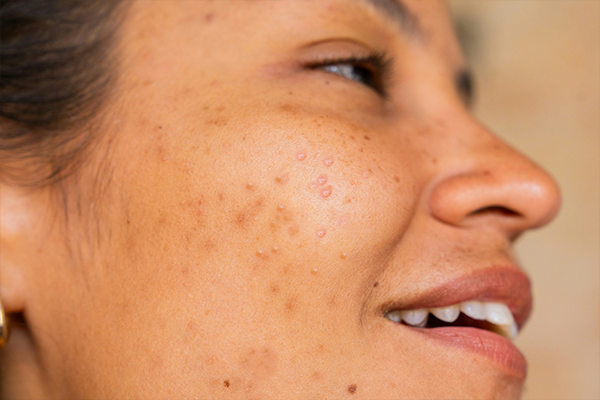
Sometimes pores can get clogged with dirt or excess oil, causing them to become more noticeable than usual or break out into blemishes like blackheads or whiteheads.3 Your skin may also look ‘congested’ – dull, blemished or uneven in texture. As your skin naturally sheds dead cells, they can sometimes build up inside your pores along with dirt, sweat, sebum and bacteria. But visible pores don’t automatically mean they’re clogged. Seeing some sebum or hair follicles is completely normal – blocked pores are only something to tackle if they’re bothering you or contributing to breakouts.
What causes clogged pores?
Excess oil and dead skin cells are the main things that physically clog pores, but everyday habits and products may contribute to buildup. From cleansing to makeup and skincare, here are some common culprits...
Not cleansing properly
Your skin is quite the multitasker – it’s constantly shedding dead cells and regularly renews its entire outer layer.4 Regular, gentle cleansing can help remove excess oil, dead skin cells and other debris from the skin's surface. For acne-prone skin, NICE recommends cleansing twice a day with a gentle, non-alkaline cleanser.5
Sleeping in makeup
Been known to hit the sack with a full face on? Er, guilty. But leaving makeup on overnight may contribute to clogged pores – so try to stick to your evening routine.7
Not cleaning your phone
Frequent phone contact with your face has been suggested as a possible contributor to acne, although evidence is limited. If you're prone to breakouts around your cheeks, keeping your phone clean may be sensible or alternatively use the speaker if you can.
Touching your face
Touching your face throughout the day can transfer oil, dirt and bacteria from your hands onto your skin, which may contribute to breakouts. It can be hard to break this unconscious habit, but it’s worth keeping an eye on if clogged pores are a concern. Try to avoid touching your face unnecessarily and make sure your hands are clean before applying skincare or makeup.8
Using comedogenic products
Some skin products contain comedogenic (pore-clogging) ingredients. Some makeup, sunscreens and moisturisers may be more likely to contribute to blocked pores, particularly if you’re already prone to congestion. Look for products labelled ‘non-comedogenic’, which are formulated to be less likely to clog pores.9
Pollution
Some research suggests exposure to air pollution may be associated with acne, although the evidence is still developing and it isn't clear whether pollution directly causes clogged pores.10 If you live in a busy or polluted area, that makes a thorough evening cleanse even more important.
How to unclog pores safely
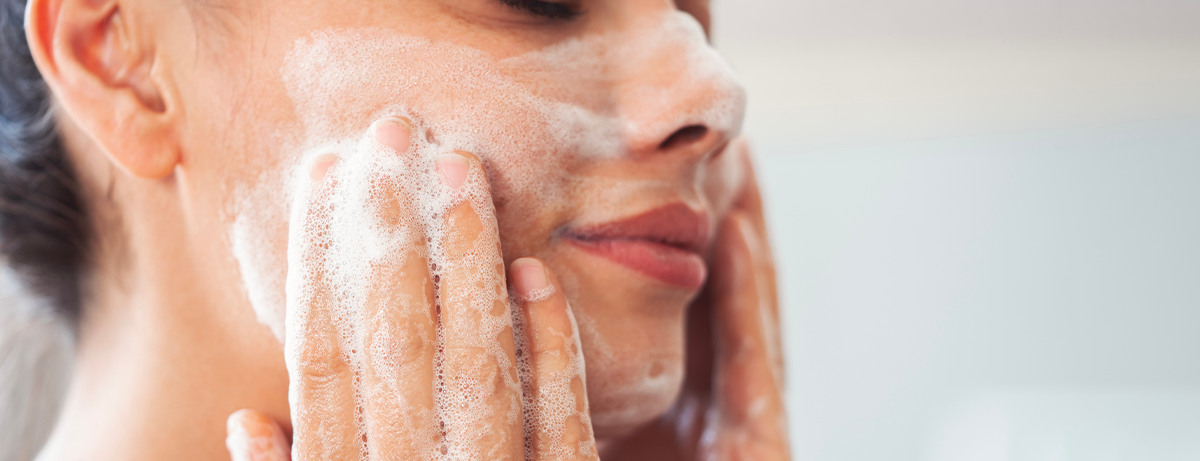
Cleanse twice daily
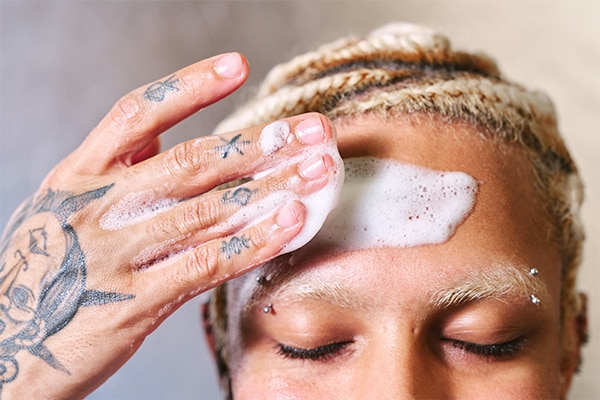
It's common for the pores on your face to become blocked, especially around oilier areas like your T-zone and chin. Start by cleansing twice daily with a foaming cleanser – look for ingredients like salicylic acid and lactic acid, which help sweep away any dead cells clinging to your epidermis.11,12,13 More isn’t always better, though. Over-cleansing can disrupt your skin barrier and leave skin feeling dry or irritated, so stick to a consistent routine and follow with a moisturiser.14
Consider pore strips
Pore strips, or even a pore cleanser device, are options to help clear clogged pores, typically used on the nose or other areas of the T-zone. The little pore strips stick to your skin when they’re damp. After a few minutes, you remove them... taking the contents of your blocked pores with them. Gross but oh-so-satisfying. They won’t stop pores becoming clogged again, though, so think of them as a potential quick fix rather than a long-term solution.
Try an exfoliating brush
Instead of using a flannel for your cleansing routine, you could try a mechanical exfoliating brush. Think of this as a gentle toothbrush for your skin – it helps sweep dead skin cells and lift dirt from the surface.15
What ingredients help unclog pores?
To help unclog your pores, pair your cleansing routine with ingredients that are particularly good at removing excess oil and dead skin cells:
salicylic acid: if clogged pores are your main concern, salicylic acid is one ingredient to know. It’s a beta hydroxy acid (BHA), which is oil-soluble and can help clear dead skin cells16
AHAs: alpha hydroxy acids (AHAs), including glycolic and lactic acid, work slightly differently. They exfoliate the skin’s surface and help remove dead skin cells that may otherwise contribute to buildup17
niacinamide: this is a form of vitamin B3 that may help support the skin’s natural oil balance. Niacinamide won’t unclog pores in the same way as exfoliating acids, but it may help reduce facial oiliness.18 However, it’s worth knowing that AHAs can increase skin sensitivity to the sun, so you should use sun protection alongside them
Whichever ingredient you choose, introduce exfoliating acids gradually and follow the product instructions – using more won’t necessarily clear your pores any faster.
How to prevent clogged pores
Once you’ve unclogged your pores, a few simple habits can help keep congestion at bay. Stick to a consistent cleansing routine, remove makeup before bed and choose non-comedogenic products if you’re prone to blocked pores. If exfoliation suits your skin, gentle exfoliation can help remove dead skin cells from the surface – just be careful not to overdo it.
If body breakouts are an issue, shower after sweaty workouts and change out of damp clothes.19 Keep clothing loose where you can, especially when you’re exercising, and choose more breathable materials like cotton over synthetic fibres.20 As tempting as it can be, try not to squeeze or pick at clogged pores. This can irritate or damage the skin and increase the risk of infection and scarring.5,21 If stubborn clogged pores are bothering you, speak to a dermatologist about the safest way to treat them.
Clogged pores FAQs
Dirt, sweat, excess oil and our dead skin cells can all clog our pores. Not removing makeup properly or choosing skincare products that aren’t suitable for your skin type may also contribute to clogged pores too.
If you’re prone to clogged pores, look for products labelled ‘non-comedogenic’, which are formulated to be less likely to block pores.5 However, comedogenic ratings don't always reflect how an ingredient will behave in a finished product.22
Clogged pores can show up as blackheads, whiteheads or other blemishes, or simply make your pores look more noticeable than usual. You may also notice dullness or an uneven, bumpy skin texture.9
The final say
In a world of city strolls, gym sessions and makeup mishaps, clogged pores are pretty normal – and, fortunately, a little regular cleansing and non-comedogenic care can help keep congestion under control. If you’re in search of radiant skin, upgrade your routine with our glow-up essentials – or learn how to stop oily skin in its tracks...
Disclaimer – This article provides informational advice and is not a substitute for medical care. Working with experts for accuracy, we take great care to ensure the information is up-to-date and relevant. However, you should always consult your GP or healthcare professional before using supplements or alternative products, particularly if you have medical conditions or are under supervision.
1 Patel BC, Treister AD, McCausland C, Lio PA, Jozsa F. Anatomy, Skin, Sudoriferous Gland. StatPearls [Internet]. 2023 Apr 24 [cited 2026 Sep 22]. Available from: https://www.ncbi.nlm.nih.gov/books/NBK513244/
2 Hoover E, Aslam S, Krishnamurthy K. Physiology, Sebaceous Glands. StatPearls [Internet]. 2022 Oct 10 [cited 2026 Sep 22]. Available from: https://www.ncbi.nlm.nih.gov/books/NBK499819/
3 Leung AKC, Barankin B, Lam JM, Leong KF, Hon KL. Dermatology: how to manage acne vulgaris. Drugs Context [Internet]. 2021 Oct 11 [cited 2026 Sep 22]; 10: 2021-8-6. Available from: https://pmc.ncbi.nlm.nih.gov/articles/PMC8510514/
4 American Chemical Society (ACS). The skinny on how shed skin reduces indoor air pollution [Internet]. ACS [reviewed 2011 May 9; cited 2026 Sep 22]. Available from: https://www.acs.org/pressroom/newsreleases/2011/may/the-skinny-on-how-shed-skin-reduces-indoor-air-pollution.html
5 National Institute for Health and Care Excellence (NICE). Acne vulgaris: management [Internet]. NICE [reviewed 2021Jun 25; cited 2026 Sep 22]. Available from: https://www.nice.org.uk/guidance/ng198/chapter/Recommendations
6 American Academy of Dermatology Association (AAD). Is your workout causing your acne? [Internet]. AAD [cited 2026 Sep 22]. Available from: https://www.aad.org/public/diseases/acne/causes/workouts
7 American Academy of Dermatology Association (AAD). I have acne! Is it okay to wear makeup? [Internet]. AAD [cited 2026 Sep 22]. Available from: https://www.aad.org/public/diseases/acne/causes/makeup
8 American Academy of Dermatology Association (AAD). How to control oily skin [Internet]. AAD [cited 2026 Sep 22]. Available from: https://www.aad.org/public/everyday-care/skin-care-basics/dry/oily-skin
9 DermNet. Comedonal Acne [Internet]. DermNet [reviewed 2014 Apr; cited 2026 Sep 22]. Available from: https://dermnetnz.org/topics/comedonal-acne
10 Okeah IR, Afzal UM, Ali FR. Impact of environmental pollution on acne: a systematic review. Skin Health Dis [Internet]. 2025 Dec 30 [cited 2026 Sep 22]; 6(1): 12-19. Available from: https://pubmed.ncbi.nlm.nih.gov/41646535/
11 Tang SC, Yang JH. Dual Effects of Alpha-Hydroxy Acids on the Skin. Molecules [Internet]. 2018 Apr 10 [cited 2026 Sep 22]; 23(4): 863. Available from: https://pmc.ncbi.nlm.nih.gov/articles/PMC6017965/
12 Kim HJ, Kim YH. Exploring Acne Treatments: From Pathophysiological Mechanisms to Emerging Therapies. Int J Mol Sci [Internet]. 2024 May 13 [cited 2026 Sep 22]; 25(10): 5302. Available from: https://pmc.ncbi.nlm.nih.gov/articles/PMC11121268/
13 National Institute for Health and Care Excellence (NICE). Acne vulgaris: management [Internet]. 2026 Aug 3 [cited 2026 Sep 22]. Available from: https://www.nice.org.uk/guidance/ng198/resources/acnevulgaris-management-pdf-66142088866501
14 Diaz D, Ditre CM. The Effect of Cleansers on the Skin Microbiome. Practical Dermatology [Internet]. 2020 Apr 14 [cited 2026 Sep 22]. Available from: https://practicaldermatology.com/youngmd-connect/resident-resource-center/the-effect-of-cleansers-on-the-skin-microbiome/23269/
15 American Academy of Dermatology Association (AAD). How to safely exfoliate at home [Internet]. AAD [cited 2026 Sep 22]. Available from: https://www.aad.org/public/everyday-care/skin-care-secrets/routine/safely-exfoliate-at-home
16 Liu H et al. Evidence-based topical treatments (azelaic acid, salicylic acid, nicotinamide, sulfur, zinc, and fruit acid) for acne: an abridged version of a Cochrane systematic review. J Evid Based Med [Internet]. 2020 Nov [cited 2026 Sep 22]; 13(4): 275-83. Available from: https://pubmed.ncbi.nlm.nih.gov/33034949/
17 US Food and Drug Administration (FDA). Alpha Hydroxy Acids [Internet]. FDA [reviewed 2022 Nov 22; cited 2026 Sep 22]. Available from: https://www.fda.gov/cosmetics/cosmetic-ingredients/alpha-hydroxy-acids
18 Ong RR, Goh CF. Niacinamide: a review on dermal delivery strategies and clinical evidence. Drug Deliv Transl Res [Internet]. 2024 Dec [cited 2026 Sep 22]; 14(12): 3512-48. Available from: https://pubmed.ncbi.nlm.nih.gov/38722460/
19 American Academy of Dermatology Association (AAD). Back acne: how to see clearer skin [Internet]. AAD [cited 2026 Sep 22]. Available from: https://www.aad.org/public/diseases/acne/DIY/back-acne
20 Callewaert C et al. Microbial Odor Profile of Polyester and Cotton Clothes after a Fitness Session. Appl Environ Microbiol [Internet]. 2014 Nov [cited 2026 Sep 22]; 80(21): 6611-19. Available from: https://pmc.ncbi.nlm.nih.gov/articles/PMC4249026/
21 American Academy of Dermatology Association (AAD). Pimple popping: why only a dermatologist should do it[Internet]. AAD [cited 2026 Sep 22]. Available from: https://www.aad.org/public/diseases/acne/skin-care/popping
22 Waranuch N et al. Safety assessment on comedogenicity of dermatological products containing d-alpha tocopheryl acetate in Asian subjects: A double-blind randomized controlled trial. Contemp Clin Trials Commun [Internet]. 2021 Aug 19 [cited 2026 Sep 22]; 23: 100834. Available from: https://pmc.ncbi.nlm.nih.gov/articles/PMC8387765/


