 Track an order
 Buy It Again
 Favourites
 Manage account
 Rewards
 Subscriptions
 Find a store
 Help centre
Age spots on the face and hands: everything you need to know

Written byEmily Coates

Reviewed byMadalena Vieira Costa
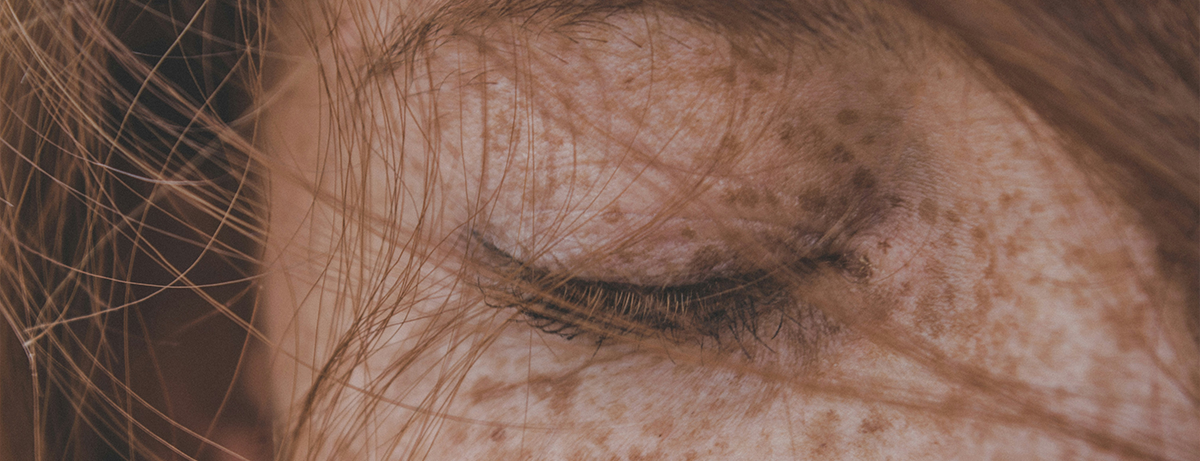
Noticed age spots on your face or hands? We asked an expert to explain why they develop, how to help prevent new ones from appearing and which skincare ingredients may help improve uneven-looking skin
Summary
1Age spots and the sun
Age spots are harmless patches of pigmentation caused by UV exposure, not ageing. They commonly appear on the face, hands and shoulders.
2What skincare could help age spots?
Age spots don't usually fade on their own, but sun protection and ingredients like vitamin C, niacinamide and retinoids may help uneven skin tone.
3How to prevent age spots
The best way to help prevent new age spots is daily broad-spectrum SPF30 or higher, reapplying outdoors and getting new or changing marks checked.
Whether they've appeared gradually or seemingly overnight, those tiny brown speckles on your face, hands or shoulders are often age spots – common, harmless patches of pigmentation caused by years of sun exposure rather than ageing itself.1 Also known as liver spots or sunspots, age spots don't need ‘fixing’. But if you'd like to understand why they appear, help prevent new ones or support a more even-looking skin tone, there are plenty of practical steps you can take.
One of our experts, Madalena Vieira Costa, explains: “Age spots are really a reflection of your skin's history rather than your age. They develop after years of cumulative UV exposure, which stimulates the skin to produce extra melanin. While they're usually harmless, they remind us how important daily sun protection is for long-term skin health.”1
What are age spots?
Age spots, also known as solar lentigines, are small, flat patches of skin that look darker than the surrounding area. They develop when ultraviolet (UV) light triggers the skin to produce extra melanin – the natural pigment that gives skin its colour.1
You'll usually find age spots on areas that have had the most sun exposure over the years, including age spots on the face, hands, shoulders, forearms and upper chest. Although they're most common in adults over 50, younger people can develop them too, particularly after lots of time in the sun or using sunbeds. Unlike freckles, which often fade when sun exposure decreases, age spots tend to stay and may become more noticeable over time.1,2 “Sunspots are one of the most recognisable signs of photoageing – the premature ageing of the skin caused by repeated sun exposure. Over time, cumulative UV damage changes the skin's structure and function, contributing to the formation of these visible spots,” Madalena shares.3
Age spots themselves are harmless and don't become skin cancer. However, because some skin cancers can look similar in their early stages, it's always worth getting any new, changing or unusual marks checked by your GP.4
Why am I getting age spots?
Years of UV exposure are the biggest reason age spots develop. Every time your skin is exposed to the sun, it produces melanin to help protect itself from damage. Over time, that pigment can become unevenly distributed, creating darker patches.1 Madalena explains that UV rays also increase oxidative stress in the skin by generating free radicals, which can damage collagen, elastin and skin cells over time.3
Your skin type, genetics and sun protection habits all influence whether age spots appear. Some medicines can also make your skin more sensitive to sunlight, increasing the likelihood of UV-related pigmentation. If you're taking medication that causes photosensitivity, it's especially important to wear sunscreen every day and follow the advice from your GP or pharmacist.5
Can age spots fade?
Age spots don't usually disappear on their own. However, some people notice they become less noticeable over time, and consistent skincare may help improve the appearance of uneven pigmentation.6
“Once sunspots have formed, complete reversal through diet or lifestyle alone is unlikely. However, certain skincare ingredients may help reduce their appearance and support overall skin quality,” says Madalena. She adds that improvements are usually gradual and depend on consistent use. Rather than removing existing age spots completely, the aim is to help prevent new blemishes and pigmentation from developing through a consistent skincare routine.3
What skincare ingredients help reduce the appearance of uneven skin tone?
No skincare product can completely remove age spots, but some ingredients may help improve the appearance of uneven pigmentation when used consistently alongside daily sun protection.⁶ Some of these ingredients can be used together, but it's best to introduce them one at a time and follow the product instructions, as combining multiple active ingredients may increase the risk of irritation. Look out for products containing:
- vitamin C – an antioxidant that helps protect against free radical damage caused by UV exposure while supporting a brighter, more even-looking complexion7
- niacinamide – helps support the skin barrier and may help improve the appearance of uneven skin tone over time8
- retinoids – encourage skin renewal and have been widely studied for improving visible signs of photoageing, including pigmentation9 alpha hydroxy acids (AHAs) – gentle chemical exfoliants that help remove dead skin cells, leaving skin looking smoother and more radiant10
- tranexamic acid – may help improve the appearance of hyperpigmentation and uneven skin tone11
As Madalena explains, ingredients that support skin and antioxidant defence can all play a role in improving the appearance of photoaged skin. The key is consistency – visible improvements are usually gradual rather than immediate, and both the results and the time it takes to notice them can vary from person to person.
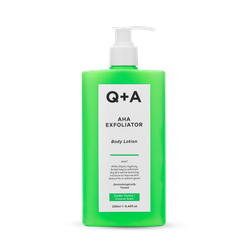
Q+A
£10.50
£42.00/1 l
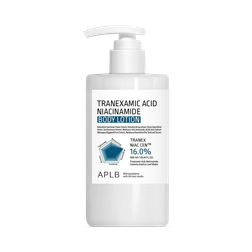
APLB
£12.00
£4.00/100 ml
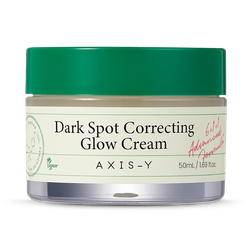
AXIS-Y
£18.00
£36.00/100 ml
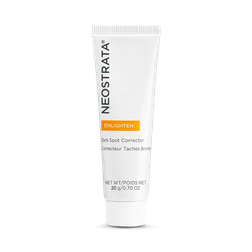
NeoStrata
£38.40
£1920.00/1 kg
How to prevent age spots
While you can't undo years of past sun exposure, protecting your skin today can help reduce further UV damage and lower the chance of new age spots developing.1 Daily sunscreen is one of the most effective ways to help protect your skin. Choose a broad-spectrum SPF30 or higher and apply it every morning, even on cloudy days. If you're spending time outdoors, reapply every two hours, or more often after sunbathing, swimming, sweating or towel drying.4
Madalena explains that “a tan is actually the skin's response to UV damage, even if it doesn't look like sunburn”. That's why practising sun safety all year round is one of the best ways to support your skin long term. You can also help protect your skin by:
- wearing a wide-brimmed hat and UV-protective sunglasses
- seeking shade during the middle of the day when UV levels are highest
- covering up with lightweight clothing where possible
- avoiding sunbeds
- remembering easy-to-miss areas like your hands, neck and chest
Sun protection doesn't stop with skincare. According to Madalena, eating a balanced diet rich in colourful fruit and vegetables, vitamin C-rich foods, carotenoids, polyphenols and healthy fats may help support the skin's natural defences against oxidative stress caused by UV exposure. While these nutrients won't prevent or reverse age spots on their own, they can support healthy skin ageing as part of an overall healthy lifestyle.12
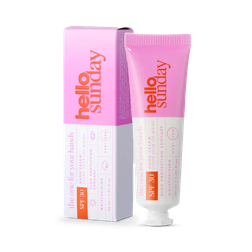
Hello Sunday
£11.00
£366.67/1 l
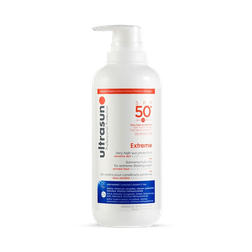
Ultrasun
£58.00
£145.00/1 l
Cosmetic procedures for age spots
If age spots bother you, a dermatologist may recommend cosmetic treatments to help reduce their appearance. The right approach depends on factors including your skin type, the size and location of the pigmentation and your overall skin health.13 Treatment options may include:
- laser treatments – target excess pigment in the skin
- chemical peels – encourage skin renewal by removing the outermost layers of skin
- cryotherapy – uses liquid nitrogen to treat individual age spots
Can age spots turn cancerous?
Age spots themselves don't turn into skin cancer. However, some types of skin cancer, including melanoma, can sometimes look similar to an age spot in their early stages.13 One of the easiest ways to tell the difference is that age spots usually stay the same over time, while melanoma is more likely to change in size, shape or colour. If you notice a new mark on your skin or an existing one starts to change, it's important to get it checked by your GP as soon as possible.14
The NHS recommends using the ABCDE guide to spot possible signs of melanoma.14
- A – asymmetry
- B – irregular border
- C – uneven colour
- D – diameter over 6mm (although melanomas can be smaller)
- E – evolving or changing appearance
Age spots FAQs
Age spots are flat brown patches that usually appear on the face, hands, shoulders and forearms after years of sun exposure.
Skincare can't remove age spots completely, but ingredients such as vitamin C, retinoids, niacinamide, AHAs and tranexamic acid may help improve their appearance. Dermatologists may also recommend cosmetic treatments.6,13
No. Age spots are harmless, but because melanoma can sometimes resemble them, always get new or changing marks checked by your GP.14
The final say
Age spots are a common part of life and, for many people, a visible reminder of years spent enjoying time outdoors. While they don't need treating, protecting your skin from UV exposure can help prevent new age spots from developing.1
“Age spots are really a reflection of your skin's history rather than your age,” reminds Madalena. Looking after your skin with daily sun protection, a consistent skincare routine and healthy lifestyle habits can all support skin ageing over time.
Looking for more ways to protect and care for your skin? Explore our SPF round-up for everyday sun protection and discover the latest skincare innovations in our new in beauty edit.
Disclaimer – This article provides informational advice and is not a substitute for medical care. Curated by experts for accuracy, we take great care to ensure the information is up-to-date and relevant. However, you should always consult your GP or healthcare professional before using supplements or alternative products, particularly if you have medical conditions or are under supervision.
1. Wang RF, Ko D, Friedman BJ, Lim HW, Mohammad TF. Disorders of hyperpigmentation. Part I. Pathogenesis and clinical features of common pigmentary disorders. J Am Acad Dermatol. 2023;88(2):271-288. Available from: https://www.jaad.org/article/S0190-9622(22)00251-1/
2. National Institute on Aging. Skin care and aging. National Institutes of Health. Available from: https://www.nia.nih.gov/health/skin-care/skin-care-and-aging
3. Pillai S, Oresajo C, Hayward J. Ultraviolet radiation and skin aging: roles of reactive oxygen species, inflammation and protease activation, and strategies for prevention of inflammation-induced matrix degradation. Int J Cosmet Sci. 2005;27(1):17-34. Available from: https://pmc.ncbi.nlm.nih.gov/articles/PMC3583892/
4. NHS. Melanoma skin cancer. Available from: https://www.nhs.uk/conditions/melanoma-skin-cancer/
5. Drucker AM, Rosen CF. Drug-induced photosensitivity. Drug Saf. 2011;34(10):821-37.
6. Ebanks JP, Wickett RR, Boissy RE. Mechanisms regulating skin pigmentation: the rise and fall of complexion coloration. Int J Mol Sci. 2009;10(9):4066-87. Available from: https://pmc.ncbi.nlm.nih.gov/articles/PMC5342934/
7. Al-Niaimi F, Chiang NYZ. Topical vitamin C and the skin: mechanisms of action and clinical applications. J Clin Aesthet Dermatol. 2017;10(7):14-17. Available from: https://pmc.ncbi.nlm.nih.gov/articles/PMC5605218/
8. Bissett DL, Oblong JE, Berge CA. Niacinamide: a B vitamin that improves ageing facial skin appearance. Dermatol Surg. 2005;31(7 Pt 2):860-5.
9. Mukherjee S, Date A, Patravale V, et al. Retinoids in the treatment of skin aging: an overview of clinical efficacy and safety. Clin Interv Aging. 2006;1(4):327-48. Available from: https://pmc.ncbi.nlm.nih.gov/articles/PMC2699641/
10. Kornhauser A, Coelho SG, Hearing VJ. Applications of hydroxy acids: classification, mechanisms and photoaging. Clin Cosmet Investig Dermatol. 2010;3:135-42. Available from: https://pmc.ncbi.nlm.nih.gov/articles/PMC3583892/
11. Kim SJ, Park JY, Shibata T, et al. Tranexamic acid in dermatology: a review of its mechanisms and clinical applications. Dermatol Ther (Heidelb). 2024. Available from: https://pmc.ncbi.nlm.nih.gov/articles/PMC11723311/
12. Assaf S, Kelly O. Nutritional dermatology: optimizing dietary choices for skin health. Nutrients. 2025;17(1):60. doi:10.3390/nu17010060.
13. Lee SY, et al. Current approaches to the treatment of photoaging and solar lentigines. Int J Mol Sci. 2020;21(7):2560. Available from: https://pmc.ncbi.nlm.nih.gov/articles/PMC7146365/
14. NHS. Melanoma skin cancer - Symptoms. Available from: https://www.nhs.uk/conditions/melanoma-skin-cancer/symptoms/
Related to this article


