 Track an order
 Buy It Again
 Favourites
 Manage account
 Rewards
 Subscriptions
 Find a store
 Help centre
Lack of motivation? Here's how to get back on track

Written byJodi M Johnson

Reviewed byMadalena Vieira Costa

Summary
1Why do we lose motivation?
Motivation can be affected by how we feel physically and mentally. Stress, tiredness and everyday demands can make it harder to keep motivated.
2How to motivate yourself
You don’t have to sign up for a gruelling challenge to rediscover your mojo. Often, small shifts can make all the difference to your mindset.
3When to rest vs when to push through
Some days, your body craves higher levels of rest – and that’s not laziness. Rest is just as important as exercise.
We all have those days when motivation seems to vanish. The alarm goes off, the to-do list feels overwhelming and even things we normally enjoy – from exercise to getting stuck into a project – can feel like hard work. But a lack of motivation doesn’t mean you’re lazy or lacking ambition. So, why do we lose it, and how can we get it back? From finding the drive to get moving to staying motivated through exercise and building habits that help you keep going, we’ve explored the reality of motivation – and the simple, practical ways to work with it rather than constantly chasing it.
What causes low motivation?
Motivation naturally ebbs and flows and can be affected by how we feel physically and mentally. Stress, tiredness and everyday demands can all take the wind out of your sails, making even everyday tasks feel like more effort.1 So, when you’re tired, overwhelmed or simply have a lot going on, it can be harder to feel enthusiastic about work, exercise, chores, social plans or even things you usually enjoy. There’s also a reason new goals can feel easier at the beginning. The excitement of starting something new can give you an initial boost, but that can fade over time, particularly when progress feels slow, life gets busy or the goal feels too big.2
Setting small, realistic goals and focusing on what you can do today can make it easier to keep moving forward.3 Creating routines can also help, so healthy habits become part of your day rather than something you need to feel motivated to do. Losing motivation doesn’t mean you’ve failed or that you’ve lost your ability to make progress – what matters is finding manageable ways to keep going, even on the days when you don’t feel particularly motivated.
Why does motivation drop in winter?
The mornings are colder and the weather is wetter, which makes staying under the duvet very tempting. But there are other less obvious reasons why many of us struggle with get-up-and-go in the winter months.
Less sunlight = less serotonin: the lack of daylight in the winter tends to zap levels of serotonin, the feel-good brain chemical that helps regulate mood, focus and energy. Spending less time outside during winter can also reduce our exposure to sunlight which our bodies use to make vitamin D4
Melatonin disruption: our brains tend to produce more of the sleep hormone melatonin when it’s dark outside, which can make us feel sleepier or more sluggish during the day5
Changes to circadian rhythms: shorter days and longer nights can throw off our internal body clocks, making it harder to stay energised6
More time indoors = less movement: cold weather can keep us cooped up under blankets on the sofa, which often leads to less movement, and ironically, can affect fatigue7,8
The winter slump is real: many people also experience Seasonal Affective Disorder (SAD), or a milder dip known as the ‘winter blues,’ both of which are linked to low energy and motivation9
How to motivate yourself
The good news is that you don’t have to sign up for a gruelling Hyrox race or take on an intense ice bath challenge to rediscover your mojo. Often, small shifts can make all the difference to your mindset when getting things done feels like a monumental task.
Start small
Studies have found that natural light plays a crucial role in regulating our body's internal clock, supporting hormone balance (like melatonin) and supporting energy levels.6 Try taking a short walk first thing in the morning or using a SAD lamp, a high-intensity device that mimics qualities of sunlight, following the product instructions.
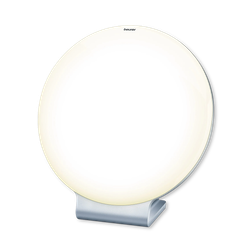
Beurer
RRP £99.99
£70.99
Research into the science of habit formation has found that people who set smaller, more manageable goals are far more likely to see success than those who overshoot their aims.3 So, instead of pushing for a strict 10k run, why not switch off Strava and go for an intuitive jog instead?
Create momentum
You don’t have to do a full-body pump in the weight room to reap the mood-boosting benefits of exercise. Gentle yoga, a kitchen dance break while the kettle brews or walking the dog can all deliver a mini energy lift – spending time outdoors can also help you find your momentum and has many benefits for your physical and mental health too.10 Rather than pushing against winter, try leaning into the temptation to hunker down. That could mean slower mornings, earlier nights and swapping late nights out at the pub for nourishing self-care evenings.
Support your body
When your motivation is running low, it’s worth going back to the basics. Eating regular, balanced meals, getting enough sleep and staying hydrated can all help give your body what it needs to get through the day. The NHS recommends vitamin D for everyone during the darker winter months, as it’s difficult to make enough vitamin D from sunshine alone.11
It’s worth paying attention to the rest of your diet too. Magnesium and certain B vitamins contribute to reducing tiredness and fatigue.12 Aim to get these through your diet first though and it’s always worth having a quick chat with your GP before adding new supplements into your routine, just to make sure it’s the right fit for you.13
How to stay motivated to exercise
The mental and physical benefits of keeping fit need little introduction. Knowing exercise is good for you and actually wanting to do it are two very different things. You can have the workout planned, your trainers ready and every intention of moving – then 6pm rolls around and the sofa suddenly looks very appealing.
And that doesn’t just happen when you’re new to exercise. No matter your skill or fitness level, finding the energy to work out can often be the biggest roadblock in making progress, and even some of the most successful athletes struggle with motivation. To help you stay on task with your training, try these tips ahead of your next fitness session.
Try something new
It’s pretty demotivating to do anything without purpose. If you’ve lost your love for straight-up HIIT classes, find a new type of movement to get pumped about. Whether it's home workouts, hot Pilates, cosy cardio or restorative yoga, give yourself permission to slow down and enjoy the process of challenging your brain and body in new ways.
Do bite-sized workouts
If doing a workout feels intimidating, why not try brief bursts of exercise throughout the day? Sometimes called ‘exercise snacks’, these can last around one minute or less and may help reduce body fat and LDL cholesterol, although results may vary. Research suggests that physical activity can benefit your health regardless of duration – and shorter bursts may be easier to fit into a busy schedule.14
Invest in some new kit
You don’t need an expensive drawer full of designer athleisure wear to reap the benefits of exercise, but there’s no denying that a box-fresh pair of trainers or something new can make getting active feel a little more appealing. Whether it’s sipping a scoop of Tri-Active’s energy supporting Raspberry and Lime pre-workout or slipping into a hot bath mixed with Westlab’s Recover Bathing Salts, treating yourself to some new wellness goodies can make fitness all the more appealing.

How to stay motivated when you're tired
It’s important to know the difference between a temporary lack of motivation and true burnout. There will inevitably be times when you’re simply not feeling up to the task and when you have to fight the urge to procrastinate (or nap).
When you just don’t feel like it
Lack of motivation is often about not feeling particularly driven to do something. You might know you want to exercise or stick to a goal but simply don’t feel like doing it. Motivation naturally changes from day to day, and a dip doesn’t necessarily mean you’ve lost interest altogether.
You could try the five-minute rule: if you’re stuck on starting a task, commit to doing the task for just five minutes and then give yourself the option of stopping. Research suggests that taking that first step can help build momentum, making it easier to carry on once you’ve started.15
Genuinely tired? Give yourself permission to rest
Physical tiredness can be a sign that your body needs more rest and recovery. You might feel low on energy, heavy or simply not ready for another workout. In this case, rest, sleep and giving yourself a little more recovery time may be what you need. Remember that rest isn’t one-size-fits-all though – there could be something to be said for finding your relaxation sweet spot based on your personality.
Burnout vs lack of motivation
Understanding the difference between losing motivation, feeling physically tired and experiencing burnout can help you work out what you need. Burnout tends to be more persistent. Rather than simply not feeling motivated or having a tired day, you may feel mentally and physically drained, overwhelmed or detached from things you would normally enjoy. It can be a sign that you’ve been dealing with too much for too long. Mentally, burnout can feel like overwhelming tiredness and fatigue (even after decent periods of rest) while physically it can manifest as headaches, digestive issues and even muscle pain.16 But if these symptoms have been happening a while, speak to a doctor to rule out any other conditions.
When to rest vs when to push through
Rest is just as important as exercise. When you work out, you place your muscles under stress, and your body needs time afterwards to repair and adapt.17 Sleep is also an important part of recovery, giving your body time to recharge and repair.18 So, rather than feeling guilty about taking a rest day, think of it as part of your training routine. Give yourself permission to slow down when needed, and once you’re ready to get back on task, start with small, low-pressure steps. Often, motivation returns after you take action, not before.
Lack of motivation FAQs
A lack of motivation can have lots of different causes, and it’s often a combination of things rather than one single reason. Sometimes, motivation naturally dips when the excitement of a new goal wears off or progress feels slower than expected. Changes in your routine, sleep, mood, stress or everyday circumstances can play a part, too.
Try putting on your favourite playlist, changing into your workout clothes or telling yourself you’ll do just five minutes. You can also make things more enjoyable by exercising somewhere you like, meeting a friend or rewarding yourself with something you enjoy afterwards.
Another useful trick is to keep a little note or journal of how you feel after you’ve done something. Write down the mood boost, sense of achievement or the extra energy you felt. When you’re struggling to get going next time, read it back as a reminder that you usually feel better once you’ve started.
When motivation is low, try these five simple motivation tips suggested by the NHS:15
take action first – don’t wait until you feel motivated as getting started can help motivation follow:
try the five-minute rule – commit to doing something for just five minutes. Once you’ve started, you may find it easier to keep going.
spend time with others – a chat with a friend, a coffee or a walk together can help you feel more connected and lift your mood
make time for yourself – set aside time for something you enjoy, even when your to-do list is calling
get moving – you don’t need a big workout, a short walk or some gentle movement can be a simple way to get yourself going.
The final say
A motivation dip is usually nothing to beat yourself up about. Understanding what might be behind it can make it easier to work out what you need – whether that’s a break, a change of approach or simply a small push to get started again.
New to running? Discover why run clubs are one of the easiest ways to get started or lean into your slower-paced days with our top products to help you support your energy.
Disclaimer – This article provides informational advice and is not a substitute for medical care. Working with experts for accuracy, we take great care to ensure the information is up-to-date and relevant. However, you should always consult your GP or healthcare professional before using supplements or alternative products, particularly if you have medical conditions or are under supervision.
1 Kunasegaran K, Ismail AMH, Ramasamy S, Gnanou JV, Caszo BA, Chen PL. Understanding mental fatigue and its detection: a comparative analysis of assessments and tools. PeerJ [Internet]. 2023 [cited 2026 Sept 22];11(1):e15744. Available from: https://pubmed.ncbi.nlm.nih.gov/37637168/
2 Dai H, Milkman KL, Riis J. Put Your Imperfections Behind You: Temporal Landmarks Spur Goal Initiation When They Signal New Beginnings. Psychological Science. 2015 Nov 5;26(12):1927–36.
3 Gardner B, Lally P, Wardle J. Making health habitual: The psychology of ‘habit-formation’ and general practice. British Journal of General Practice. 2012 Dec;62(605):664–6.
4 Sansone RA, Sansone LA. Sunshine, Serotonin, and Skin: A Partial Explanation for Seasonal Patterns in Psychopathology? Innovations in Clinical Neuroscience [Internet]. 2024;10(7-8):20. Available from: https://pmc.ncbi.nlm.nih.gov/articles/PMC3779905/
5 NCCIH. Melatonin: What you need to know [Internet]. National Center for Complementary and Integrative Health. 2024. Available from: https://www.nccih.nih.gov/health/melatonin-what-you-need-to-know
6 Blume C, Garbazza C, Spitschan M. Effects of light on human circadian rhythms, sleep and mood. Somnology : Sleep Research and Sleep Medicine [Internet]. 2019 Sep 1;23(3):147–56. Available from: https://pmc.ncbi.nlm.nih.gov/articles/PMC6751071/
7 Wender CLA, Manninen M, O’Connor PJ. The Effect of Chronic Exercise on Energy and Fatigue States: A Systematic Review and Meta-Analysis of Randomized Trials. Frontiers in Psychology. 2022 June 3;13(13).
8 Checking your browser - reCAPTCHA [Internet]. Nih.gov. 2024 [cited 2026 Sept 22]. Available from: https://pmc.ncbi.nlm.nih.gov/articles/PMC7863471/
9 NHS. Overview - Seasonal affective disorder (SAD) [Internet]. nhs.uk. NHS; 2021. Available from: https://www.nhs.uk/mental-health/conditions/seasonal-affective-disorder-sad/overview/
10 Urban green spaces and health [Internet]. [cited 2026 Sept 22]. Available from: https://iris.who.int/server/api/core/bitstreams/74006ead-650d-4fca-815a-f1ff53c1eea1/content
11 NHS. Vitamin D - Vitamins and Minerals [Internet]. NHS. 2020 [cited 2026 Sept 22]. Available from: https://www.nhs.uk/conditions/vitamins-and-minerals/vitamin-d/
12 Tardy AL, Pouteau E, Marquez D, Yilmaz C, Scholey A. Vitamins and minerals for energy, fatigue and cognition: A narrative review of the biochemical and clinical evidence. Nutrients [Internet]. 2020 Jan 16 [cited 2026 Sept 22];12(1):228. Available from: https://pmc.ncbi.nlm.nih.gov/articles/PMC7019700/
13 Department of Health and Social Care. Great Britain Nutrition and Health Claims (NHC) Register [Internet]. GOV.UK. 2020 [cited 2026 Sept 22]. Available from: https://www.gov.uk/government/publications/great-britain-nutrition-and-health-claims-nhc-register
14 Wang T, Laher I, Li S. Exercise snacks and physical fitness in sedentary populations. Sports Medicine and Health Science [Internet]. 2024 Feb 27;7(1). Available from: https://www.sciencedirect.com/science/article/pii/S2666337624000283
15 Five ways to boost your motivation | Berkshire Healthcare NHS Foundation Trust [Internet]. Berkshirehealthcare.nhs.uk. 2018 [cited 2026 Sept 22]. Available from: https://www.berkshirehealthcare.nhs.uk/advice/five-ways-to-boost-your-motivation
16 Mental Health UK. Burnout [Internet]. Mental Health UK. Mental Health UK; 2024. Available from: https://mentalhealth-uk.org/burnout/ 13. Hammarström P, Rosendahl S, Gruber M, Nordin S. Somatic symptoms in burnout in a general adult population. Journal of Psychosomatic Research. 2023 May;168:111217.
17 McGlory C, Devries MC, Phillips SM. Skeletal muscle and resistance exercise training; the role of protein synthesis in recovery and remodeling. Journal of Applied Physiology. 2017 Mar 1;122(3):541–8.
18 Asp M. Rest. Global Qualitative Nursing Research. 2015 Jan 1;2.


