 Track an order
 Buy It Again
 Favourites
 Manage account
 Rewards
 Subscriptions
 Find a store
 Help centre
Why are my lips so dry? What causes chapped lips and how to soothe them

Written byH&B editorial team

Reviewed byHeeral Tomlinson
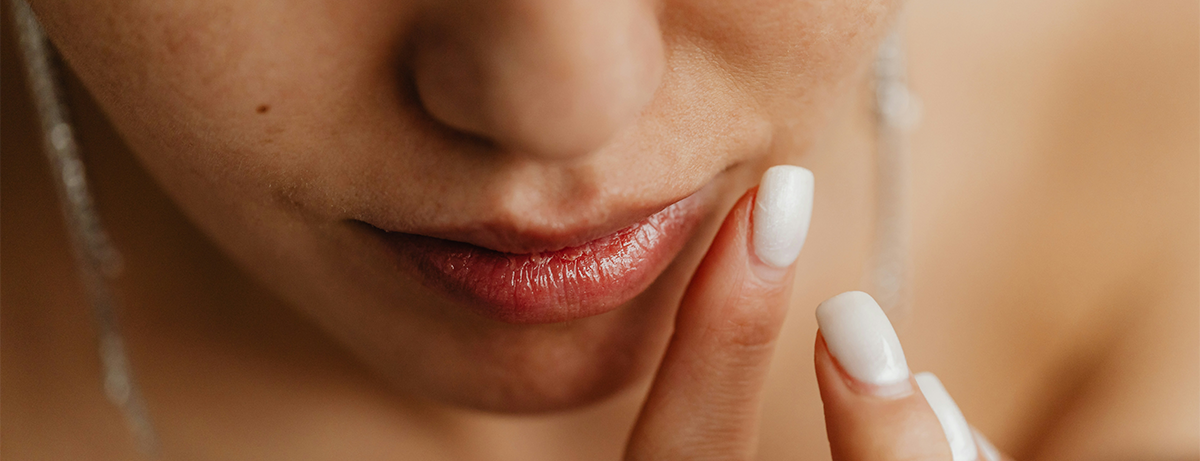
Lips feeling sore, dry and cracked? Here’s why you’re getting chapped lips – and how to kiss them goodbye
Summary
1Chapped lips in cold weather
Drink plenty of water and apply an emollient lip balm containing linoleic and fatty acids such as olive oil, shea butter or coconut oil.
2Chapped lips and dehydration
Aim to drink at least eight cups of water a day and avoid drinking too much caffeine and alcohol.
3Picking chapped lips
If you need to pull your lip skin to remove it, it’s not ready to come off and you’ll create further damage and dryness.
As the seasons change, you might need a moment to adjust – and so could your lips. But while the weather’s a big contributor to our sad pouts, there’s more to it than that. There are several reasons for dry, cracked and sore lips, from central heating to licking your lips too much. Here are the most common reasons and how you can get your lips feeling soft again...
What are chapped lips?
When we say our lips are chapped, it means they’re sore and dry. They might also be cracked, bleeding or peeling. Most people experience chapped lips at some point and it’s nothing to worry about. But it’s easy to get caught in a cycle where your lips become chronically sore, which might be frustrating or embarrassing.
What causes dry lips and how to manage them
Our lips are one of the most sensitive bits of skin on our body, and with all that eating, drinking, kissing, talking, breathing and lipstick-applying, it’s expected they’ll become chapped at some point. But what you don’t want is chronic chapped lips that can lead to painful sores. It’s time to get to the bottom of your flaky lips and banish them for good. Here are some of the most common causes of dry, sore lips...
1. Cold weather
You know that feeling when you step out of the house on a crisp winter’s day and your skin feels super tight and stretched? This is partly due to a lack of humidity in the air, which can cause your skin to struggle to retain moisture and lead to dry skin. Your lips tend to be even more fragile than the rest of your skin, so they can be affected more severely.1
What you can do about it: unless you fancy moving to sunnier climes, the unfortunate reality is that it’s hard to totally avoid chapped lips in winter. The best thing is to drink plenty of water and apply an emollient-based lip balm containing linoleic and fatty acids like olive oil, shea butter or coconut oil if you think the cold weather may be causing your lip distress. Covering your mouth with a scarf when out in the cold might also help.
2. Indoor heating
Another thing that can dry out your lips big-time is cranking up the thermostat, as it sucks moisture from the air. One study among office workers found that when the air humidity went from 43% (normal) to 15% (dry), significantly more people complained about discomfort and more frequent symptoms in facial skin and mucous membranes (e.g. the lining of the nose and throat).2
What you can do about it: you could try using an air humidifier to combat the dryness, as well as keeping hydrated and using lip balm – you could even make your own. You might also want to have heating-free periods where you snuggle up with a hot water bottle for a few hours instead (it’s for science).

3. Dehydration
If your body’s dehydrated, chances are your skin’s pretty thirsty too. It’s important to keep hydration levels up for your body to run properly – and this includes your lips.
What you can do about it: aim to drink at least eight cups of water a day and avoid drinking too much caffeine and alcohol.3
4. Licking your lips
Though it's super tempting to lick your lips when they’re feeling dry, try to stop yourself as this can make things even worse. In fact, there’s a condition called ‘lip-licker’s dermatitis’ – the repeated licking of the lips, which causes saliva to wear out the skin and remove its protective oils.4,5 It’s the same reason you might try not to wash your hair too often.
What you can do about it: apply an emollient-based balm to help soothe your lips (but avoid flavoured balms). It might also help to understand why you’re licking your lips – is it just a tough habit to break or is there a noticeable trigger? Sometimes, it's a sign of stress or anxiety and helping to manage the root cause might improve your lip-licking.
5. Allergies to beauty products
Just like the rest of your skin, lips can respond badly to certain ingredients or you may even be allergic. Look out for swelling, itchiness or extreme dryness after you use a product on your lips. For any sudden swelling of the lips, mouth, throat or tongue, the NHS recommends seeking medical advice urgently as it could be a serious allergic reaction.
What you can do about it: avoid products with any ingredients that you know you respond badly to. If you’re not sure of the cause, eliminate all lip products and slowly introduce them back in one at a time. In the meantime, choose lip balms with minimal ingredients, which will hopefully reduce the chance of you experiencing a reaction. Seek urgent medical help if you experience sudden swelling of the lips and mouth area.6
6. Picking your lips
It’s as irresistible as picking a spot or biting your nails... but try not to pick the skin off your flaky lips. If you need to pull your lip skin to remove it, it’s not ready to come off and you’ll create further damage and dryness.
What you can do about it: if your lip skin is flaky and dry, try making a homemade scrub with warm water, coconut oil or honey mixed with naturally gritty sugar or salt and gently scrub your lips with a clean cloth.
7. Sun exposure
If you experience dry lips in the summer, it could be down to sun exposure. We often forget that our lips need protecting from the sun just as much as our facial skin.
What you can do about it: choose a lip balm with SPF in it.
8. Overusing lip balms
Ironically, lip balms can be too much of a good thing. If you use them too regularly – especially those with fragrances or irritating active ingredients – they may make your lips even more sensitive.
What you can do about it: try to reduce your lip balm application if you’re always reaching for one. You shouldn’t need to use it more than every few hours. If you suffer with chronic chapped lips, take a break from your usual lip balm and swap it for an emollient-based product to see if the problem persists.
FAQs
If you’ve tried the tips above and your chapped lips just won’t quit, it could be time to see your GP to discuss other potential causes and possible solutions.
Regularly apply a thick emollient lip cream or balm. Be sure to drink plenty of water and stay out of cold or dry environments (e.g. rooms with high central heating). Apply SPF to your lips when you're outdoors.
Vaseline is made from petroleum jelly and is an occlusive – a substance that forms a barrier locking moisture into the skin.7,8 That means it’s good for keeping your lips soft and hydrated – unless they’re already very dry. You might want to use a type of ingredient called a humectant first – it draws moisture to the skin and help to keep it hydrated.9 Examples of humectants include hyaluronic acid, glycerin and lactic acid.9 Then, you can ‘seal’ in the moisture using your occlusive like Vaseline.
The final say
Just like the skin on the rest of our body, our lips are susceptible to getting damaged and dried out by our environment and lifestyle, e.g. the weather, central heating and how we take care of them. Chapped lips will affect most people at some point, but with a little TLC and plenty of moisture they should be well on their way to recovery.
Want to stay glowing all over? Read our guide to dry skin or shop our range of lip balms.
Disclaimer – This article provides informational advice and is not a substitute for medical care. Working with experts for accuracy, we take great care to ensure the information is up-to-date and relevant. However, you should always consult your GP or healthcare professional before using supplements or alternative products, particularly if you have medical conditions or are under supervision.
1. NHS. Sore or dry lips [Internet]. NHS [reviewed 2025 Feb 13; cited 2026 Feb 4]. Available from: https://www.nhs.uk/symptoms/sore-or-dry-lips/
2. Gavhed D, Klasson L. Perceived problems and discomfort at low air humidity among officee workers. Elsevier Ergonomics Book Series [Internet]. 2005 [cited 2026 Feb 4]; 3: 225-30. Available from: https://www.sciencedirect.com/science/article/pii/S1572347X05800370
3. NHS. Water, drinks and hydration [Internet]. NHS [reviewed 2023 May 17; cited 2026 Feb 4]. Available from: https://www.nhs.uk/live-well/eat-well/food-guidelines-and-food-labels/water-drinks-nutrition/
4. Watt CJ, Chih-ho Hong H. Dermacase. Canadian Family Physician [Internet]. 2002 Jun [cited 2026 Feb 4]; 48. Available from: https://www.ncbi.nlm.nih.gov/pmc/articles/PMC2214070/pdf/12113191.pdf
5. Fonseca A, Jacob SE, Sindle A. Art of prevention: Practical interventions in lip-licking dermatitis. International Journal of Women’s Dermatology [Internet]. 2020 Dec [cited 2026 Feb 4]; 6(5): 377-380. Available from: https://www.sciencedirect.com/science/article/pii/S2352647520300988
6. NHS. Angioedema [Internet]. NHS [reviewed 2023 Jan 18; cited 2026 Feb 4]. Available from: https://www.nhs.uk/conditions/angioedema/
7. European Commission. CosIng – Cosmetics Ingredients: Functions. OCCLUSIVE [Internet]. European Commission [cited 2026 Feb 4]. Available from: https://ec.europa.eu/growth/tools-databases/cosing/reference/functions/list/OCCLUSIVE
8. Vaseline. Vaseline®Healing Jelly Original [Internet]. Vaseline [cited 2026 Feb 4]. Available from: https://www.vaseline.com/us/en/p/vaseline-healing-jelly-original.html/00305212352009
9. European Commission. CosIng – Cosmetics Ingredients: Functions. HUMECTANT [Internet]. European Commission [cited 2026 Feb 4]. Available from https://ec.europa.eu/growth/tools-databases/cosing/reference/functions
Related to this article


