 Track an order
 Buy It Again
 Favourites
 Manage account
 Rewards
 Subscriptions
 Find a store
 Help centre
Pelvic floor exercises: your guide to strengthening your pelvic floor
Written byNatalie Beastall

Reviewed byHeeral Tomlinson
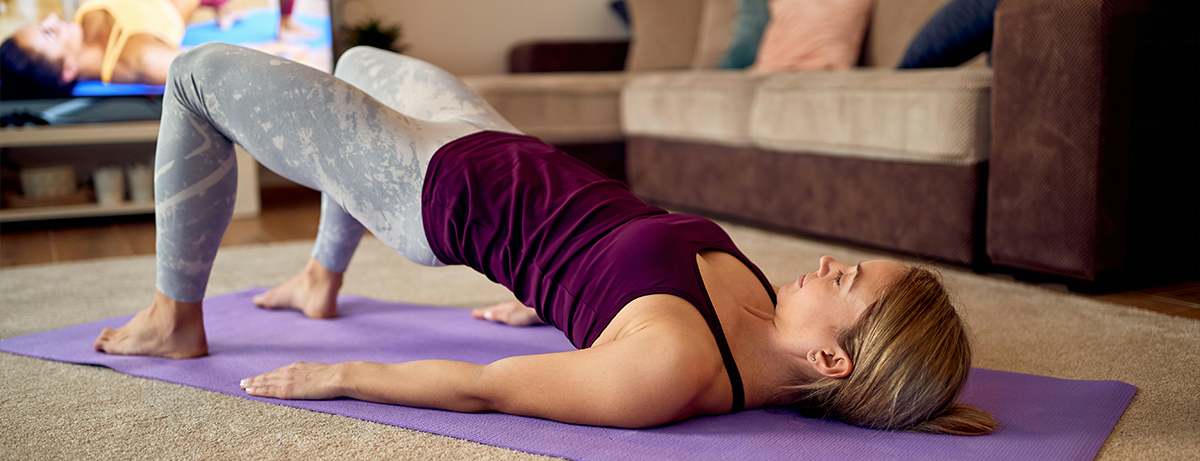
Leaking when you laugh, sneeze or run? Your pelvic floor could be trying to tell you something. Discover simple exercises that may help strengthen these hardworking muscles
Summary
1What are weak pelvic floor symptoms?
Some symptoms are leaking urine when coughing, sneezing, laughing, exercising or lifting something heavy.
2How do you find your pelvic floor muscles?
Imagine trying to stop yourself passing wind and stop the flow of urine. The muscles you gently tighten to do this are your pelvic floor muscles.
3Pelvic floor exercises to try
Kegel, bridge, squat, bird dog, heel slides and dead bugs are some of the most effective pelvic floor exercises.
Ever crossed your legs before a sneeze? Or found yourself planning toilet stops before a long journey? It might not be 'just one of those things'.
Your pelvic floor muscles work hard every day to support your bladder, bowel and core, but pregnancy, childbirth, menopause and ageing can all take their toll. Over 60% of women in the UK experience at least one symptom of poor pelvic floor health.1 The good news? Pelvic floor exercises can often help strengthen these muscles and improve symptoms over time.
Short on time? Here's the quick answer: pelvic floor exercises can help strengthen the muscles that support your bladder, bowel and core. Kegel exercises for women are among the best-known pelvic floor exercises, but consistency matters more than intensity.2
How do you find your pelvic floor muscles?
If you've never consciously used your pelvic floor muscles before, don't worry – it can take a little practice to recognise what they should feel like. A good way to identify them is to imagine you're trying to stop yourself passing wind and stop the flow of urine. The muscles you gently tighten to do this are your pelvic floor muscles. You should feel a lifting or squeezing sensation inside your pelvis without tightening your stomach, buttocks or thighs.3
Although imagining stopping your urine can help you identify the correct muscles, don't regularly practise your pelvic floor exercises while you're actually weeing. The NHS advises against this because repeatedly stopping the flow of urine can interfere with normal bladder function and may increase the risk of bladder problems.3
Pelvic floor exercises to try
Looking for how to strengthen your pelvic floor? Pelvic floor exercises are widely recommended to help to help strengthen these muscles. While Kegel exercises directly target your pelvic floor muscles, other movements can help strengthen your core, hips and glutes, which all work together to support your pelvis. If you're new to pelvic floor exercises, start slowly and focus on good technique rather than doing lots of repetitions.
Kegel exercises are the best-known pelvic floor exercises for women and are designed to strengthen the pelvic floor muscles directly.2,4
Here's how to do them:
- sit, stand or lie down in a comfortable position
- tighten the muscles you'd use to stop yourself passing urine or wind
- hold the squeeze for up to 10 seconds while breathing normally
- slowly relax for the same amount of time
- repeat eight to 12 times, then finish with three to five quick squeezes
Top tip: Avoid squeezing your buttocks, thighs or stomach and don't hold your breath. You should also avoid regularly stopping your flow of urine to practise, as this can affect normal bladder function.5,6
Bridges help strengthen your glutes, core and pelvic floor together.7
Here's how to do them:
- lie on your back with your knees bent and feet flat on the floor, hip-width apart
- tighten your pelvic floor muscles
- press through your heels and slowly lift your hips until your body forms a straight line from your shoulders to your knees
- hold for three to five seconds
- lower slowly back to the floor Aim for eight to 12 repetitions.
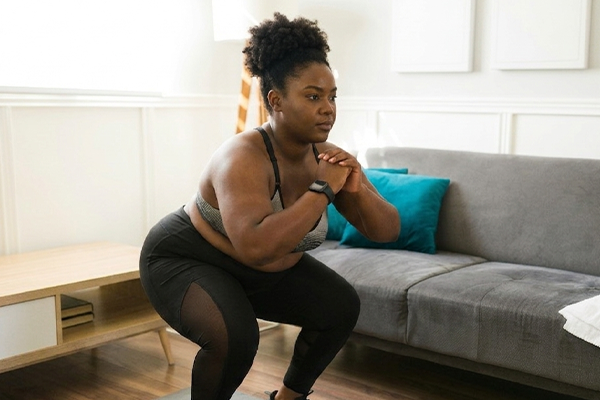
Squats strengthen your lower body while encouraging your pelvic floor and core muscles to work together.3,8
Here's how to do them:
- stand with your feet shoulder-width apart
- tighten your pelvic floor before you begin
- slowly bend your knees and lower into a squat, keeping your chest lifted
- push through your heels to stand back up while gently lifting your pelvic floor
Repeat eight to 12 times.
The bird dog is a gentle exercise that helps improve core stability and coordination.9
Here's how to do it:
- start on your hands and knees with your spine in a neutral position
- tighten your pelvic floor and core muscles
- slowly extend one arm forwards while extending the opposite leg behind you
- hold for a few seconds before returning to the starting position
- repeat on the opposite side
Aim for eight to 10 repetitions on each side.
Heel slides are a beginner-friendly exercise that encourages your pelvic floor and deep core muscles to work together.10
Here's how to do them:
- lie on your back with your knees bent and feet flat on the floor
- gently tighten your pelvic floor muscles
- slowly slide one heel away until your leg is almost straight
- bring it back to the starting position while keeping your pelvis still
- repeat with the other leg
Aim for eight to 10 repetitions on each side.
Despite the unusual name, the dead bug is a great exercise for improving deep core strength and pelvic stability.11
Here's how to do it:
- lie on your back with your arms pointing towards the ceiling and your knees bent at 90 degrees
- tighten your pelvic floor and gently engage your core
- slowly lower one arm behind your head while extending the opposite leg towards the floor
- return to the starting position and repeat on the opposite side
Complete eight to 10 repetitions on each side while moving slowly and maintaining control.
How to do pelvic floor exercises properly
When it comes to pelvic floor exercises, technique matters just as much as consistency. You don't need to spend hours training your pelvic floor, but you do need to make sure you're working the right muscles. The good news is that, once you've got the hang of them, pelvic floor exercises are quick, simple and can easily become part of your daily routine.
Start with slow contractions
Slow contractions help build strength and endurance in your pelvic floor muscles. You'll want to:3
- tighten your pelvic floor muscles as though you're trying to stop yourself passing urine or wind
- hold the contraction for up to 10 seconds while breathing normally
- slowly relax your muscles completely for the same amount of time before repeating
Follow with fast contractions
Fast contractions help your pelvic floor react quickly when you cough, sneeze, laugh or lift something heavy. You'll want to:3
- tighten your pelvic floor muscles as quickly as you can
- hold for around one second
- relax fully before repeating
Remember to breathe and relax
Breathe normally throughout each contraction and fully relax between repetitions. Holding your breath or constantly keeping the muscles tense can make the exercises less effective and may contribute to an overactive pelvic floor.
Common mistakes to avoid
To get the most from your pelvic floor exercises, try to avoid these common mistakes:3,6
- holding your breath instead of breathing normally
- squeezing your stomach, buttocks or thighs instead of isolating your pelvic floor muscles
- rushing the exercises rather than using slow, controlled movements
- forgetting to relax fully between each contraction
- practising by stopping your urine mid-flow
- giving up too soon. Like any strength exercise, pelvic floor training takes time. Many people notice improvements after around six to 12 weeks of regular practice
Do you need a pelvic floor trainer?
Not necessarily. Most people can strengthen their pelvic floor muscles without using a device, and regular pelvic floor exercises are often the first approach recommended by healthcare professionals for your pelvic floor muscles.
However, some people find pelvic floor trainers helpful, particularly if you're unsure whether you're doing the exercises correctly or need extra motivation to stay consistent. Some devices provide biofeedback or app-based guidance that may help some people identify the correct muscles, although most people can strengthen their pelvic floor without a device.

Smile Makers
RRP £59.95
£44.96
£44.96/1 Each
Pelvic floor FAQs
Like any muscle-strengthening exercise, consistency is more important than doing lots all at once. Aim to do your pelvic floor exercises every day, even if it's just for a few minutes. Many people find it easiest to build them into an existing routine, such as after brushing their teeth or while waiting for the kettle to boil. The more regularly you practise, the more likely you are to see results.
Most people can benefit from looking after their pelvic floor, but they're particularly recommended if you:12
- are pregnant or planning a pregnancy
- have recently given birth
- are going through menopause
- experience bladder leaks or frequently need to rush to the toilet
- are recovering after prostate surgery
- regularly lift heavy weights or take part in high-impact exercise
- have a physically demanding job that involves heavy lifting
- want to support your bladder, bowel and core health as you get older
Absolutely. Pelvic floor exercises aren't just for women or people who've had children. Men also have pelvic floor muscles and keeping them strong can help support bladder and bowel control. They're often recommended after prostate surgery, but they may also benefit men experiencing symptoms such as urinary leakage. If you have ongoing bladder problems or erectile dysfunction, it's always worth speaking to your GP, as there can be several possible causes.
Walking is great for your overall health, but it won't strengthen your pelvic floor on its own.13 Think of it this way: walking keeps you active, while pelvic floor exercises specifically target the muscles that support your bladder, bowel and core. Doing both as part of a healthy lifestyle is a great combination.
Pelvic floor muscles don't get stronger overnight, so try not to be discouraged if you don't notice a difference straight away. With regular practice, many people might start to see improvements after a few months. If you've been recommended pelvic floor exercises but aren’t seeing a difference, speak to your GP again or a pelvic health physiotherapist. They can check whether you're doing the exercises correctly and recommend the most appropriate treatment for you.
The final say
Your pelvic floor probably isn't something you think about every day – but it quietly supports you through almost everything you do, from laughing and lifting to running, coughing and going to the toilet. And just like any other muscle, it responds to regular training. Just remember, bladder leaks, pelvic heaviness and discomfort aren't something you just have to put up with. If your symptoms are affecting your daily life, speak to your GP.
Interested in more things pelvic floor? Discover whether your pelvic floor is too tight and what to do about it.
Disclaimer – This article provides informational advice and is not a substitute for medical care. Working with experts for accuracy, we take great care to ensure the information is up-to-date and relevant. However, you should always consult your GP or healthcare professional before using supplements or alternative products, particularly if you have medical conditions or are under supervision.
1. Royal College of Obstetricians & Gynaecologists. RCOG calling for action to reduce number of women living with poor pelvic floor health [Internet]. [2023 November 3; cited 2024 Mar 8]. Available from: https://www.rcog.org.uk/news/rcog-calling-for-action-to-reduce-number-of-women-living-with-poor-pelvic-floor-health
2. National Institute of Diabetes and Digestive and Kidney Diseases. Kegel Exercises [Internet]. 2021 [cited 2024 Mar 8]. Available from: https://www.niddk.nih.gov/health-information/urologic-diseases/kegel-exercises
3. Pelvic Floor Exercises for Women [Internet]. North Tees and Hartlepool NHS Foundation Trust. 2024 Mar [cited 2026 July 22]. Available from: https://www.nth.nhs.uk/resources/pelvic-floor-exercises-for-women/
4. Michael's Hospital S. Pelvic floor exercises and continence advice for women Patient information service [Internet]. [cited 2024 May 10]. Available from: https://www.ruh.nhs.uk/patients/patient_information/Pelvic_floor_exercise_and_continence_advice.pdf
5. Bladder care and management [Internet]. Cambridge University Hospitals. [cited 2026 July 22]. Available from: https://www.cuh.nhs.uk/patient-information/bladder-care-and-management/
6. Pelvic Floor Muscle exercises and bladder advice - Leeds Teaching Hospitals NHS Trust [Internet]. Leeds Teaching Hospitals NHS Trust. 2024 [cited 2026 July 22]. Available from: https://www.leedsth.nhs.uk/patients/resources/pelvic-floor-muscle-exercises-and-bladder-advice/
7. Letícia M, Lívia Oliveira Bezerra, Maria J, Clara M, Maria. Pelvic floor muscle training in women with urinary incontinence and pelvic organ prolapse: A protocol study. PLoS ONE. 2024 Aug 16;19(8):e0308701–1.
8. Ayub I, Zainab Basharat, Sajid A, Asif A. Comparative Effects of Kegel and Squat Exercises on Urinary Incontinence Severity and Quality of Life. Journal of Health Wellness and Community Research [Internet]. 2025 Aug 23 [cited 2026 July 21];e683–3. Available from: https://jhwcr.com/index.php/jhwcr/article/view/683
9. Siff LN, Hill AJ, Walters SJ, Walters G, Walters M D. The Effect of Commonly Performed Exercises on the Levator Hiatus Area and the Length and Strength of Pelvic Floor Muscles in Postpartum Women. Female pelvic medicine & reconstructive surgery [Internet]. 2020 [cited 2026 July 22];26(1):61–6. Available from: https://pubmed.ncbi.nlm.nih.gov/29727372/
10. Nipa SI, Sriboonreung T, Paungmali A, Phongnarisorn C. The Effects of Pelvic Floor Muscle Exercise Combined with Core Stability Exercise on Women with Stress Urinary Incontinence following the Treatment of Nonspecific Chronic Low Back Pain. Advances in Urology [Internet]. 2022 Sept 5 [cited 2026 July 22];2022(1):2051374. Available from: https://www.ncbi.nlm.nih.gov/pmc/articles/PMC9467742/
11. Sadaf Fetanat, Shabnam ShahAli, Mehdi Dadgoo, Shohreh Noorizadeh Dehkordi, Mehdi Naghian Fesharaki. Effect of motor control training and breathing exercises on pain, disability and core muscle activity in women with postpartum lumbopelvic pain: a study protocol for randomised controlled trial study. BMJ Open. 2025 Mar 1;15(3):e093691–1.
12. NICE. Recommendations | Pelvic floor dysfunction: prevention and non-surgical management | Guidance | NICE [Internet]. www.nice.org.uk. 2021 [cited 2026 July 22]. Available from: https://www.nice.org.uk/guidance/ng210/chapter/Recommendations
13. Bø K, Nygaard IE. Is Physical Activity Good or Bad for the Female Pelvic Floor? A Narrative Review. Sports Medicine. 2019 Dec 9;50(3):471–84.
Related to this article


