 Track an order
 Buy It Again
 Favourites
 Manage account
 Rewards
 Subscriptions
 Find a store
 Help centre
What is scalp exfoliation and should you be doing it?
Written byNatalie Beastall

Reviewed byH&B Regulatory Affairs
Summary
1What is a scalp detox?
It usually involves giving your scalp a more thorough cleanse than usual to help remove stubborn build-up.
2What causes scalp build-up?
Scalp build-up happens when things like excess oil, sweat, dead skin cells and product residue accumulate on your scalp.
3What is scalp exfoliation?
It helps remove dead skin cells, excess oil and product build-up from the surface of your scalp.
Your skincare routine probably has cleansing and exfoliation covered. But underneath the dry shampoo, styling products and hair oils, there’s another patch of skin that can be surprisingly easy to forget: your scalp. Before you start scrubbing away, though, there’s a knack to getting that fresh-scalp feeling without overdoing it. From spotting build-up to choosing between a scrub, scalp cleansing treatment or clarifying shampoo, here’s how to look after your roots.
What is scalp cleansing?
Think of it like a deep clean for your scalp. Just like the skin on your face, your scalp can collect oil, sweat, dead skin cells and residue from the products you use.1,2 Dry shampoo lovers, we’re looking at you. Over time, all that can leave your roots feeling greasy, coated or simply not as fresh as you’d like.
That’s where a scalp cleanse comes in. It usually involves using things like a clarifying shampoo, scalp exfoliation or a dedicated scalp cleansing treatment to help remove stubborn build-up. Do you need one every wash day? Probably not. But if your usual shampoo doesn’t seem to be cutting through the layers of styling products anymore, it might be time to give your scalp a clean slate.
What causes scalp build-up?
Dry shampoo on Monday, styling cream on Tuesday, hair oil by Wednesday… it can all add up. Scalp build-up happens when things like sweat, dead skin cells and residue from your styling products accumulate on your scalp rather than being completely washed away.3 Your scalp naturally produces sebum too, so oil can become part of the mix.3,4
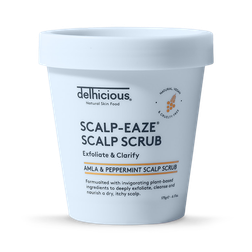
Delhicious
RRP £14.95
£13.45
You might notice your roots getting greasy more quickly, your hair feeling heavy or coated or visible residue around your scalp. But flakes don’t automatically mean build-up. Dandruff and dry or irritated scalps can look similar – and scrubbing harder isn’t necessarily the answer.5
What is scalp exfoliation?
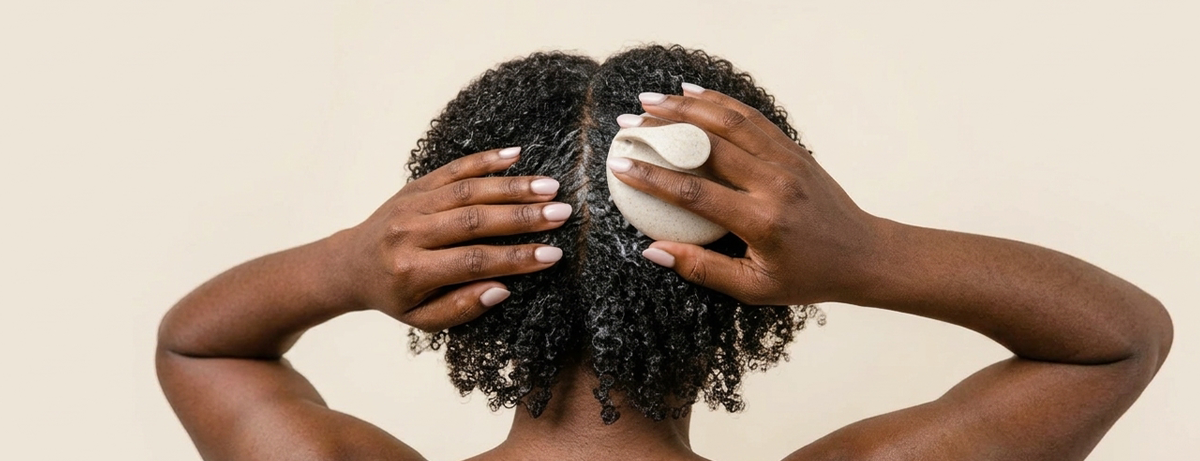
You exfoliate your face, maybe your body gets a scrub now and then – but what about your scalp? Scalp exfoliation is all about helping remove dead skin cells, excess oil and product build-up from the surface of your scalp.1,6 It can be a useful extra step when your usual shampoo isn’t quite getting to the bottom of that coated, congested feeling – but, just like facial exfoliation, more isn’t always better and there are two main ways to do it.
Physical scalp exfoliation
This is the hands-on option. Physical exfoliators use things like fine particles or a specially designed scalp brush to help loosen and lift away build-up as you massage them over the scalp.7 The key word here is gentle. Your scalp doesn’t need an aggressive scrub-down, so follow the product instructions and avoid scratching at it with your nails.
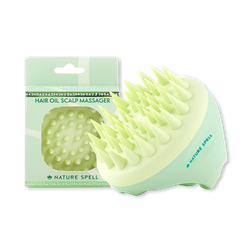
Nature Spell
£7.00
Chemical scalp exfoliation
No scrubbing required. Chemical scalp exfoliators use ingredients such as salicylic acid to help loosen and remove dead skin cells and scales from the scalp.8 The exact ingredients and how often you should use them will vary from product to product, so always follow the label rather than assuming your scalp needs daily exfoliation.
And which is better? There’s no universal winner. The right choice comes down to your scalp and the type of build-up you’re dealing with. Whichever route you choose, think reset, not scrub within an inch of its life.
How to exfoliate your scalp
Exfoliating your scalp or a scalp cleanse doesn’t need to involve a complicated 10-step routine. The aim is simply to shift stubborn build-up without irritating your scalp in the process.
Start before you shampoo
If there’s a lot of product or oil hanging around, try a pre-wash scalp cleansing treatment. Depending on the product, this can help loosen flakes and build-up before you step into the shower – just follow the instructions on the label.9
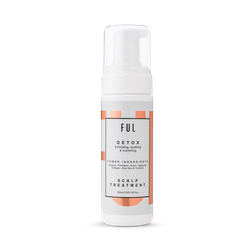
FUL
£30.00
Add some scalp exfoliation: if your scalp needs a thorough clean, reach for a scalp scrub or chemical exfoliant designed specifically for the job. Be gentle and resist the temptation to scrub harder in the hope of getting it ‘extra clean’.
Give your roots some shampoo attention
Rather than concentrating shampoo on your lengths, work it gently into your scalp with your fingertips. Spend a little time massaging it around the areas where product tends to accumulate, then rinse thoroughly. An occasional clarifying shampoo can give your usual wash a little more cleansing power and help remove stubborn product residue.3
Don’t overdo the deep clean
Your scalp doesn’t need to feel squeaky-clean to be clean. How often you need a deeper cleanse will depend on your hair, scalp and the products you use, so take your cue from how yours feels and always follow the instructions on your scalp products.
And if your scalp is sore, broken, very itchy or persistently flaky, put down the scrub. What looks like build-up can sometimes be something else, so it’s worth getting advice from health professional rather than repeatedly exfoliating it.
What are the benefits of a clarifying shampoo?
Think of your everyday shampoo as the regular clean and a clarifying shampoo as the occasional thorough clean. One of the main clarifying shampoo benefits is its ability to tackle more stubborn residue left behind by products.3 So, if your hair still feels coated, greasy or weighed down even after washing, switching in a clarifying shampoo could help give your roots a fresher start.
That doesn’t mean stronger is always better, though. Clarifying shampoos are designed for an extra cleanse, so how often you use one will depend on the formula and your hair and scalp type. If your hair is dry, curly, coily, coloured or chemically treated, you may find you need to use one less often.10
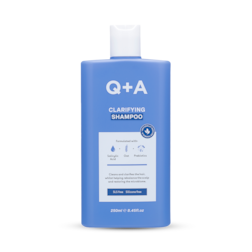
Q+A
£7.50
When should you avoid scalp exfoliation?
Sometimes your scalp needs some love and other times it just wants to be left alone. If your scalp is already sore, inflamed, broken or particularly sensitive, skip the scrub or exfoliating acids until it’s settled. The same goes if you’ve scratched your scalp and caused broken skin – exfoliating over it could lead to further irritation.11
And don’t assume every flake needs exfoliating away. Persistent itching, redness, scaling or flaking could be linked to a scalp condition rather than simple product build-up, so repeatedly scrubbing at it may make things feel worse.5 If you’re not sure what’s causing your symptoms or they aren’t improving, speak to a pharmacist, GP or dermatologist.
Finally, pay attention to what your scalp is telling you. If exfoliating leaves it feeling tight, sore or uncomfortable, dial things back. A good scalp cleanse should leave you feeling fresh, not freshly scrubbed raw.
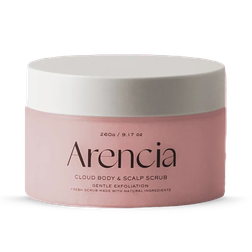
ARENCIA
£19.99
£16.99
Scalp exfoliation FAQs
Start with a thorough shampoo, concentrating the product on your scalp rather than your lengths and rinsing well. For more stubborn product, oil or dry-shampoo residue, a clarifying shampoo or scalp cleansing treatment can help give your roots more of a clean. You could also add gentle scalp exfoliation when needed.
Not in the literal sense – your scalp doesn’t need toxins ‘drawn out’ of it. Apple cider vinegar is sometimes used in haircare to help cleanse the scalp and remove residue, but pouring undiluted vinegar straight onto your scalp could cause irritation. If you want to try it, choose a hair or scalp product formulated with apple cider vinegar rather than reaching for the bottle in your kitchen cupboard.
There’s no one-size-fits-all schedule. How often you need scalp exfoliation depends on your scalp, the products you use and the exfoliator itself, so follow the product instructions rather than automatically adding it to every wash day. If your scalp starts feeling dry, tight, sore or irritated, that’s a sign to cut back.
The final say
If your roots are feeling coated or your usual wash isn’t quite doing the job, a little extra scalp attention could be worth adding to your next wash day – but start gently. You don’t need to exfoliate, scrub and deep-clean all at once to get that fresh feeling. And if your scalp is happy with your usual routine? There’s no need to ‘detox’ it just because everyone else is.
Up next: discover tips on how to support your hair growth journey or take a look at some of our favourite vitamins for hair.
Disclaimer – This article provides informational advice and is not a substitute for medical care. Working with experts for accuracy, we take great care to ensure the information is up-to-date and relevant. However, you should always consult your GP or healthcare professional before using supplements or alternative products, particularly if you have medical conditions or are under supervision.
1 CDC. Healthy Habits: Hair and Scalp Hygiene [Internet]. Water, Sanitation, and Environmentally Related Hygiene (WASH). 2024 [cited 2026 Sept 28]. Available from: https://www.cdc.gov/hygiene/about/hair-and-scalp-hygiene.html
2 Paul JK, Azmal M, Talukder OF, Haque ASNB, Meem M, Ghosh A. Unlocking the secrets of the hair microbiome: From scalp health to therapeutic advances. The Microbe [Internet]. 2025 Apr 23 [cited 2026 Sept 7];7:100353. Available from: https://www.sciencedirect.com/science/article/pii/S2950194625001219
3 Draelos Z. Essentials of hair care often neglected: Hair cleansing. International Journal of Trichology. 2010;2(1):24.
4 Chen K, Lau H, Xu S, Yu A, Wang S, Biehle S, et al. Physiological Characteristics of Scalp Skin With High Sebum Production and the Impacts of Shampoo Cleansing [Internet]. Vol. 32, Skin research and technology : official journal of International Society for Bioengineering and the Skin (ISBS) [and] International Society for Digital Imaging of Skin (ISDIS) [and] International Society for Skin Imaging (ISSI). England; 2026 [cited 2026 Sept 7]. p. e70376. Available from: https://pubmed.ncbi.nlm.nih.gov/42584365/
5 Seborrhoeic dermatitis [Internet]. Bad.org.uk. 2023 [cited 2026 Sept 28]. Available from: https://www.bad.org.uk/pils/seborrhoeic-dermatitis
6 Oliwia Kalinowska, Maślana J, Gilreath A. The Treatment and Evaluation of Dandruff and Scalp Erythema with Fermented Salix purpurea Bark Extract. Clinical Cosmetic and Investigational Dermatology [Internet]. 2025 Mar 1 [cited 2026 Sept 28];Volume 18:639–48. Available from: https://pmc.ncbi.nlm.nih.gov/articles/PMC11930920/
7 Rodan K, Fields K, Majewski G, Falla T. Skincare Bootcamp: The Evolving Role of Skincare. Plastic and Reconstructive Surgery - Global Open [Internet]. 2016 Dec [cited 2026 Sept 28];4(12):e1152. Available from: https://www.ncbi.nlm.nih.gov/pmc/articles/PMC5172479/
8 Squire R, Goode K. A randomised, single-blind, single-centre clinical trial to evaluate comparative clinical efficacy of shampoos containing ciclopirox olamine (1.5%) and salicylic acid (3%), or ketoconazole (2%, Nizoral ® ) for the treatment of dandruff/seborrhoeic dermatitis. Journal of Dermatological Treatment. 2002 Jan;13(2):51–60.
9 Mehta R, Jain D, Prabhakaran PN, Kumari D, Padmanabhan V, Bhui K, et al. A New Purpose to Old Arsenal: Exploring the Safety and Efficacy of a New Regimen Comprising a Combination of Chlorhexidine Gluconate and Cetrimide for Seborrheic Dermatitis Treatment in a Randomized Placebo-Controlled Clinical Trial [Internet]. Vol. 16, Cureus. United States; 2024 [cited 2026 Sept 28]. p. e70138. Available from: https://pubmed.ncbi.nlm.nih.gov/39463503/
10 Gavazzoni Dias MFR. Pro and Contra of Cleansing Conditioners. Skin Appendage Disorders. 2018 Oct 26;5(3):131–4.
11 Emilly Neves Souza, Anzai A, Oliveira C, Sakai Y, Romiti R. Sensitive Scalp and Trichodynia: Epidemiology, Etiopathogenesis, Diagnosis, and Management. Skin appendage disorders. 2023 Jan 1;9(6):407–15.
12 Luu LA, Flowers RH, Kellams AL, Zeichner S, Preston DC, Zlotoff BJ, et al. Apple cider vinegar soaks [0.5%] as a treatment for atopic dermatitis do not improve skin barrier integrity. Pediatric Dermatology. 2019 July 22;36(5):634–9.


