 Track an order
 Buy It Again
 Favourites
 Manage account
 Rewards
 Subscriptions
 Find a store
 Help centre
Beyond bathtime: here's how to use Epsom salts

Written byH&B editorial team

Reviewed byPatille Joy Madaghjian
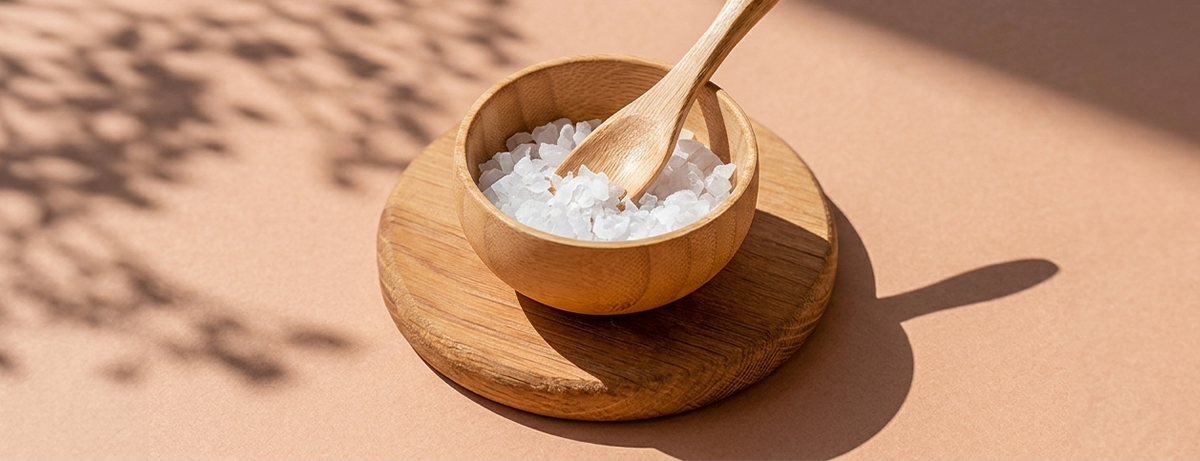
Magnesium salts for baths, foot soaks and... watering your plants? We break down the science to see if Epsom baths are worth their salt
Summary
1What is Epsom salt and how does it work?
Epsom salt is a naturally occurring salt made of magnesium sulphate – magnesium, oxygen and sulphur.
2What is Epsom salt used for?
Not sure what to do with that pack in your bathroom cupboard? Great news: it’s pretty versatile.
3What are the potential benefits of Epsom salt?
There isn’t enough evidence to say for sure that Epsom salts are useful for improving skin health... but many people find them a relaxing addition.
Salt’s almost certainly got a place in your kitchen cupboard... but what if you want to shake things up? Epsom salt is the kind you’d add to a bath after a long day, and it’s definitely not for sprinkling into your dinner. But there’s more to it than just bathtime, so here are some other ways to use Epsom salt and add something extra to your routine...
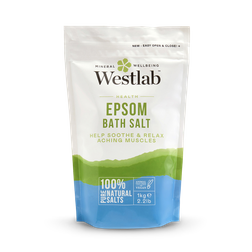
Westlab
RRP £6.00
£4.02
£4.02/1 kg
What is Epsom salt and how does it work?
Epsom salt is a naturally occurring salt made of magnesium sulphate – magnesium, oxygen and sulphur. It’s different to the salt you’d use in cooking as it's got a different chemical makeup, plus we wouldn't recommend eating it. It was discovered in 1618 in Epsom, Surrey – unsurprisingly where it gets its name.1 Centuries later, it’s used as alternative care and relaxation.
Epsom salt’s main appeal is its magnesium content: magnesium is an essential mineral and, in our diet, plays a role in processes from normal muscle function to electrolyte balance and the reduction of tiredness and fatigue.2,3,4 That’s not to say it has all these benefits in our baths, though (more on that later).
What is Epsom salt used for?
Not sure what to do with that pack in your bathroom cupboard? Great news: it’s pretty versatile. You should follow the instructions on your individual bathing salts’ packaging but here are a few ideas to get you started...
1. You can bathe in it
Soaking away in an Epsom salt bath is thought to soothe tired muscles – ideal after a long day or an intense workout. You might have heard that the magnesium in Epsom salts is absorbed into our skin or blood, or that it supports muscle recovery in the same way that dietary magnesium does – but there isn’t enough concrete evidence to suggest these are true.5 Whether or not you find it helps you, it makes a super-simple way to wind down – who doesn’t love a warm bath?
2. You can soak your feet in it
Another popular thing to do with Epsom salt is to create an Epsom salt foot soak in your bath or in a bowl of warm water. Simply add your salts and soak away for at least 10 minutes – any less is hardly a wind-down!
Again, there’s not enough concrete evidence to say that Epsom salt soaks are beneficial for feet or that the magnesium is well absorbed into the body.5 But a warm soak sounds tempting after a long day on your feet and is a great opportunity to practice other foot care like removing dry skin on your feet or keeping your nails in check. Depending on which salts you choose, you can pick from added botanical ingredients, essential oils or vitamins too. Lavender salt soak, anyone?
3. You can water your plants with it
Yep – Epsom salts can be beneficial for your plants. Yellowing leaves (chlorosis) may be a sign of magnesium deficiency in plants, which Epsom salts are rich in.6 According to the RHS, you can apply Epsom salts at 30g per square metre in light, free draining soils for long-term improvement.6 For short-term improvement, dilute Epsom salts at 20g per litre of water. Apply by spraying onto plants or use a watering can on leaves two or three times a fortnight.6
What are the potential benefits of Epsom salt?
There isn’t enough evidence to say for sure that Epsom salts are useful for improving skin health, increasing magnesium absorption in the body or having any physical effect on muscles. But many people find them a relaxing addition to a warm bath or foot soak. It might be that the routine of a pamper evening – the warm water, time alone and relaxing atmosphere – plays more of a role in your relaxation than the magnesium itself. But if you find that Epsom salts work for you and you enjoy using them, no problem.
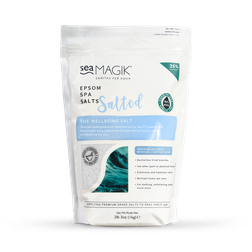
Sea Magik
£6.50
£6.50/1 kg
Epsom salt FAQs
If we’re talking about magnesium bath salts to provide any medical benefit or affect our skin and muscle health, then no – there isn’t enough evidence to suggest they increase blood magnesium levels or support our muscles beyond the normal relaxation you’d get from a warm bath. But if you enjoy using Epsom salts and you find they help you wind down, they’re fine to use.
There isn’t a strict limit on how often to use Epsom salts – generally it’s OK to use them as you like. However, we recommend not using them more than two or three times a week as very frequent use might dry out the skin.7 Check the label on any products you use and follow their instructions.
Not strictly. There’s not enough concrete evidence to suggest that Epsom salt soaks have a significant effect on relieving muscle aches, aiding sports injuries or relaxing sore muscles. However, a warm bath with Epsom salts can feel relaxing and give you a moment to put those achy feet up.
No, Epsom salt is not safe to consume.8 You shouldn’t worry if you accidentally take in a bit of your bathwater, but it’s not to be eaten or sprinkled on food in the same way as table salt.
General advice suggests around one to two cups of Epsom salt per full bath, but you should follow the instructions on the individual product you use.
The final say
Phew... after all that, you’re due a pamper night. The science on Epsom salts is still emerging, but if they leave you feeling more renewed, then we say go full steam ahead. For nutritionist-backed advice on soothing tired muscles, read our best ways to recover after working out or crack some magnesium myths in our ‘true or false’ guide...
Disclaimer – This article provides informational advice and is not a substitute for medical care. Working with experts for accuracy, we take great care to ensure the information is up-to-date and relevant. However, you should always consult your GP or healthcare professional before using supplements or alternative products, particularly if you have medical conditions or are under supervision.
1. Vats S et al. Analysing the Therapeutic Potential of Epsom Salt across Multiple Human Physiological Systems: A Comprehensive Review. Journal of Clinical and Diagnostic Research [Internet]. 2024 Sep [cited 2026 Jun 16]; 18(9). Available from: https://www.jcdr.net/article_fulltext.asp?issn=0973-709x&year=2024&month=September&volume=18&issue=9&page=KE01-KE03&id=19979
2. European Commission. Food and Feed Information Portal Database [Internet]. European Commission [cited 2026 Jun 16]. Available from: https://ec.europa.eu/food/food-feed-portal/screen/health-claims/eu-register/details/POL-HC-6405
3. European Commission. Food and Feed Information Portal Database [Internet]. European Commission [cited 2026 Jun 16]. Available from: https://ec.europa.eu/food/food-feed-portal/screen/health-claims/eu-register/details/POL-HC-6402
4. European Commission. Food and Feed Information Portal Database [Internet]. European Commission [cited 2026 Jun 16]. Available from: https://ec.europa.eu/food/food-feed-portal/screen/health-claims/eu-register/details/POL-HC-6401
5. Gröber U, Werner T, Vormann J, Kisters K. Myth or Reality—Transdermal Magnesium? Nutrients [Internet]. 2017 Jul 28 [cited 2026 Jun 16]; 9(8): 813. Available from: https://www.ncbi.nlm.nih.gov/pmc/articles/PMC5579607/
6. RHS. Nutrient deficiencies [Internet]. RHS [cited 2026 Jun 16]. Available from: https://www.rhs.org.uk/prevention-protection/nutrient-deficiencies
7. Great Ormond Street Hospital (GOSH). Salt soaks for epidermolysis bullosa (EB) [Internet]. GOSH [reviewed 2024 Dec 1; cited 2026 Jun 16]. Available from: https://www.gosh.nhs.uk/conditions-and-treatments/conditions-we-treat/salt-soaks-for-epidermolysis-bullosa-eb/
8. Milne H, Dean P, Hughes M. Deliberate overdose with Epsom salts. BMJ Case Rep [Internet]. 2009 Apr 20 [cited 2026 Jun 16]. Available from: https://pmc.ncbi.nlm.nih.gov/articles/PMC3030276/
Related to this article


