20% off £40 or 15% off £30
 Track an order
 Buy It Again
 Favourites
 Manage account
 Rewards
 Subscriptions
 Find a store
 Help centre
The rise of rosehip oil: benefits, uses and expert tips

Written byJodi M Johnson

Reviewed byHeeral Tomlinson

Rosehip oil is having a moment. From TV talk to skincare routines everywhere, discover why this nutrient-rich facial oil is back in the spotlight with our expert
Summary
1What is rosehip oil?
Rosehip oil (sometimes called rosehip seed oil) is a plant oil made by cold pressing the seeds of rosehip fruit, most commonly from Rosa canina.
2Rosehip oil benefits for skin
Rosehip oil is known for its ability to help lock in moisture – it's widely used as an emollient, meaning it helps soften and smooth the skin.
3How to use rosehip oil in your skincare routine
Rosehip oil is commonly applied as part of a daily skincare routine, either on its own or layered with other products.
Rosehip oil has long been a favourite in natural skincare, but recently it's seen a renewed surge in interest after appearing on The Apprentice and across social media skincare conversations. Extracted from the seeds of rosehip fruit, rosehip oil is rich in essential fatty acids, antioxidants and naturally occurring vitamins that may help support healthy-looking skin.
It's often used for nourishing dry skin, supporting the skin barrier and helping the appearance of dull or uneven-looking skin. So, if you're wondering what rosehip oil does, if rosehip oil is good for skin or how to use rosehip oil for your face, our expert, Olivia Rosenvinge, is here to share her expert tips.
What is rosehip oil?
“Rosehip oil (sometimes called rosehip seed oil) is a plant oil made by cold pressing the seeds of rosehip fruit, most commonly from Rosa canina,” says Olivia.1,2 Unlike rose essential oil, which is extracted from rose petals, rosehip oil comes from the fruit and seeds left behind after a rose has flowered. “The resulting oil is naturally rich in skin-conditioning nutrients, including essential fatty acids, antioxidants and other bioactive compounds that researchers continue to investigate.”2
Why is rosehip oil trending?
Interest in rosehip oil has increased recently following discussions on The Apprentice, where the ingredient was highlighted as part of a skincare business concept. But beyond the TV spotlight, rosehip oil's popularity reflects a wider skincare trend towards simple, ingredient-led routines.
Many people are looking for multifunctional ingredients that can help support hydration, barrier function and overall skin appearance without overly complicated routines. Its combination of naturally occurring fatty acids, antioxidants and vitamins has made rosehip oil a popular choice for those seeking a more minimalist approach to skincare.2
What nutrients are found in rosehip oil?
“One reason rosehip oil has attracted attention in skincare research is its naturally occurring fatty acid profile and antioxidant content,” says Olivia. “Studies have identified linoleic acid as one of its major components, alongside other naturally occurring compounds that may help support overall skin health.”3,4
Essential fatty acids
Rosehip oil contains omega-6 (linoleic acid) and omega-3 (alpha-linolenic acid) fatty acids. These essential fatty acids help support the skin barrier – the outer layer of skin responsible for helping retain moisture and protecting against environmental stressors.5
Antioxidants
Antioxidants are compounds that help protect the skin from oxidative stress caused by factors such as pollution and UV exposure (though rosehip oil isn’t a substitute for suncream).6 Rosehip oil naturally contains antioxidant compounds including carotenoids, polyphenols and tocopherols, which may help support overall skin appearance.7
Vitamin A compounds
Rosehip oil contains naturally occurring vitamin A-related compounds,2 which are often associated with supporting skin renewal and helping maintain smooth-looking skin.8
Vitamin C
Rosehips themselves are known to contain vitamin C. While the fruit is naturally rich in this nutrient, levels present in rosehip seed oil can vary depending on processing methods and formulation.7
Rosehip oil benefits for skin
May help support skin hydration
One of the most well-known benefits of rosehip oil for skin is its ability to help lock in moisture.2 “Rosehip oil is widely used as an emollient, meaning it helps soften and smooth the skin,” says Olivia. “Its fatty acid content may support the skin barrier, which plays an important role in maintaining moisture levels and reducing water loss.”1,2
Can help support the skin barrier
The skin barrier plays an important role in keeping skin hydrated and resilient.9 Because rosehip oil contains essential fatty acids, it’s commonly used in skincare routines focused on maintaining skin hydration and barrier function, particularly during colder weather or periods of dryness.
May help improve the appearance of dull skin
Rosehip oil is often associated with a healthy-looking glow. Its combination of moisturising fatty acids and antioxidant compounds may help the appearance of dull or tired-looking skin, leaving skin looking more radiant.
Can help the appearance of uneven skin tone
Rosehip oil is frequently included in products designed to support a more even-looking complexion. While it's not a treatment for pigmentation concerns, regular use may help improve the overall appearance and texture of skin.2
May help support mature-looking skin
As skin naturally changes with age, hydration and barrier support become increasingly important. Rosehip oil is often used in skincare routines for mature skin because of its nourishing properties and naturally occurring antioxidant content.
“However, although rosehip oil is often promoted as part of healthy-ageing skincare routines, researchers note that high-quality human studies remain limited,” says Olivia. “Current evidence suggests it may help support skin appearance, but larger clinical trials are needed to better understand its effects.”1
Can help the appearance of post-blemish marks and scars
“Much of the scientific interest in rosehip oil centres on wound healing and scar appearance. Early findings have been encouraging, with some studies exploring whether rosehip oil may help improve the appearance of scars,” says Olivia. “However, researchers emphasise that more robust human studies are needed before firm conclusions can be drawn.”1,4 While it shouldn't be viewed as a treatment, its moisturising and conditioning properties may help support smoother-looking skin over time.
Can rosehip oil help support the skin barrier?
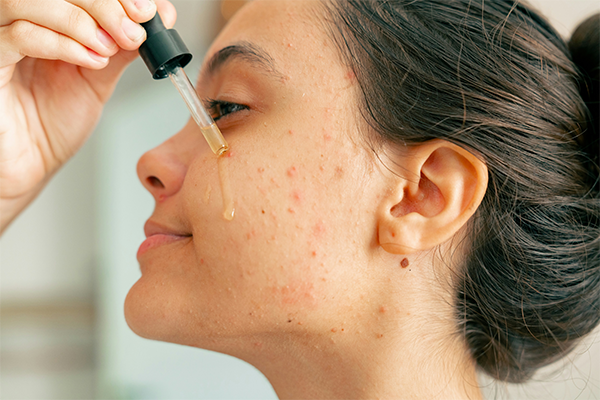
Potentially, yes. The skin barrier relies on lipids, including essential fatty acids, to function effectively.10 Rosehip oil contains linoleic and alpha-linolenic acids, which may help support the skin's natural barrier and improve moisture retention. A cared-for skin barrier can help skin feel more comfortable, hydrated and resilient to everyday environmental stressors.11
Is rosehip oil suitable for oily or acne-prone skin?
Despite being an oil, rosehip oil is often considered lightweight compared with some richer facial oils. It contains a high proportion of linoleic acid and is frequently used by people with break-out prone skin who want additional hydration without a heavy feel.
However, everyone's skin is different. If you have blemish or break-out prone skin, it's best to introduce any new skincare product gradually and monitor how your skin responds. It's important to note that rosehip oil is not a treatment for acne and should not be considered a cure for breakouts.
Who is rosehip oil best for?
Rosehip oil may help support hydration and reduce feelings of dryness by helping to reinforce the skin barrier.
Its nourishing properties can help the appearance of tired-looking skin and contribute to a healthy-looking glow.
Rosehip oil is often used in routines focused on hydration, skin comfort and maintaining smooth-looking skin.
Many people find rosehip oil gentle and easy to incorporate into a simple skincare routine, although patch testing is always recommended.
Some people with blemish-prone skin enjoy rosehip oil because of its lightweight feel and fatty acid content, but individual experiences may vary.
How to use rosehip oil in your skincare routine
“Rosehip oil is commonly applied as part of a daily skincare routine, either on its own or layered with other products. A few drops can be applied directly to the skin or mixed with a moisturiser, depending on personal preference,” says Olivia. “As with many skincare ingredients, consistency is likely to be more important than quantity, and a small amount used regularly is often enough.” A simple routine could look like:
- cleanser
- hydrating serum
- rosehip oil (two–three drops)
- moisturiser
- SPF (morning)
Are there any side effects of rosehip oil?
Rosehip oil is generally well tolerated, but some people may experience irritation or sensitivity. Although rosehip oil is not generally associated with increased sun sensitivity, daily SPF remains an important part of any skincare routine. Before using rosehip oil on your face:
- carry out a patch test on a small area of skin
- introduce it gradually into your routine
- stop use if irritation occurs
Rosehip oil FAQs
Rosehip oil works well both morning and night, however many people prefer to use facial oils in the evening as part of their overnight skincare routine. If you prefer using it in the morning, a few drops are usually enough – just follow with sunscreen.
Rosehips naturally contain vitamin C, although the amount present in rosehip seed oil can vary depending on how the oil is produced and processed.2
Rosehip oil is often used on areas with uneven skin texture or post-blemish marks. While it's not a treatment for scarring, its moisturising properties may help support smoother-looking skin and improve overall skin appearance over time.2
The final say
Rosehip oil remains one of skincare's most talked-about natural ingredients for good reason. Rich in essential fatty acids and antioxidants, it may help support hydration, skin barrier function and overall skin appearance. While it's not a miracle ingredient, its versatility and gentle nature make it a popular addition to many skincare routines – particularly for those looking to support dry, dull or mature-looking skin with a simple, ingredient-led approach.
Want to take your skincare know-how even further? Dive into our K-beauty edit: Korean skincare worth the hype for the trends and techniques beauty lovers can't stop talking about or discover 10 collagen-friendly foods to add to your menu for simple ways to support your skin from the inside out.
Disclaimer – This article provides informational advice and is not a substitute for medical care. Working with experts for accuracy, we take great care to ensure the information is up-to-date and relevant. However, you should always consult your GP or healthcare professional before using supplements or alternative products, particularly if you have medical conditions or are under supervision.
1. Malachy Belkhelladi, Bougrine A. Rosehip extract and wound healing: A review. Journal of Cosmetic Dermatology. 2023 Aug 21;
2. Patricia D, Mihaiela Cornea-Cipcigan, Mirela Irina Cordea. Unveiling the mechanisms for the development of rosehip-based dermatological products: an updated review. Frontiers in pharmacology. 2024 Apr 11;15.
3. Aydin Acar C, Kiyak FG, Pehlivanoglu S, Yesilot S, Ozmen O. Phytotherapeutic evaluation of rosehip seed and olive oils on wound healing: evidence from L929 cell culture and in vivo VEGF/TGF-β analysis.
3 Biotech [Internet]. 2025 Sep;15(9):324. Available from: https://pubmed.ncbi.nlm.nih.gov/40900812/
4. Lei Z, Cao Z, Yang Z, Ao M, Jin W, Yu L. Rosehip Oil Promotes Excisional Wound Healing by Accelerating the Phenotypic Transition of Macrophages. Planta Medica [Internet]. 2019 May 1;85(7):563–9. Available from: https://pubmed.ncbi.nlm.nih.gov/30199901/
5. Balić A, Vlašić D, Žužul K, Marinović B, Bukvić Mokos Z. Omega-3 Versus Omega-6 Polyunsaturated Fatty Acids in the Prevention and Treatment of Inflammatory Skin Diseases. International Journal of Molecular Sciences. 2020 Jan 23;21(3).
6. Dunaway S, Odin R, Zhou L, Ji L, Zhang Y, Kadekaro AL. Natural Antioxidants: Multiple Mechanisms to Protect Skin From Solar Radiation. Frontiers in Pharmacology. 2018 Apr 24;9.
7. Negrean OR, Farcas AC, Nemes SA, Cic DE, Socaci SA. Recent advances and insights into the bioactive properties and applications of Rosa canina L. and its by-products. Heliyon [Internet]. 2024 May 15;10(9):e30816. Available from: https://pubmed.ncbi.nlm.nih.gov/38765085/
8. VanBuren CA, Everts HB. Vitamin A in Skin and Hair: An Update. Nutrients. 2022 Jul 19;14(14):2952.
9. Baker P, Huang C, Radi R, Moll SB, Jules E, Arbiser JL. Skin Barrier Function: The Interplay of Physical, Chemical, and Immunologic Properties. Cells [Internet]. 2023 Jan 1;12(23):2745. Available from: https://www.mdpi.com/2073-4409/12/23/2745
10. Berdyshev E. Skin Lipid Barrier: Structure, Function and Metabolism. Allergy, Asthma & Immunology Research. 2024;16(5):445.
11. Cécile Viodé, A. Rouquier, Céline Mias, Questel E, S. Bessou‐Touya, Duplan H. Specific protection of sensitive skin against environmental stress by maintenance and improvement of barrier function. Journal of The European Academy of Dermatology and Venereology. 2022 Mar 21;36(S5):13–20.
Related to this article


