20% off £40 or 15% off £30
 Track an order
 Buy It Again
 Favourites
 Manage account
 Rewards
 Subscriptions
 Find a store
 Help centre
The role of prebiotics: how do they support your gut?

Written byJenna Burke

Reviewed byH&B Regulatory Affairs
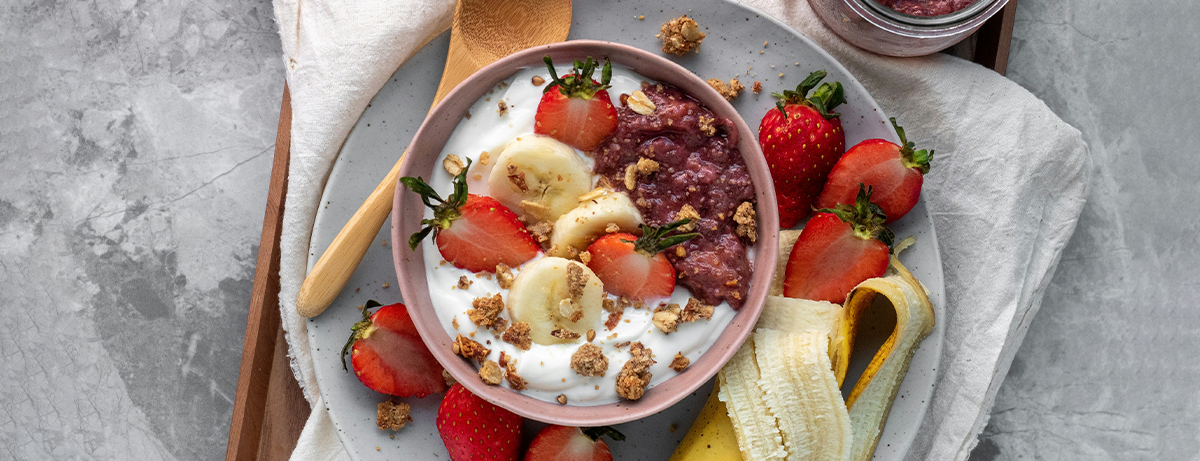
Your gut bacteria need the right fuel to thrive. Here’s how prebiotics quietly power your microbiome and how to add them to your plate in simple, everyday ways
Summary
1What are prebiotics
Prebiotics are fibres that act as fuel for the “good” gut bacteria in your gut.
2Where can I find prebiotics?
You’ll naturally find prebiotics in fibre-rich plant foods like onions, leeks, oats and beans.
3How do prebiotics work?
Helpful compounds are produced and certain bacteria can flourish, supporting gut health and beyond.
Your gut is home to trillions of microbes that may influence everything from digestion to how you feel day to day. Prebiotics help keep this inner ecosystem thriving by feeding the beneficial bacteria that support your microbiome. Let’s break down how they work, which foods contain them and easy ways to get more into your meal plan.
What are prebiotics and why do they matter?
Prebiotics are fibres that act as fuel for the 'good' gut bacteria in your gut. By nourishing these beneficial bacteria, they help support the balance of your gut microbiome. Scientifically, prebiotics are defined as substances that are selectively used by beneficial gut bacteria, leading to a health benefit.1 By helping these bacteria thrive, prebiotics can support digestive health and overall wellbeing.2,4
Where can I find prebiotics?
You’ll naturally find prebiotics in fibre-rich plant foods like onions, leeks, oats and beans – more on these later. They’re not only found naturally in foods though, as you can also find them in supplements or added to certain products, like infant formula.5,6 Most prebiotics are types of dietary fibre, but not all fibres are prebiotics. The key difference is that prebiotics have been shown to positively change the balance of bacteria in the gut in a way that delivers a specific health benefit.1
Why does this matter? Because your gut bacteria don’t just sit there. They help break down fibres, produce beneficial compounds, such as short-chain fatty acids and contribute to the overall balance of your microbiome, the ecosystem of microbes living in your digestive tract. 7-9 There’s no single quick fix for gut health. Supporting your microbiome starts with getting enough fibre and eating a wide variety of plant foods consistently.10,11
How do prebiotics work?
Think of prebiotics as fertiliser for your internal garden. When you eat prebiotic foods, they travel to your gut largely undigested. There, specific beneficial gut bacteria ferment them. During this process, helpful compounds are produced and certain bacteria can flourish, supporting gut health and beyond.9
Some of the most well-studied prebiotics include:4
- galactooligosaccharides (GOS) – found in dairy and legumes
- fructooligosaccharides (FOS) – found in onions, garlic and bananas
- oligofructose (OF) – found in chicory root, onions and wheat
- inulin (chicory root fibre) – often added to cereals and bars
- resistant starch – found in cooked-and-cooled potatoes, green bananas, oats and legumes12
- lactulose – sometimes used to support bowel regularity
The key is to start with a small amount and give your gut time to adjust. Having too much too quickly can cause gas or bloating – this is completely normal and will vary depending on the individual.
Prebiotic vs probiotic vs fibre – what’s the difference?
The terms are often used interchangeably but pre, pro and postbiotics and fibre aren’t the same.
- Prebiotics are the substrates that feed beneficial gut bacteria1
- Probiotics are live microorganisms that, when consumed in adequate amounts, provide a health benefit13
- Postbiotics are whole or parts of inactivated microbes with or without their components that have proven to provide a health benefit. Postbiotics are often confused with metabolites (beneficial compounds produced during fermentation), but in reality, metabolites by themselves do not qualify as postbiotics14
- Fibre is the part of plant foods your body can’t fully break down in the small intestine, but some of it can be broken down by bacteria in the large intestine10
What foods contain prebiotics?
If you’re wondering how to eat more prebiotic foods, the good news is that many everyday staples qualify.

Some of the easiest options include oats, beans, lentils and chickpeas, onions, garlic and leeks, bananas (especially slightly green ones), cooked-and-cooled potatoes and wholegrains. Adding more fibre-rich foods to your meals is one of the simplest ways to introduce prebiotics. You don’t need a complete diet overhaul, even small, everyday changes can help support your gut over time.
- Make your overnight oats with kefir instead of milk for an easy gut-friendly swap. Top with live Greek yoghurt, sliced banana and berries for a delicious boost of prebiotic fibres like beta-glucans and polyphenols that your gut microbes can use
- Or simply add a sprinkle of oat-based granola, banana and berries to a bowl of live Greek yoghurt for a quick, balanced start to the day
- Stir some lentils into your spaghetti bolognese. It adds texture, plant-based fibre and extra nourishment without changing the flavour too much
- Swap plain white rice for a wholegrain rice mix or brown rice in your stir fries, curries or grain bowls. Wholegrains naturally contain more fibre, helping to nourish your gut while keeping meals just as satisfying
- Pair your meal with a refreshing kombucha for an extra fermented twist
- Add a spoonful of kimchi to a grilled chicken grain bowl with brown rice or quinoa, cucumber, shredded carrots and roasted chickpeas. Finish with a drizzle of sesame oil and a squeeze of lime. It’s an effortless way to add tangy flavour and gut-friendly goodness. Why not add our delicious ancient grains recipe to your repertoire?
What are the potential benefits of prebiotics?
Prebiotics are most strongly linked with supporting:7,15,16
- a balanced gut microbiome
- digestive health
- bowel regularity (depending on the type)
Research is still uncovering how prebiotics may support the body beyond digestion. Early studies suggest they could help support immune health, aid mineral absorption, support steady energy and help you feel fuller after meals.17
It’s a promising area of science, but the effects can vary depending on the type of prebiotic and the individual – so it’s helpful, not a magic fix.
Do you need a prebiotic supplement?
Prebiotic supplements may be helpful in certain situations, but they aren’t essential for everyone. If you’re thinking about trying one, it’s a good idea to check that it’s suitable for you, especially if you have an existing digestive condition or are taking medication.
The gut microbiome is an exciting and fast-growing area of research, but the foundation is always your everyday diet. Supplements can complement a balanced approach, but they’re not a substitute for it. Focusing on whole foods that naturally provide fibre and polyphenols, like wholegrains, fruit, vegetables, nuts and seeds, is a great place to start. It’s about building habits that feel realistic and sustainable for you, rather than striving for perfection.
Prebiotics FAQs
Most people can benefit from increasing prebiotic foods as part of a balanced, fibre-rich diet. Those with low fibre intake may particularly benefit from gradually increasing prebiotic foods. If you have digestive conditions such as IBS, it’s best to seek personalised advice before significantly increasing certain fermentable fibres.
Fermented foods are foods that have been transformed by microbes such as bacteria or yeast. Examples include yoghurt, kefir, kimchi and sauerkraut. Not all fermented foods contain live probiotic strains, and not all qualify as probiotics, as strains must be proven to deliver a health benefit and be alive when consumed
Greek yoghurt can be a nutritious addition to your diet. As a fermented food, it’s made by adding live bacterial cultures to milk, which gives it its distinctive tangy flavour and thick texture.
It naturally provides protein and calcium, which contributes to normal digestive enzyme function. Some varieties also contain live cultures, which may help support a balanced gut microbiome. Choosing plain versions without added sugars and checking for 'live cultures' on the label can help you make an informed choice.
The final say
If you take one action this week, make it this: add one extra plant-based, fibre-rich food to your plate each day. It could be oats at breakfast, lentils in a soup or a banana and a handful of nuts as a snack. Small, consistent changes build a healthier gut environment over time.
Your gut bacteria are ready. They just need feeding. Curious to learn more? Discover how you can support gut health and the gut-brain axis.
Disclaimer – This article provides informational advice and is not a substitute for medical care. Working with experts for accuracy, we take great care to ensure the information is up-to-date and relevant. However, you should always consult your GP or healthcare professional before using supplements or alternative products, particularly if you have medical conditions or are under supervision.
1. Gibson, G.R., et al., Expert consensus document: The International Scientific Association for Probiotics and Prebiotics (ISAPP) consensus statement on the definition and scope of prebiotics. Nature Reviews Gastroenterology & Hepatology, 2017. 14(8): p. 491-502.
2. Bindels, L.B., et al., Towards a more comprehensive concept for prebiotics. Nature Reviews Gastroenterology & Hepatology, 2015. 12(5): p. 303-310.
3. Davani-Davari, D., et al., Prebiotics: Definition, Types, Sources, Mechanisms, and Clinical Applications. Foods, 2019. 8(3).
4. Gibson, G.R., et al., Dietary modulation of the human colonic microbiota: updating the concept of prebiotics. Nutrition Research Reviews, 2004. 17(2): p. 259-275.
5. Wiciński, M., et al., Human Milk Oligosaccharides: Health Benefits, Potential Applications in Infant Formulas, and Pharmacology. Nutrients, 2020. 12(1).
6. Dinleyici, M., et al., Functional effects of human milk oligosaccharides (HMOs). Gut Microbes, 2023. 15(1): p. 2186115.
7. Yoo, S., et al., The Role of Prebiotics in Modulating Gut Microbiota: Implications for Human Health. International Journal of Molecular Sciences, 2024. 25.
8. Dewulf, E.M., et al., Insight into the prebiotic concept: lessons from an exploratory, double blind intervention study with inulin-type fructans in obese women. Gut, 2013. 62(8): p. 1112.
9. den Besten, G., et al., The role of short-chain fatty acids in the interplay between diet, gut microbiota, and host energy metabolism. J Lipid Res, 2013. 54(9): p. 2325-40.
10. Louis, P., et al., Dietary fibre complexity and its influence on functional groups of the human gut microbiota. Proceedings of the Nutrition Society, 2021. 80(4): p. 386-397.
11. Singh, R.K., et al., Influence of diet on the gut microbiome and implications for human health. Journal of Translational Medicine, 2017. 15(1): p. 73.
12. Baptista NT, Dessalles R, Illner AK, Ville P, Ribet L, Anton PM, Durand-Dubief M. Harnessing the power of resistant starch: a narrative review of its health impact and processing challenges. Front Nutr. 2024;11:1369950. Available from: https://pmc.ncbi.nlm.nih.gov/articles/PMC10987757/
13. Hill, C., et al., The International Scientific Association for Probiotics and Prebiotics consensus statement on the scope and appropriate use of the term probiotic. Nature Reviews Gastroenterology & Hepatology, 2014. 11(8): p. 506-514.
14. Salminen, S., Collado, M.C., Endo, A., Hill, C., Lebeer, S., Quigley, E.M.M., Sanders, M.E., Shamir, R., Swann, J.R., Szajewska, H., Vinderola, G., 2021. The International Scientific Association of Probiotics and Prebiotics (ISAPP) consensus statement on the definition and scope of postbiotics. Nature Reviews Gastroenterology & Hepatology 18, 649-667.
15. EFSA Panel on Dietetic Products, N. and Allergies, Scientific Opinion on the substantiation of a health claim related to “native chicory inulin” and maintenance of normal defecation by increasing stool frequency pursuant to Article 13.5 of Regulation (EC) No 1924/2006. EFSA Journal, 2015. 13(1): p. 3951.
16. EFSA Panel on Dietetic Products, N. and Allergies, Scientific Opinion on the substantiation of health claims related to lactulose and decreasing potentially pathogenic gastro-intestinal microorganisms (ID 806) and reduction in intestinal transit time (ID 807) pursuant to Article 13(1) of Regulation (EC) No 1924/2006. EFSA Journal, 2010. 8(10): p. 1806.
17. Sanders, M.E., et al., Probiotics and prebiotics in intestinal health and disease: from biology to the clinic. Nat Rev Gastroenterol Hepatol, 2019. 16(10): p. 605-616.


