 Track an order
 Buy It Again
 Favourites
 Manage account
 Rewards
 Subscriptions
 Find a store
 Help centre


More than a third of men over 50 experience symptoms of prostate problems. From what you eat to how much you move, discover the everyday habits that may help support your prostate health
Summary
1What can you eat for a healthier prostate?
A varied, balanced diet that’s low in saturated fat and sugar but high in fibre is thought to be best for overall health.
2Diet and prostate health
Evidence is still evolving, but diets high in alcohol and certain ultra-processed foods may result in a higher risk of prostate conditions.
3Exercise and prostate health
Research suggests regular physical activity may be linked with better prostate health, alongside its wider benefits for physical and mental wellbeing.
Getting up for the loo again? A change in your toilet habits might be easy to brush off as ‘just getting older’, but your prostate could be part of the picture. Prostate changes become more common with age and they can sometimes affect how often or easily you pee.1,2 Age isn’t exactly something you can negotiate with but there are other parts of your health you have more say over.
Research is exploring how factors including diet and physical activity may be linked with prostate health.3 So rather than waiting until your prostate demands your attention, what can you do now? Here are the everyday habits worth having on your radar – and the symptoms you shouldn’t ignore.
Can diet support prostate health?
Alongside speaking to your doctor about any concerns, looking after your wider health matters too. The link between diet and prostate health is an ongoing area of research, with evidence around specific foods still developing. What we do know is that a varied, balanced diet that’s low in saturated fat and sugar and high in fibre can benefit overall health and may also play a role in supporting prostate health.3,4
A small number of studies have also focused on whether certain foods could be more effective at supporting your prostate health than others. From the humble tomato to a cup of green tea, here are three different foods that researchers are currently exploring in relation to prostate health:
Tomatoes
Tomatoes are a fantastic addition to a healthy diet and contain a powerful antioxidant called lycopene – in fact, it’s lycopene that gives most tomatoes their striking red colour.5,6 Some research has also explored whether lycopene may play a role in prostate health, although the evidence is mixed and more research is needed.7,8,9 The body absorbs lycopene much more easily once it’s been cooked – even more so when cooked with a little olive or coconut oil, as it’s fat-soluble.10 So, why not try making your own pasta sauce or roasting some tomatoes to go in a salad?
Cruciferous vegetables
Cruciferous vegetables are a family of veg which includes broccoli, cauliflower, cabbage, kale, sprouts, rocket and more.11 In some studies, researchers found that those who ate more cruciferous vegetables had a lower risk of prostate cancer than those who ate less.12,13 However, in other studies, it was made clear that more research and human trials were needed to assess whether cruciferous vegetables specifically can actually affect prostate health.14,15
Green tea
Already a green tea drinker? Your daily cuppa has caught researchers’ attention for more than its refreshing taste. Green tea contains plant compounds called polyphenols, including a group known as catechins, which are being studied for their potential role in prostate health. There are some interesting early findings. In one small study, men experiencing lower urinary tract symptoms were given a green and black tea extract for 12 weeks. Researchers reported improvements in some urinary symptoms and measures of quality of life.17
However, the study was small and used a concentrated tea extract – not simply a mug of green tea – so we can’t assume drinking green tea would have the same effect.
For now, think of green tea as something you can enjoy as part of a varied, balanced diet rather than a treatment for prostate symptoms. If you already like it, though? There’s no need to put the kettle away.
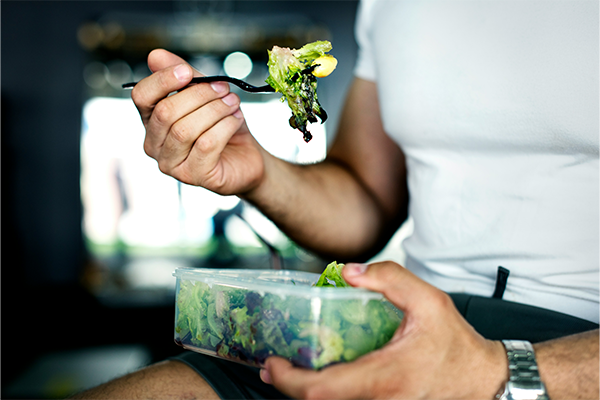
Diet and prostate health: what should you consider?
There's currently not enough strong evidence to pinpoint which foods are definitively harmful for your prostate, so more reliable studies are needed. However, the research available has highlighted that diets high in alcohol and some ultra-processed foods (UPFs) which contain high levels of salt or sugar may be linked to a higher risk of prostate conditions.
Alcohol
We know that drinking too much alcohol can affect our health. Over time, regularly drinking above recommended levels can increase your risk of problems with your heart and liver, as well as some types of cancer.18 When it comes to prostate health, the picture is less clear. Some studies suggest alcohol may increase the risk of prostate problems, including prostate cancer, while others haven’t found a clear link.19
What we do know is that alcohol is a diuretic, meaning it can make you urinate more often. Some research suggests this may irritate the bladder and make symptoms of prostate problems worse. The evidence is currently conflicting though and it needs further research.20,21 So, how much is too much? The NHS recommends drinking no more than 14 units of alcohol a week – around one and a half bottles of wine or six pints of average-strength beer.22,23
Too much red or processed meat
Eating a lot of red and processed meat has been linked with some health risks, particularly an increased risk of bowel cancer. When it comes to prostate cancer, however, the evidence is less clear.24 Red meat is a good source of protein, iron, zinc and B vitamins.24 So, instead of cutting it out completely, try limiting your intake – the NHS recommends around 70g of red or processed meat per day.24
Processed foods
Ultra-processed foods, including fast foods, can be loaded with unhealthy fats, salt, refined carbohydrates and added sugars, which aren’t great for your health when consumed in large quantities.25 However, it's important to remember that not all processed foods are unhealthy. Some processed foods, such as canned beans or frozen vegetables, can be part of a healthy diet. Processing can also help make foods safe, add additional nutrients or help them last longer. Research into ultra-processed foods and prostate health is still developing, so it’s the overall quality of your diet that matters most.
Is there a link between exercise and prostate health?
Exercising regularly is important for your overall health and there’s growing research to suggest that exercise is important for your prostate health too. In fact, some research has shown that men who exercised regularly were less likely to experience prostate problems than those who didn’t and may support prostate health in several ways, including:26-29
- helping with weight management: being overweight is linked to an increased risk of prostate problems
- reducing stress: psychological stress may also increase a man’s chances of developing prostate health issues
Three easy exercise tips to support prostate health
Getting more active can feel daunting, but the key is little and often. Try these tips below:
- aim for at least 20 minutes of exercise a day: whether it’s getting your daily steps in, taking part in an exercise class or lifting weights. Any exercise that raises your heart rate and makes you breathe faster counts
- try Kegel exercises: these exercises specifically focus on strengthening your pelvic floor muscles and may help with urinary problems31
- start slowly: if you’re not currently active, begin with short periods of exercise and gradually increase your time. Make small changes where you can, like taking the stairs or parking your car slightly further away from where you need to go
When to see your doctor about your prostate
If you’re experiencing symptoms like frequently urinating, difficulty urinating, blood in your urine or pain when urinating, it’s important to consult your doctor.1 You should also let your doctor know if there are prostate problems in your family history. Going for your checkups and talking openly to your doctor can help detect any possible problems early and result in more effective management.1
Prostate health FAQs
Yes, although more research is needed around specific foods and their link to prostate health. While there’s no specific ‘prostate-friendly diet’ eating a healthy, balanced diet may help support overall prostate health. Aim for a varied diet with plenty of fruit, vegetables and fibre, rather than relying on any one food.
There’s no specific food proven to treat an enlarged prostate, but research has explored whether diet may play a role in an enlarged prostate. Some studies have linked eating more vegetables with a lower risk, while ingredients such as lycopene – found in tomatoes – have also been studied. However, the evidence isn’t strong enough to recommend any one food for preventing or treating an enlarged prostate, so a varied, balanced diet remains the best approach.32
The final say
Your prostate gland might be small, but its health matters. You don’t need to overhaul your lifestyle overnight – regular exercise and a balanced diet rich in fruit, vegetables, wholegrains and lean sources of protein can all support your overall health as you age.
And if you notice any changes in your urinary habits or other possible prostate symptoms, speak to your doctor rather than waiting for them to go away. Want to know more about men’s health? Find out the seven symptoms men should never ignore or read everything you need to know about male hormones...
Disclaimer – This article provides informational advice and is not a substitute for medical care. Working with experts for accuracy, we take great care to ensure the information is up-to-date and relevant. However, you should always consult your GP or healthcare professional before using supplements or alternative products, particularly if you have medical conditions or are under supervision.
1. NHS. Enlarged prostate [Internet]. NHS [reviewed 2025 Apr 8; cited 2026 Sep 9]. Available from: https://www.nhs.uk/conditions/enlarged-prostate/
2. National Cancer Institute (NIH). Prostate – definition [Internet]. NIH [cited 2026 Sep 9]. Available from: https://www.cancer.gov/publications/dictionaries/cancer-terms/def/prostate
3. Matsushita M, Fujita K, Nonomura N. Influence of Diet and Nutrition on Prostate Cancer. Int J Mol Sci [Internet]. 2020 Feb 20 [cited 2026 Sep 9]; 21(4): 1447. Available from: https://pmc.ncbi.nlm.nih.gov/articles/PMC7073095/
4. UCSF Health. Nutrition and Prostate Cancer [Internet]. UCSF Health [cited 2026 Sep 9]. Available from: https://www.ucsfhealth.org/health-articles/nutrition-and-prostate-cancer
5. Duma M, Alsina I, Dubova L, Erdberga I. CHEMICAL COMPOSITION OF TOMATOES DEPENDING ON THE STAGE OF RIPENING. Chemical Technology [Internet]. 2015 Sep [cited 2026 Sep 9]; 66(1): 24-8. Available from: https://www.researchgate.net/publication/283776075_Chemical_composition_of_tomatoes_depending_on_the_stage_of_ripening
6. Britannica. Why are tomatoes red? [Internet]. Britannica [cited 2026 Sep 9]. Available from: https://www.britannica.com/story/why-are-tomatoes-red
7. Patel HRH, Elbakbak W, Bouhelal A, Müller S. Does Oral Lycopene Reduce Benign Prostate Enlargement/Hyperplasia (BPE/BPH)? Oncology and Cancer Case Reports [Internet]. 2016 [cited 2026 Sep 9]; 2:1. Available from: https://www.iomcworld.org/open-access/does-oral-lycopene-reduce-benign-prostate-enlargementhyperplasiabpebph-occrs-1000108.pdf
8. Wei MY, Giovannucci EL. Lycopene, Tomato Products, and Prostate Cancer Incidence: A Review and Reassessment in the PSA Screening Era. J Oncol [Internet]. 2012 May 28 [cited 2026 Sep 9]; 271063. Available from: https://pmc.ncbi.nlm.nih.gov/articles/PMC3368367/
9. Chen P et al. Lycopene and Risk of Prostate Cancer. Medicine (Baltimore) [Internet]. 2015 Aug 21 [cited 2026 Sep 9]; 94(33): e1260. Available from: https://pmc.ncbi.nlm.nih.gov/articles/PMC4616444/
10. Arballo J, Amengual J, Erdman JW Jr. Lycopene: A Critical Review of Digestion, Absorption, Metabolism, and Excretion. Antioxidants (Basel) [Internet]. 2021 Feb 25 [cited 2026 Sep 9]; 10(3): 342. Available from: https://pmc.ncbi.nlm.nih.gov/articles/PMC7996133/
11. EatRight.org. The Beginner’s Guide to Cruciferous Vegetables [Internet]. EatRight.org. [reviewed 2026 Aug 7; cited 2026 Sep 9]. Available from: https://www.eatright.org/food/food-groups/vegetables/the-beginners-guide-to-cruciferous-vegetables
12. Long J, Liu Z, Liang S, Chen B. Cruciferous Vegetable Intake and Risk of Prostate Cancer: A Systematic Review and Meta-Analysis. Urol Int [Internet]. 2023 [cited 2026 Sep 9]; 107(7): 723-33. Available from: https://pubmed.ncbi.nlm.nih.gov/37343525/
13. Ferreira PMP et al. Cruciferous Vegetables as Antioxidative, Chemopreventive and Antineoplasic Functional Foods: Preclinical and Clinical Evidences of Sulforaphane Against Prostate Cancers. Curr Pharm Des [Internet]. 2018 [cited 2026 Sep 9]; 24(40): 4779-93. Available from: https://pubmed.ncbi.nlm.nih.gov/30652644/
14. Ballon-Landa E, Parsons JK. Nutrition, physical activity, and lifestyle factors in prostate cancer prevention. Curr Opin Urol [Internet]. 2018 Jan [cited 2026 Sep 9]; 28(1): 55-61. Available from: https://pubmed.ncbi.nlm.nih.gov/29049045/
15. Zuniga KB, Chan JM, Ryan CJ, Kenfield SA. Diet and lifestyle considerations for patients with prostate cancer. Urol Oncol [Internet]. 2020 Mar [cited 2026 Sep 9]; 38(3): 105-17. Available from: https://pubmed.ncbi.nlm.nih.gov/31327752/
16. Heart Research Institute (HRI). Nutritional Benefits of Cruciferous Vegetables [Internet]. HRI [cited 2026 Sep 9]. Available from: https://www.hri.org.au/health/your-health/nutrition/nutritional-benefits-of-cruciferous-vegetables
17. Katz A et al. A green and black tea extract benefits urological health in men with lower urinary tract symptoms. Ther Adv Urol [Internet]. 2014 Jun [cited 2026 Sep 9]; 6(3): 89-96. Available from: https://pmc.ncbi.nlm.nih.gov/articles/PMC4003843/
18. NHS. The risks of drinking too much [Internet]. NHS [reviewed 2022 Oct 24; cited 2026 Sep 9]. Available from: https://www.nhs.uk/live-well/alcohol-advice/the-risks-of-drinking-too-much/
19. Macke AJ, Petrosyan A. Alcohol and Prostate Cancer: Time to Draw Conclusions. Biomolecules [Internet]. 2022 Feb 28 [cited 2026 Sep 9]; 12(3): 375. Available from: https://pmc.ncbi.nlm.nih.gov/articles/PMC8945566/
20. Palmer E et al. Alcohol Hangover: Underlying Biochemical, Inflammatory and Neurochemical Mechanisms. Alcohol and Alcoholism [Internet]. 2019 May [cited 2026 Sep 9]; 54(3): 196-203. Available from: https://academic.oup.com/alcalc/article-abstract/54/3/196/5420612?redirectedFrom=fulltext&login=false
21. Calogero AE, Burgio G, Condorelli RA, Cannarella R, La Vignera S. Epidemiology and risk factors of lower urinary tract symptoms/benign prostatic hyperplasia and erectile dysfunction. Aging Male [Internet]. 2019 Mar [cited 2026 Sep 9]; 22(1): 12-19. Available from: https://pubmed.ncbi.nlm.nih.gov/29392976/
22. NHS. Alcohol units [Internet]. NHS [reviewed 2024 Aug 27; cited 2026 Sep 9]. Available from: https://www.nhs.uk/live-well/alcohol-advice/calculating-alcohol-units/
23. Alcohol Change UK. Unit calculator [Internet]. Alcohol Change UK [cited 2026 Sep 9]. Available from: https://alcoholchange.org.uk/alcohol-facts/interactive-tools/unit-calculator
24. NHS. Meat in your diet [Internet]. NHS [reviewed 2024 May 1; cited 2026 Sep 9]. Available from: https://www.nhs.uk/live-well/eat-well/food-types/meat-nutrition/
25. NHS. Processed foods [Internet]. NHS [reviewed 2023 Jun 12; cited 2026 Sep 9]. Available from: https://www.nhs.uk/live-well/eat-well/how-to-eat-a-balanced-diet/what-are-processed-foods/
26. Platz EA et al. Physical activity and benign prostatic hyperplasia. Arch Intern Rev [Internet]. 1998 Nov 23 [cited 2026 Sep 9]; 158(21): 2349-56. Available from: https://pubmed.ncbi.nlm.nih.gov/9827786/
27. Cancer Research UK. Physical activity, weight and prostate cancer [Internet]. Cancer Research UK [reviewed 2025 Sep 11; cited 2026 Sep 9]. Available from: https://www.cancerresearchuk.org/about-cancer/prostate-cancer/practical-emotional-support/physical-activity
28. Dickerman BA et al. Weight change, obesity, and risk of prostate cancer progression among men with clinically localized prostate cancer. Int J Cancer [Internet]. 2017 Jun 8 [cited 2026 Sep 9]; 141(5): 933-44. Available from: https://pmc.ncbi.nlm.nih.gov/articles/PMC5518616/
29. National Institute of Diabetes and Digestive and Kidney Diseases (NIH). Prostatitis: Inflammation of the Prostate [Internet]. NIH [reviewed 2014 Jul; cited 2026 Sep 9]. Available from: https://www.niddk.nih.gov/health-information/urologic-diseases/prostate-problems/prostatitis-inflammation-prostate
30. NHS Better Health. How to be more active [Internet]. NHS Better Health [cited 2026 Sep 9]. Available from: https://www.nhs.uk/better-health/get-active/how-to-be-more-active/
31. Prostate Cancer UK. Pelvic floor muscle exercises [Internet]. Prostate Cancer UK [reviewed 2025 Apr; cited 2026 Sep 9]. Available from: https://prostatecanceruk.org/prostate-information-and-support/living-with-prostate-cancer/pelvic-floor-muscle-exercises
32. Kristal AR et al. Dietary patterns, supplement use, and the risk of symptomatic benign prostatic hyperplasia: results from the prostate cancer prevention trial. Am J Epidemiol [Internet]. 2008 Apr 15 [cited 2026 Sep 9]; 167(8): 925-34. Available from: https://pubmed.ncbi.nlm.nih.gov/18263602/
Related to this article


