 Track an order
 Buy It Again
 Favourites
 Manage account
 Rewards
 Subscriptions
 Find a store
 Help centre
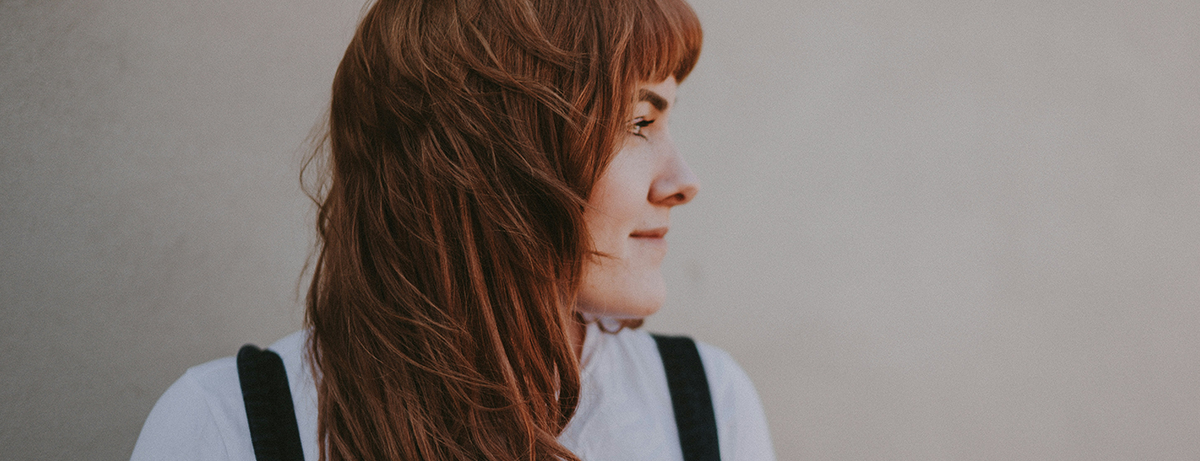
Think protein only powers your workouts? Its benefits go beyond the gym. From strength to shine, discover how eating enough can support your hair
Summary
1Why does hair need protein?
Hair is mostly made up of a protein called keratin, which is why you’ll normally see haircare treatment with keratin in.
2Keratin hair treatment, masks and more
A protein hair mask, a treatment with keratin or topical products can make hair feel smoother, less frizzy and add shine.
3Is ‘protein overload’ on hair real?
Some people report frequent use of protein-rich hair products leaves hair feeling stiff or brittle, but evidence isn't strong enough.
Has dry, brittle hair got you down? Are you struggling with breakage or finding it impossible to grow your strands past your shoulders? If you’re looking for ways to support your hair, here’s the secret: healthy hair starts from within.1 A balanced diet is one part of the puzzle when it comes to your locks – and that means getting enough of all the nutrients you need, including protein.1 Whilst there’s no one single food that equals healthy hair – let’s talk about protein for hair and which protein-rich foods may help your hair.
Why does hair need protein?
Hair is mostly made up of a protein called keratin, which is why you’ll normally see haircare treatments with keratin in.1,2 Sounds like you should eat more keratin then, right? If only it were that simple. Your body can’t absorb most keratin from food because it can’t break it down.2 Instead, your body builds all the keratin it needs from the amino acids found in the protein you eat.2
Keratin production isn’t the only reason your hair needs protein, though. Proteins in your diet are made up of building blocks called amino acids.3 These amino acids are used to make the proteins your body needs to survive, including those that give the skin and hair their structure.1,3
Keratin hair treatment, masks and more
From a protein hair mask to a glossy salon treatment with keratin, topical protein products can make hair feel smoother, less frizzy and add temporary shine. But here’s the important distinction: they don’t work in the same way as the protein you eat. Dietary protein is needed for normal hair growth, while topical treatments work on the appearance and feel of the hair you already have.4
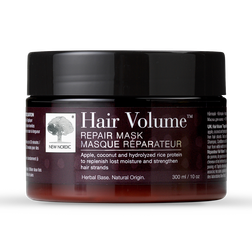
New Nordic
£30.85
£102.83/1 l
Treatments that combine keratin and protein, bond-building formulas, conditioners or even a protein spray for hair are designed to coat or temporarily support the hair fibre and appearance. They may help soften the look of split ends, add shine and make strands feel better, but they can’t feed the follicle or directly trigger new growth.
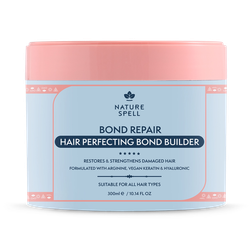
Nature Spell
£8.00
£6.40
£21.33/1 l
You might also have seen buzzy terms like ‘hair growth peptides’ or ‘hair and collagen’ popping up in the beauty space. These ingredients are often marketed as strengthening or smoothing heroes but in topical haircare, their effects are mostly cosmetic. Think of them as styling support for the outside of the strand, rather than nutrition for the root.
Is ‘protein overload’ on hair real?
You've probably also seen claims on social media that too much protein can make hair dry or brittle – rather like uncooked spaghetti that snaps instead of bends. Some people report that frequent use of protein-rich hair products leaves their hair feeling stiff or brittle, which is often described as ‘protein overload’. For now, though, the evidence isn't strong enough to confirm whether that's really the case.
The best approach? Balance. Occasional protein-based preparations and formulations may help tame frizz or improve the look of your hair but hydration and moisture are still essential.
What does protein do for hair?
Protein provides the amino acids needed to produce keratin, the structural protein that makes up hair, playing a vital role in both growth and strength.1 So, when you’re not getting enough, your hair may be affected because the body prioritises essential functions over hair growth. A severe protein deficiency can contribute to hair thinning and even hair loss.1 One type of hair loss, known as telogen effluvium (TE), can happen when the body isn’t getting enough protein, causing more hairs than usual to enter the shedding phase.5 Protein-rich foods also provide important nutrients that support healthy hair, including B vitamins – low levels of certain B vitamins have also been associated with hair loss.5,6
One B vitamin in particular, biotin, is closely linked to protein metabolism (which is how your body breaks it down).6 Biotin is found in a range of foods, particularly eggs, meat, fish and nuts, and helps your body produce keratin – the structural protein that makes up the majority of each strand of hair.6,7 That said, biotin supplements aren’t a miracle solution. Most people get enough biotin from their diet but if you’re after a little support then there’s no harm in trying them.6,7
Does my hair need more protein? Here’s how to tell
Your hair can reveal a lot about what's going on inside your body. When you're severely lacking protein, your body prioritises essential functions over hair growth, meaning your strands can become thinner, drier and lose some of their natural shine. In some cases, hair may even lose a little of its colour.8
A protein deficiency can also contribute to telogen effluvium (TE), a type of temporary hair loss that causes more hairs than usual to enter the shedding phase.1,5,9 Protein isn't the only trigger, though. Nutrient deficiencies, illness, hormonal changes and periods of stress can all play a role.1,5,9 TE signs to look out for include:9
- hair shedding
- decreased hair thickness
- reduced hair volume
The reassuring news? TE is usually temporary. Once the underlying cause has been identified and treated with help from a healthcare professional, hair typically begins to regrow, although it can take several months before your hair returns to its usual thickness.9
Of course, not all dry, dull or brittle hair points to a protein deficiency. Everyday habits and environmental factors can also take their toll. Sun exposure, frequent washing, heated styling tools and vigorous brushing can all damage the outer layer of the hair, leading to dryness, split ends and breakage.4,10 That's very different from the hair thinning or excessive shedding associated with protein deficiency.9-10
If you're concerned that your hair loss or ongoing shedding could be linked to a nutritional deficiency, it's worth speaking to your GP. They can help identify the underlying cause and advise whether further investigation or treatment is needed.
Sources of protein for healthy hair
Protein is needed to keep your entire body healthy, so it’s important to eat enough.1-3 The British Nutrition Foundation advises that UK adults should eat 0.75g of protein per kg of body weight a day.11 So, what does that look like? For a 75kg man, that’s about 56g of protein a day, while a 60kg woman should aim for around 45g.11 However, keep in mind that older adults or those with active lifestyles may need even more.11
So, what should you be eating to hit your protein goals? Lean protein sources like chicken breast, beef steak and lamb chop are some of the richest sources, providing 29–32g of protein per 100g.11 But you shouldn’t rely on meat alone – pulses, beans, wholegrains and nuts are also excellent plant-based protein options.11 Including plant-based proteins is good for your overall health, but may also benefit your hair due to the variety of vitamins and minerals. Try to include a mix of these in your diet for a balanced approach.
Protein and hair FAQs
Protein can help with hair growth as it provides the amino acids your body needs to produce keratin, the structural protein that makes up your hair. If you're deficient in protein, hair growth can slow down and you may experience thinning or increased shedding.2 However, eating more protein than your body needs isn't proven to make hair grow faster or thicker.
It’s a haircare product or salon treatment designed to temporarily strengthen the hair fibre. These treatments often contain ingredients such as keratin, hydrolysed proteins or bond-building compounds that coat and reinforce the outer layer of the hair.
There's no good evidence that protein supplements themselves cause hair loss. In fact, protein supplements may be helpful for people who struggle to meet their daily protein needs through food. However, taking extra protein is unlikely to improve hair growth.
The final say
When it comes to healthy hair, protein is working behind the scenes long before you notice a good hair day. The good news? You don't need a cupboard full of supplements or miracle treatments. For most people, eating a balanced diet that includes protein-rich foods such as lean meat, fish, eggs, dairy, beans, lentils, tofu and nuts is one of the best ways to support healthy hair.1-3,11
Think of it this way: haircare products can help your hair look its best, but what you put on your plate helps give it the building blocks to grow. Worried about a dry scalp? Learn the signs and how to tackle it.
Disclaimer – This article provides informational advice and is not a substitute for medical care. Working with experts for accuracy, we take great care to ensure the information is up-to-date and relevant. However, you should always consult your GP or healthcare professional before using supplements or alternative products, particularly if you have medical conditions or are under supervision.
1. Lin RL, et al. Systemic causes of hair loss. Ann Med. 2016;48(6):393–402. https://doi.org/10.1080/07853890.2016.1180426
2. Trüeb RM. “Let food be thy medicine”: Value of nutritional treatment for hair loss. Int J Trichology. 2021;13(6):1–3. https://doi.org/10.4103/ijt.ijt_124_20
3. Wu G. Dietary protein intake and human health. Food Funct. 2016;7(3):1251–65. https://doi.org/10.1039/C5FO01530H
4. Dias MFRG. Hair cosmetics: An overview. Int J Trichology. 2015;7(1):2–15. https://doi.org/10.4103/0974-7753.153450
5. Natarelli N, et al. Integrative and mechanistic approach to the hair growth cycle and hair loss. J Clin Med. 2023;12(3):893. https://doi.org/10.3390/jcm12030893
6. Almohanna HM, et al. The role of vitamins and minerals in hair loss: A review. Derm Ther (Heidelb). 2018;9(1):51–70. https://doi.org/10.1007/s13555-018-0278-6
7. Patel DP, et al. A review of the use of biotin for hair loss. Skin Appendage Disord. 2017;3(3):166–9. https://doi.org/10.1159/000462981
8. Wong CY, et al. Cutaneous signs of nutritional disorders. Int J Women’s Dermatol. 2021;7(5):647–52. https://doi.org/10.1016/j.ijwd.2021.09.003
9. British Association of Dermatologists. Telogen effluvium [Internet]. [cited 2025 Mar 7]. Available from: https://www.bad.org.uk/pils/telogen-effluvium/
10. Richena M, Rezende CA. Morphological degradation of human hair cuticle due to simulated sunlight irradiation and washing. J Photochem Photobiol B. 2016;161:430–40. https://doi.org/10.1016/j.jphotobiol.2016.06.002.
11. British Nutrition Foundation. Protein [Internet]. [cited 2025 Mar 7]. Available from: https://www.nutrition.org.uk/nutritional-information/protein/
Related to this article


