 Track an order
 Buy It Again
 Favourites
 Manage account
 Rewards
 Subscriptions
 Find a store
 Help centre


Curious about the potential benefits of drinking apple cider vinegar? Here's what the science really says about this sour sip
Summary
1What is apple cider vinegar?
Apple cider vinegar is made by fermenting apple juice into vinegar. Researchers are exploring its potential health benefits.
2Potential apple cider vinegar benefits?
Research has explored whether apple cider vinegar could support areas like appetite, blood sugar and digestion. However, evidence remains limited.
3What's ‘the mother’?
Unfiltered apple cider vinegar with mother contains naturally occurring proteins, enzymes and bacteria created during fermentation.
You've probably spotted apple cider vinegar everywhere lately – splashed into water, stirred into salad dressings or packed into gummies and capsules. But when it comes to the benefits of apple cider vinegar, how much is backed by science and how much is simply hype?
Researchers have explored apple cider vinegar for weight loss, digestion and blood sugar control, with some promising early findings.1 But many of the studies have been small, short-term or produced mixed results, so the evidence is still evolving. To help separate fact from fiction, we asked H&B Science Specialist, Molly Sykes (ANutr) what the science really says.
What is apple cider vinegar?
Apple cider vinegar (or ACV, as you'll often see it called) is made by fermenting apple juice or apple cider. During this process, natural sugars are first converted into alcohol before bacteria convert the alcohol into acetic acid – the main active compound found in ACV.2
Molly explains, "It's been used in cooking and food preservation for centuries, but it's only more recently that researchers have begun investigating its potential health effects." Researchers are also still exploring exactly how acetic acid may influence the body – which is why so much of the evidence is still emerging.
What’s ‘the mother’?
Ever picked up a bottle of apple cider vinegar with mother and wondered what those cloudy strands are? Don't worry – they haven't gone off. Known as ‘the mother’, they’re a naturally occurring mixture of proteins, enzymes and beneficial bacteria created during the fermentation process. It's found in unfiltered apple cider vinegar but removed from filtered varieties.2
This means apple cider vinegar with mother is often marketed as being the more beneficial option. However, Molly says we should keep expectations realistic: “While ‘the mother’ is commonly associated with the possible effects of apple cider vinegar, there's currently very little clinical evidence to show that products containing ‘the mother’ provide greater health benefits than filtered varieties.”
So, while choosing an unfiltered variety is absolutely fine, there's currently no strong evidence that it offers additional health benefits over filtered apple cider vinegar.
What are the potential benefits of drinking apple cider vinegar?
Apple cider vinegar has been linked to several possible health benefits, but it's worth remembering that much of the research is still emerging. "It's important to separate the evidence from the hype," says Molly. "The greatest benefits are likely to come when it's used alongside healthy eating habits and regular physical activity rather than as a standalone solution."
But let’s take a look at some emerging health benefits of apple cider vinegar.
You might have heard people saying apple cider vinegar ‘keeps you fuller for longer’. But is this really true? “The acetic acid in ACV may help slow the digestion of carbohydrates”3, says Molly. “This may lead to a smaller rise in blood sugar after eating and may help with feelings of fullness, potentially reducing how much we eat overall.” 7 One 12-week study found that 30ml per day of ACV paired with a calorie-restricted diet showed a significant increase in the participants' appetite scores.5 However, other studies exploring ACV and appetite have produced mixed results and we still need more research before we know how much of a difference it really makes.
Blood sugar is another area where apple cider vinegar often grabs attention. One small randomised controlled trial found that drinking 25ml ACV before a high-carbohydrate meal led to a significantly smaller increase in blood sugar after the meal.6 This was supported by another small trial exploring the effects of acetic acid on blood sugar.7 However, larger studies have shown the opposite effects4, which highlights the inconsistencies in research findings and the need for more high-quality studies to truly understand the effects of ACV on blood sugar levels.
If you have diabetes or take medication that affects blood sugar, always speak to your GP before taking it regularly.
Some people reach for ACV in the hope it can support weight management and there's moderate evidence to back this up. Molly explains, "Some clinical trials have shown improvements in body weight, body fat and blood lipid markers when around 30ml of liquid apple cider vinegar was consumed daily for around 12 weeks.”5,8 One study in particular found ACV to reduce body weight, BMI and hip circumference in overweight and obese participants.5 These findings could be due to many reasons, such as ACV’s possible effects on appetite, blood sugar and digestion. More research is needed to truly understand how ACV impacts weight loss and it’s important to know that taking ACV isn’t a ‘miracle solution’ for weight loss.
Some people choose to take apple cider vinegar before meals in the hope of supporting digestion. It’s thought that the acetic acid may influence how quickly food leaves the stomach and how carbohydrates are digested, which may slow down the digestive process.9 However, research into these effects is still very limited and there isn't enough high-quality evidence to confirm that ACV slows gastric emptying.
That said, early research suggests that the bacteria found in ACV may influence the gut microbiome and support overall gut health.10 So, if you enjoy the tangy flavour, it makes a great addition to salad dressings, marinades and sauces. Any potential health benefits are most likely to come alongside an overall balanced diet, rather than from apple cider vinegar alone.
Some research has explored whether apple cider vinegar could support certain markers of heart health, including blood lipids (fats found in the blood), with some promising findings. A review of clinical trials found that ACV was associated with lower total cholesterol, although it didn't consistently improve other markers such as LDL (‘bad’) or HDL (‘good’) cholesterol.4 The paper was supported by two randomised controlled trials which found ACV to significantly reduce total cholesterol and triglycerides (blood fats) in overweight and obese participants.5,8 More high-quality research is still needed to understand the mechanisms behind these effects and whether these changes translate into meaningful heart health benefits.
How do you take apple cider vinegar?
If you're thinking about adding apple cider vinegar to your routine, there isn't one ‘best’ way to take it. The right option often comes down to your personal preference, lifestyle and whether you enjoy the taste. According to Molly, up to 30ml a day (around two tablespoons), diluted in water or added to meals, appears to be safe for most people.2
If the sharp taste isn't for you, don't worry – there are plenty of alternatives:
- diluted in water: liquid apple cider vinegar should always be diluted before drinking. Simply mix it into a large glass of water and drink it either first thing in the morning or just before a meal. Just remember to always use a straw (more on this below)
- in salad dressings: whisk apple cider vinegar with olive oil, herbs and seasonings for an easy homemade dressing
- as a dip: mix apple cider vinegar with olive oil, lemon and a little honey for a simple bread dip
- in marinades: add apple cider vinegar to marinades for chicken, fish or tofu to bring a tangy flavour to your meals
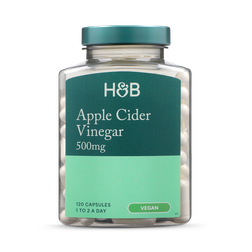
Holland & Barrett
£21.99
£0.18/1 Capsule
Is apple cider vinegar safe?
For most people, apple cider vinegar is safe to enjoy as part of a balanced diet. As Molly explains, “Liquid apple cider vinegar is highly acidic and should always be diluted before drinking to protect the mouth, throat and tooth enamel.” Drinking it neat may irritate your mouth, throat and stomach, particularly if you have a sensitive digestive system.2
“People taking medications for diabetes, blood-thinning medicines or certain heart medications should also speak to a healthcare professional before using it regularly, as it may interact with some treatments.” If you're taking prescription medication or managing a long-term health condition, it's also worth checking with your GP.
Can apple cider vinegar damage your teeth?
It can – over time, regularly drinking undiluted apple cider vinegar may contribute to enamel erosion because of its acidity.2,11 To help protect your teeth:
- always dilute apple cider vinegar with water
- drink it through a straw
- avoid brushing your teeth immediately afterwards, as softened enamel can be more vulnerable to wear
Apple cider vinegar side effects
For most people, apple cider vinegar is well tolerated when consumed in moderation and diluted correctly. However, because it's acidic, it isn't completely risk-free.
Possible side effects from drinking apple cider vinegar may include:
- nausea or stomach discomfort
- acid reflux or indigestion
- if you’re taking heart medication, ACV could lead to low potassium levels
- injury or irritation of the digestive tract (throat, oesophagus, and stomach) if consumed undiluted and in large quantities2
- tooth enamel erosion over time if consumed regularly and undiluted2,11
If you notice any unexpected symptoms after taking apple cider vinegar, stop using it and speak to your GP or healthcare professional.
Apple cider vinegar FAQs
There has been some promising research to suggest that ACV can support weight loss. However, more high-quality research is needed before firm conclusions can be drawn. The greatest benefits are likely to come when it's used alongside healthy eating habits and regular physical activity rather than as a standalone solution.
According to Molly, up to 30ml per day (around two tablespoons), well diluted in water or added to meals, appears to be safe for most people. Just remember to drink it through a straw to protect your teeth from the acidity.
Yes, although it has a naturally long shelf life thanks to its acidity. Unopened bottles can last for several years when stored in a cool, dark place, while opened bottles are generally best used within around two years for the best quality. If you're using apple cider vinegar with mother, you may notice cloudy strands or sediment developing over time. This is completely normal and doesn't mean it's gone off. Simply give the bottle a gentle shake before using. However, if the vinegar develops an unusual smell, colour or signs of contamination, it's best to discard it.
The final say
Apple cider vinegar has certainly earned its place in the wellness conversation, but the science is still catching up. While research has explored several potential health benefits of apple cider vinegar, including heart health, weight management, appetite and blood sugar, much of the evidence remains limited and more high-quality studies are needed.
If you enjoy apple cider vinegar, there's no reason not to include it as part of a healthy, balanced diet. Whether you prefer it in a dressing, diluted in water or as a supplement, think of it as one small part of your overall wellbeing – not a shortcut to better health.
Want to learn more? Read our tips on what to eat and drink whilst intermittent fasting or discover our top picks for turmeric supplements.
Disclaimer – This article provides informational advice and is not a substitute for medical care. Working with experts for accuracy, we take great care to ensure the information is up-to-date and relevant. However, you should always consult your GP or healthcare professional before using supplements or alternative products, particularly if you have medical conditions or are under supervision.
1. Kannan S, Anandhasayanam A, ES N, Rajamurugan R, Akash B, Abitha S, et al. Apple cider vinegar effervescent tablets on gut health, obesity and user experience – A randomized controlled trial. International journal of research in pharmaceutical sciences. 2024 Apr 28;15(2):1–9.
2. Martini N. Apple cider vinegar. Journal of Primary Health Care. 2021. Available at: https://www.publish.csiro.au/hc/fulltext/hc19561
3. Kausar S, Humayun A, Ahmed Z, Abbas MA, Tahir A. Effect of apple cider vinegar on glycemic control, hyperlipidemia and control on body weight in type 2 diabetes patients. Health Sciences. 2019. Available at: https://www.researchgate.net/profile/Ayesha-Humayun/publication/333673829_Effect_of_Apple_Cider_Vinegar_on_Glycemic_Control_Hyperlipidemia_and_Control_on_Body_Weight_in_Type_2_Diabetes_Patients
4. Hadi A, Pourmasoumi M, Najafgholizadeh A, Clark CC, Esmaillzadeh A. The effect of apple cider vinegar on lipid profiles and glycemic parameters: a systematic review and meta-analysis of randomized clinical trials. BMC Complementary Medicine and Therapies. 2021. Available at: https://link.springer.com/article/10.1186/s12906-021-03351-w
5. Khezri SS, Saidpour A, Hosseinzadeh N, Amiri Z. Beneficial effects of Apple Cider Vinegar on weight management, Visceral Adiposity Index and lipid profile in overweight or obese subjects receiving restricted calorie diet: A randomized clinical trial. Journal of Functional Foods. 2018 Apr;43(1):95–102. Available at: https://www.sciencedirect.com/science/article/abs/pii/S1756464618300483
6. Feise NK, Johnston CS. Commercial Vinegar Tablets Do Not Display the Same Physiological Benefits for Managing Postprandial Glucose Concentrations as Liquid Vinegar. Suzuki T, editor. Journal of Nutrition and Metabolism. 2020 Dec 16;2020:1–5.
7. Östman E, Granfeldt Y, Persson L, Björck I. Vinegar supplementation lowers glucose and insulin responses and increases satiety after a bread meal in healthy subjects. European Journal of Clinical Nutrition [Internet]. 2005 June 29 [cited 2026 July 31];59(9):983–8. Available from: https://pubmed.ncbi.nlm.nih.gov/16015276/
8. KONDO T, KISHI M, FUSHIMI T, UGAJIN S, KAGA T. Vinegar Intake Reduces Body Weight, Body Fat Mass, and Serum Triglyceride Levels in Obese Japanese Subjects. Bioscience, Biotechnology, and Biochemistry. 2009 Aug 23;73(8):1837–43.
9. Liljeberg H, Björck I. Delayed gastric emptying rate may explain improved glycaemia in healthy subjects to a starchy meal with added vinegar. European Journal of Clinical Nutrition [Internet]. 1998 May [cited 2026 July 31];52(5):368–71. Available from: https://www.nature.com/articles/1600572
10. Štornik A, Skok B, Trček J. Comparison of cultivable acetic acid bacterial microbiota in organic and conventional apple cider vinegar. Food Technology and Biotechnology. 2016. Available at: https://hrcak.srce.hr/clanak/228650
11. Akter R, Md Ali Asgor, Sheikh B, Das S. pH and titratable acidity levels of alcoholic and non-alcoholic beverages contrast with the threshold pH level for tooth enamel demineralization. 2023. Available at: https://www.researchgate.net/publication/373977523_pH_and_titratable_acidity_levels_of_alcoholic_and_nonalcoholic_beverages_contrast_with_the_threshold_pH_level_for_tooth_enamel_demineralization
Related to this article


