Science Corner: Energy
Science Corner: Energy

Dr Abbie Cawood
PhD, MICR, RNutr. Director of Science
“Nutrition plays an important role in helping the body produce and maintain the energy needed for everyday life. From supporting energy-yielding metabolism to helping reduce tiredness and fatigue, a range of nutrients contribute to the processes that keep us feeling physically and mentally energised throughout the day.”
Here, we explore the science behind energy and the evidence for the ingredients that can help support energy production and reduce fatigue.
View Abbie's bio here.
Our top energy articles
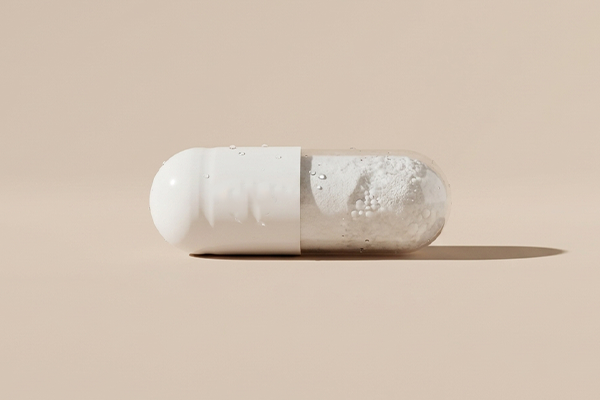

Which nutrients and ingredients are being studied for energy?
CoQ10 and energy
CoQ10 (coenzyme Q10) helps with one of the body’s most important jobs – producing adenosine triphosphate (ATP), which cells use for energy.[4] The body naturally produces CoQ10, and it’s found in almost every cell, with higher concentrations in organs that need more energy, including the heart, kidneys and liver.[5,6]
You can also get CoQ10 from foods including fatty fish, organ meats such as liver and heart, and nuts and seeds.[5] Research has explored CoQ10 supplementation in relation to fatigue, with studies suggesting it may help support energy in healthy adults experiencing fatigue.[7,10]
Korean Ginseng and energy
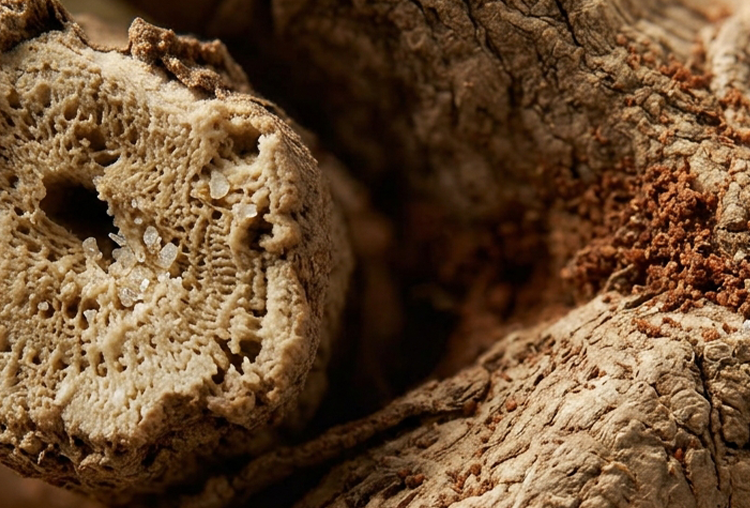
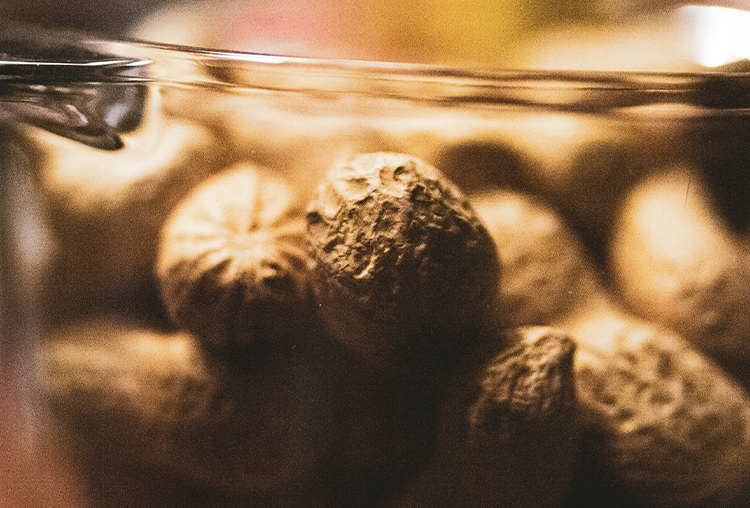
Korean ginseng (Panax ginseng) has a long history of traditional use, but it's also attracted scientific interest for its potential effects on energy and fatigue. Research suggests Korean red ginseng may help support mental energy and reduce mental fatigue in healthy adults.[11,12]
Red ginseng is produced by steaming and drying the root, which is typically harvested after at least four years of growth.[13,14] The root is the main source of ginsenosides – naturally occurring bioactive compounds that have become a key focus of ginseng research.[15]
1. Fatima G, Dzupina A, B Alhmadi H, Magomedova A, Siddiqui Z, Mehdi A, Hadi N. Magnesium Matters: A Comprehensive Review of Its Vital Role in Health and Diseases. Cureus. 2024;13;16(10):e71392. https://pmc.ncbi.nlm.nih.gov/articles/PMC11557730/#abstract1
2. Pickering G, Mazur A, Trousselard M, Bienkowski P, Yaltsewa N, Amessou M, Noah L, Pouteau E. Magnesium Status and Stress: The Vicious Circle Concept Revisited. Nutrients. 2020 Nov 28;12(12):3672. https://pmc.ncbi.nlm.nih.gov/articles/PMC7761127/
3. Dominguez LJ, Barbagallo M, Lauretani F, Bandinelli S, Bos A, Corsi AM, Simonsick EM, Ferrucci L. Magnesium and muscle performance in older persons: the InCHIANTI study. Am J Clin Nutr. 2006 Aug;84(2):419-26. https://pubmed.ncbi.nlm.nih.gov/16895893/
4. Cirilli I, Damiani E, Dludla PV, Hargreaves I, Marcheggiani F, Millichap LE, et al. Role of Coenzyme Q10 in Health and Disease: An Update on the Last 10 Years (2010–2020). Antioxidants. 2021 Aug 23;10(8):1325. Available from: Role of Coenzyme Q10 in Health and Disease: An Update on the Last 10 Years (2010–2020) | MDPI
5. Sood B, Patel P, Keenaghan M. Coenzyme Q10. StatPearls. Treasure Island (FL): StatPearls Publishing Copyright © 2025, StatPearls Publishing LLC.; 2025. Available from: Coenzyme Q10 - StatPearls - NCBI Bookshelf
6. Saini R. Coenzyme Q10: The essential nutrient. Journal of Pharmacy and Bioallied Sciences [Internet]. 2011 [cited 2026 Aug 27];3(3):466. Available from: Coenzyme Q10: The essential nutrient - PMC
7. Mizuno K, Sasaki AT, Watanabe K, Watanabe Y. Ubiquinol-10 intake is effective in relieving mild fatigue in healthy individuals. Nutrients [Internet]. 2020 June 2;12(6):1640. Available from: https://www.mdpi.com/2072-6643/12/6/1640
8. Tsai IC, Hsu CW, Chang CH, Tseng PT, Chang KV. Effectiveness of coenzyme Q10 supplementation for reducing fatigue: A systematic review and meta-analysis of randomized controlled trials. Frontiers in Pharmacology [Internet]. 2022 Aug 24 [cited 2026 Aug 26];13:883251. Available from: https://www.ncbi.nlm.nih.gov/pmc/articles/PMC9449413/
9. Mizuno K, Tanaka M, Nozaki S, Mizuma H, Ataka S, Tahara T, et al. Antifatigue effects of coenzyme Q10 during physical fatigue. Nutrition [Internet]. 2008 Apr;24(4):293–9. Available from: https://www.sciencedirect.com/science/article/pii/S0899900707003826
10. Mousavi S, Mohammadi V, Foroughi Z. Effect of coenzyme Q10 supplementation on work-related fatigue in nurses: A double-blind, randomized placebo-controlled study. Fatigue: Biomedicine, Health & Behavior [Internet]. 2019 Dec 18 [cited 2026 Aug 26];8(1):1–10. Available from: https://www.tandfonline.com/doi/full/10.1080/21641846.2019.1704374
11. Zhang L, Chen X, Cheng Y, Chen Q, Tan H, Son D, et al. Safety and antifatigue effect of Korean red ginseng: A randomized, double-blind, and placebo-controlled clinical trial. Journal of ginseng research [Internet]. 2019 Oct [cited 2026 Aug 26];43(4):676–83. Available from: https://pubmed.ncbi.nlm.nih.gov/31695571/
12. Chung TH, Kim JH, Seol SY, Kim YJ, Lee YJ. The effects of Korean red ginseng on biological aging and antioxidant capacity in postmenopausal women: A double-blind randomized controlled study. Nutrients [Internet]. 2021 Sept 2 [cited 2026 Aug 26];13(9):3090. Available from: https://yonsei.elsevierpure.com/en/publications/the-effects-of-korean-red-ginseng-on-biological-aging-and-antioxi/
13. Red ginseng and cancer treatment. Chinese Journal of Natural Medicines [Internet]. 2016 [cited 2026 Aug 27];14(1):7–16. Available from: https://www.sciencedirect.com/science/article/pii/S1875536416300048
14. Lee SM, Bae BS, Park HW, Ahn NG, Cho BG, Cho YL, et al. Characterization of Korean Red Ginseng (Panax ginseng Meyer): History, preparation method, and chemical composition. Journal of Ginseng Research [Internet]. 2015 Oct [cited 2026 Aug 27];39(4):384–91. Available from: https://www.sciencedirect.com/science/article/pii/S1226845315000421
15. Zhang Y-C, Li G, Jiang C, Yang B, Yang H-J, Xu H-Y, et al. Tissue-Specific Distribution of Ginsenosides in Different Aged Ginseng and Antioxidant Activity of Ginseng Leaf. Molecules. 2014;19(11):17381-99. Available from: https://www.mdpi.com/1420-3049/19/11/17381
16. Smith SJ, Lopresti AL, Fairchild TJ. Exploring the efficacy and safety of a novel standardized ashwagandha (Withania somnifera) root extract (Witholytin®) in adults experiencing high stress and fatigue in a randomized, double-blind, placebo-controlled trial. J Psychopharmacol. 2023;37(11):1091-104. Available from: https://pubmed.ncbi.nlm.nih.gov/37740662/
17. Kale S, Lopresti A, Suri R, Garg N, Deepak Langade. Safety and efficacy of Ashwagandha root extract on cognition, energy and mood problems in adults: Prospective, randomized, placebo-controlled study. Journal of Psychoactive Drugs [Internet]. 2024 Nov 5;1–13. Available from: https://www.tandfonline.com/doi/pdf/10.1080/02791072.2024.2424279
18. Mandlik DS, Namdeo AG. Pharmacological evaluation of Ashwagandha highlighting its healthcare claims, safety, and toxicity aspects. Journal of Dietary Supplements. 2020 Apr 3;18(2):1–44. Available from: https://pubmed.ncbi.nlm.nih.gov/32242751/
19. Sprengel M, Laskowski R, Jost Z. Withania somnifera (Ashwagandha) supplementation: a review of its mechanisms, health benefits, and role in sports performance. Nutrition & metabolism [Internet]. 2025 May [cited 2026 Aug 27];22(1):9. Available from: https://pubmed.ncbi.nlm.nih.gov/39910586/
20. Mahmoud Tareq Abdelwahed, Hegazy MA, Mohamed EH. Major biochemical constituents of Withania somnifera (ashwagandha) extract: A review of chemical analysis. Reviews in Analytical Chemistry. 2023 Jan 1;42(1). Available from: https://www.researchgate.net/publication/369616093_Major_biochemical_constituents_of_Withania_somnifera_ashwagandha_extract_A_review_of_chemical_analysis