 Track an order
 Buy It Again
 Favourites
 Manage account
 Rewards
 Subscriptions
 Find a store
 Help centre

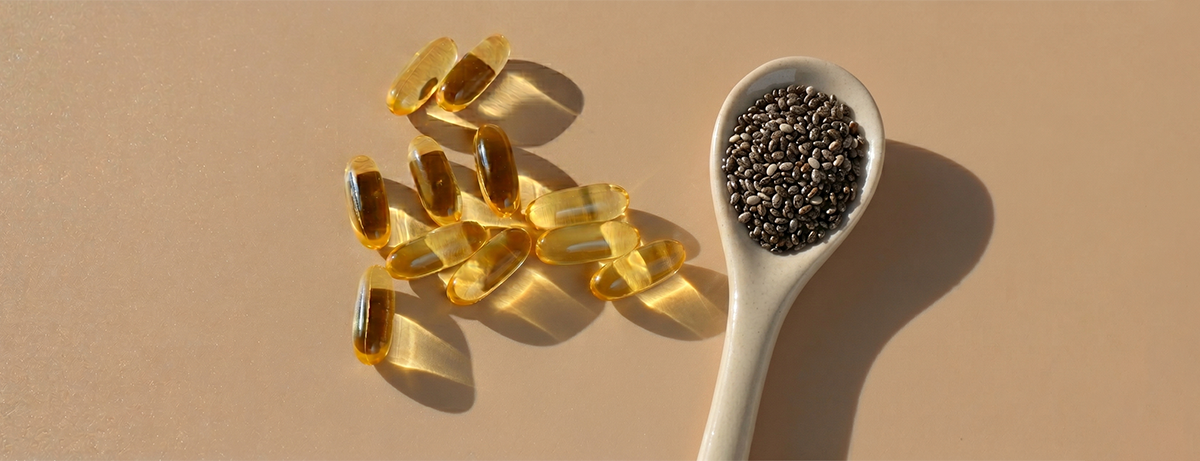
Curious about omega-3s? Discover how these essential fatty acids may support your heart, brain and more – plus expert tips on how much you really need and if supplements can help
Summary
1What does omega-3 do and why do we need it?
One of omega-3's main benefits is its role in maintaining triglyceride levels – a type of fat in your blood.
2Should you take an omega-3 supplement?
It might be useful to take a DHA supplement if you’re vegetarian or vegan to help support the levels of the DHA you’d usually find in animal products.
3How to get more omega-3s in your diet
Eat at least one portion of white fish and one portion of oily fish each week. Soy products are also excellent plant-based sources of omega-3.
You’ve likely heard of omega-3s – but there’s more to them than that dreaded spoon of fish oil. They’re actually a family of ‘healthy fats’ called polyunsaturated fatty acids (PUFAs). With potential benefits ranging from maintaining a healthy heart to supporting cognitive function, getting enough omega-3s matters more than you might think. So, how do you get enough? And how do you know if it’s time for a supplement? Let’s dive in...
What does omega-3 do and why do we need it?
Omega-3 fatty acids help make up the membranes surrounding every cell in your body.1 They help form molecules needed for multiple functions in the body, from supporting cardiovascular to immune health.1,2,3 One of omega-3's main benefits is its role in maintaining triglyceride levels – a type of fat in your blood.1,4 Having too many may heighten your risk of heart disease and stroke, so it’s important to keep your levels under control.4
There may also be a connection between omega-3s and high-density lipoprotein (HDL) cholesterol, though more research is needed to understand this relationship. HDL is often called ‘good’ cholesterol because it helps remove excess ‘bad’ cholesterol from your bloodstream, supporting normal cholesterol levels and heart health.5,6 Not only that, but getting enough omega-3 every day could also help maintain normal blood pressure.7 Since high blood pressure raises your risk of certain long-term heart conditions, it’s important to keep it in check.8
What types of omega-3 do you need?
There are several types of omega-3 fatty acids, but most research focuses on three main types: 2,9-12
- alpha-linolenic acid (ALA) – ALA is an essential fat, meaning you need to obtain it from your diet to have sufficient levels in the body. The body can also use it to produce other omega-3s (including the two types below). ALA is a mainly plant-based omega-3 you’ll find in flaxseed and rapeseed oils, chia seeds and walnuts.2 It helps with growth and development in children and maintaining normal blood cholesterol levels 13,14
- eicosapentaenoic acid (EPA) – EPA mainly comes from marine sources, including herring, mackerel, salmon, trout and oysters.2 When combined with DHA, EPA supports normal blood pressure, healthy blood triglyceride levels and optimal heart function 15,16,17
- docosahexaenoic acid (DHA) – DHA is also typically found in fish and other seafood, such as mackerel, salmon, herring, anchovies, sardines and oysters.2 DHA contributes to normal vision, supports brain function and alongside EPA contributes to healthy triglyceride levels and blood pressure and the proper functioning of the heart 15, 17-19
Although your body can convert ALA to EPA and DHA, it can't produce very much. That’s why your diet is the most effective way to get the EPA and DHA you need.2
How much omega-3 do you need?
The UK government doesn’t set specific intake recommendations for omega-3.20 However, the Scientific Advisory Committee on Nutrition (SACN), which advises the government on nutrition-related issues, suggests that everyone eats at least two 140g portions of fish a week, with one being white and the other oily.21 If you’re pregnant, the guidance is the same, however the NHS recommends to avoid more than two portions of oily fish per week (particularly tuna, salmon and mackerel) due to the high mercury content and possible pollutants that could affect the unborn baby at high levels.21,22 Don’t worry if you don’t eat fish – it's still possible to get the omega-3s you need. Just be sure to include rich sources of ALA in your diet (which your body can then make into EPA and DHA).23
Should you take an omega-3 supplement?

If you eat enough fish, you might not need a food supplement. However, if you’re not regularly eating enough oily fish (or plant-based sources like walnuts and flaxseeds) to help meet the recommendations, adding a high-quality supplement can be a simple and effective way to support your intake. It might be useful to take a DHA supplement if you’re vegetarian or vegan to help support the levels of the DHA you’d usually find in animal products.2,23
How to get more omega-3s in your diet
There are plenty of ways to get more omega-3s through your diet, including: 24-27
- eat white fish or shellfish – eat at least one portion of white fish or shellfish each week. White fish such as sea bass, sea bream, turbot and halibut are good sources of omega-3, as are shellfish like oysters, mussels, crab and squid
- eat oily fish – aim for at least one portion of oily fish weekly, such as salmon, sardines, herring, mackerel, pilchards or trout. However, if you’re pregnant or planning to start a family soon, it’s recommended you limit your intake to no more than two portions per week due to pollutants that could affect the unborn baby at high levels
- include plant-based sources – add flaxseed, pumpkin seeds, chia seeds and walnuts to your meals, along with vegetable oils such as rapeseed and flaxseed oils. Soy products, including soy milk, tofu and soy beans (edamame), are also excellent plant-based sources of omega-3
- consider supplements – if you’re not a fan of fish or struggle to get enough omega-3 from your diet, you could consider a high-quality algal oil or fish oil omega-3 supplement. Look for products that offer a balanced mix of EPA and DHA
- check food labels – some foods, such as eggs and certain frozen fish, are fortified with omega-3s, providing an additional source of these fatty acids
Omega-3 FAQs
Omega-3 deficiency is uncommon. However, if you're low in omega-3s, you might experience symptoms such as rough and scaly skin or a red, itchy rash with some swelling.2,3
Some researchers have studied the effects of omega-3s on muscle soreness and recovery after exercise. There have been some interesting findings, such as lower levels of creatine kinase and lactate dehydrogenase (markers of muscle recovery) in participants given omega-3s compared to control groups.28 Research in older adults also suggests omega-3s may help to preserve muscle mass and strength later in life.29 However, more research is needed to understand how omega-3s influence muscle recovery and strength at different life stages.
Some studies have reported side effects including nausea, burping, heartburn and stomach pain when taking omega-3 supplements.28 As with any supplements, stop taking them and speak to a doctor if you notice any unwanted symptoms.
The final say
In short: omega-3s are pretty important, thanks to their roles in keeping your heart healthy and supporting normal brain function.17,30 And they’re not just one oil, but a hard-working family. Whether you’re just dipping your toes into the world of omega-3s or you’re ready to shop supplements, we’ve got the next steps. Discover the best food sources of omega-3 or explore our range of marine and vegan omega-3 oils...
Disclaimer – This article provides informational advice and is not a substitute for medical care. Working with experts for accuracy, we take great care to ensure the information is up-to-date and relevant. However, you should always consult your GP or healthcare professional before using supplements or alternative products, particularly if you have medical conditions or are under supervision.
1. Krupa KN, Fritz K, Parmar M. Omega-3 fatty acids. Treasure Island (FL): StatPearls Publishing; 2024. Available from: https://www.ncbi.nlm.nih.gov/books/NBK564314
2. Office of Dietary Supplements. Omega-3 fatty acids: Health sheet for health professionals [Internet]. [cited 2024 Aug 23]. Available from: https://ods.od.nih.gov/factsheets/Omega3FattyAcids-HealthProfessional
3. Office of Dietary Supplements. Omega-3 fatty acids: Fact sheet for consumers [Internet]. [cited 2024 Aug 23]. Available from: https://ods.od.nih.gov/factsheets/Omega3FattyAcids-Consumer
4. National Heart, Lung, and Blood Institute. High Blood Triglycerides [Internet]. [cited 2024 Aug 23]. Available from: https://www.nhlbi.nih.gov/health/high-blood-triglycerides
5. Yanai H, et al. An improvement of cardiovascular risk factors by omega-3 polyunsaturated fatty acids. J Clin Med Res. 2018;10(4):281–9.https://doi.org/10.14740/jocmr3362w
6. Cartolano FDC, et al. Omega-3 fatty acids improve functionality of high-density lipoprotein in individuals with high cardiovascular risk: A randomized, parallel, controlled and double-blind clinical trial. Front Nutr. 2022;8:767535. https://doi.org/10.3389/fnut.2021.767535
7. Zhang X, et al. Omega‐3 polyunsaturated fatty acids intake and blood pressure: A dose‐response meta‐analysis of randomized controlled trials. J Am Heart Assoc. 2022;11(11):e025071. https://doi.org/10.1161/JAHA.121.025071
8. British Heart Foundation. High Blood Pressure [Internet]. [cited 2024 Aug 23]. Available from: https://www.bhf.org.uk/informationsupport/risk-factors/high-blood-pressure
9. USDA National Nutrient Database for Standard Reference. ALA content [Internet]. [cited 2024 Aug 23]. Available from: https://ods.od.nih.gov/pubs/usdandb/ALA-Content.pdf
10. USDA National Nutrient Database for Standard Reference. EPA content [Internet]. [cited 2024 Aug 23]. Available from: https://ods.od.nih.gov/pubs/usdandb/EPA-Content.pdf
11. USDA National Nutrient Database for Standard Reference. DHA content [Internet]. [cited 2024 Aug 23]. Available from: https://ods.od.nih.gov/pubs/usdandb/DHA-Content.pdf
12. European Commission. Food and Feed Information Portal Database [Internet]. [cited 2024 Aug 23]. Available from: https://ec.europa.eu/food/food-feed-portal/screen/health-claims
13. European Commission. Characteristics [Internet]. European Commission [cited 2026 Apr 13]. Available from: https://ec.europa.eu/food/food-feed-portal/screen/health-claims/eu-register/details/POL-HC-6267
14. European Commission. Characteristics [Internet]. European Commission [cited 2026 Apr 13]. Available from: https://ec.europa.eu/food/food-feed-portal/screen/health-claims/eu-register/details/POL-HC-6327
15. European Commission. Characteristics [Internet]. European Commission [cited 2026 Apr 13]. Available from: https://ec.europa.eu/food/food-feed-portal/screen/health-claims/eu-register/details/POL-HC-8354
16. European Commission. Characteristics [Internet]. European Commission [cited 2026 Apr 13]. Available from: https://ec.europa.eu/food/food-feed-portal/screen/health-claims/eu-register/details/POL-HC-8362
17. European Commission. Characteristics [Internet]. European Commission [cited 2026 Apr 13]. Available from: https://ec.europa.eu/food/food-feed-portal/screen/health-claims/eu-register/details/POL-HC-6368
18. European Commission. Characteristics [Internet]. European Commission [cited 2026 Apr 13]. Available from: https://ec.europa.eu/food/food-feed-portal/screen/health-claims/eu-register/details/POL-HC-6367
19. European Commission. Characteristics [Internet]. European Commission [cited 2026 Apr 13]. Available from: https://ec.europa.eu/food/food-feed-portal/screen/health-claims/eu-register/details/POL-HC-8293
20. British Heart Foundation. Omega-3 foods and your heart [Internet]. [cited 2024 Aug 23]. Available from: https://www.bhf.org.uk/informationsupport/heart-matters-magazine/nutrition/omega-3s-and-your-heart
21. Scientific Advisory Committee on Nutrition. Advice on fish consumption: Benefits and risks [Internet]. [cited 2024 Aug 23]. Available from: https://assets.publishing.service.gov.uk/media/5a7dbedc40f0b65d88634277/SACN_Advice_on_Fish_Consumption.pdf
22. Elgar K. EPA/DHA: A review of clinical use and efficacy. Nutr Med J. 2022:1(2);97–132. https://www.nmi.health/epa-dha-a-review-of-clinical-use-and-efficacy
23. The Vegan Society. Omega-3 fat [Internet]. [cited 2024 Aug 23]. Available from: https://www.vegansociety.com/resources/nutrition-and-health/nutrients/omega-3-fat
24. British Dietetic Association. Omega-3 [Internet]. Available from:https://www.bda.uk.com/resource/omega-3.html
25. NHS. Fish and shellfish [Internet]. [cited 2024 Aug 23]. Available from: https://www.nhs.uk/live-well/eat-well/food-types/fish-and-shellfish-nutrition
26. NHS. Foods to avoid in pregnancy [Internet]. [cited 2024 Aug 23]. Available from: https://www.nhs.uk/pregnancy/keeping-well/foods-to-avoid
27. Heart UK. Omega 3 fats [Internet]. [cited 2024 Aug 23]. Available from: https://www.heartuk.org.uk/low-cholesterol-foods/omega-3-fats
29. Santo André, H.C., et al., The Influence of n-3PUFA Supplementation on Muscle Strength, Mass, and Function: A Systematic Review and Meta-Analysis. Adv Nutr, 2023. 14(1): p. 115-127.
30. European Commission. Characteristics [Internet]. European Commission [cited 2026 Apr 20]. Available from: https://ec.europa.eu/food/food-feed-portal/screen/health-claims/eu-register/details/POL-HC-6366


