 Track an order
 Buy It Again
 Favourites
 Manage account
 Rewards
 Subscriptions
 Find a store
 Help centre
What exercise changes do I need to make on weight-loss injections?



Summary
1Start small and build up
New to exercise? Begin with manageable movement you enjoy, then gradually increase how often, how long or how intensely you exercise.
2Prioritise your muscles
Weight loss can include some muscle loss as well as fat, so gradually adding strength exercises can help you maintain muscle as you lose weight.
3Don’t push through symptoms
If you experience persistent fatigue, dizziness or nausea, stop exercising and speak to your prescriber or doctor for advice.
Whether you’re losing weight with or without medications like Mounjaro, eating less throughout the day can change how your body feels. And that, in turn, can affect how exercise fits into your life. You might be wondering where to start, how much you should be doing or whether you need to change the activity you already do.
To cut through the confusion, personal trainer Monty Simmons (@movewithmonty) explains how to adapt your exercise routine while taking weight-loss injections. “These medications suppress appetite, but they shouldn’t replace exercise,” he says. While exercise remains an important part of looking after your health, the key is finding a level that works for you – whether that means gradually becoming more active or adapting your existing routine as your body adjusts.
So, where should you start? And if energy is low, should you keep going or ease off? Monty explains how to build up exercise gradually, what’s worth prioritising and when it can make sense to take things a little easier.
How weight-loss injections can affect how exercise feels
Weight loss, with or without injections, often involves eating less food or consuming fewer calories. This can affect how you feel when exercising or change how your usual activity feels. Weight-loss injections can also affect things like:
appetite: eating less can mean you have less fuel available for activity1,2
energy levels: you may notice changes in your energy levels when you’re consuming fewer calories1
muscle mass: weight loss can include some loss of muscle as well as fat, making muscle-strengthening activity particularly important1,3-5
hydration: eating and drinking less may mean you need to pay closer attention to staying hydrated1,2
recovery: if you’re eating less, you may find you need more time to recover after activity1
Is it safe to exercise while on weight-loss injections?
For most people, it’s a yes. “Exercising while on weight-loss injections is generally safe and, in fact, encouraged,” says Simmons. “Even if you’re seeing weight loss results, your muscles need to be worked and your cardiovascular and nervous systems still need to be stimulated through physical exercise, so you don’t miss out on the important health benefits of movement.”5
And exercise doesn’t have to mean throwing yourself into a tough gym session. Regular movement can include everything from walking and swimming to cycling and strength exercises, and you can gradually build up how much you do as your fitness improves. Alongside supporting your muscles and bones, regular physical activity can also benefit your mental health and sleep.5
Do I need to exercise more… or less on weight-loss injections?
There’s no need to suddenly go from doing very little exercise to working out every day. If you’re new to exercise, Simmons recommends starting at a level that feels manageable and building up gradually. That could mean walking more regularly, trying some light resistance exercises or gym work, or following a beginner-friendly programme such as Couch to 5K.5
As you get fitter and more confident, you can gradually increase how long, often or intensely you exercise. Over time, it’s worth working towards a mix of aerobic activity, such as brisk walking, cycling or swimming, and exercises that strengthen your muscles. But you don’t need to get there overnight.5
If you were already exercising regularly before starting weight-loss injections, you may find some sessions feel different while your body adjusts. “If you’re eating less, you’re going to be slightly underfuelled and if you go in for very high-intensity workouts, you can end up feeling a bit nauseous, weak, wobbly or even dizzy,” says Simmons. “That can be dangerous, particularly if you’re training on your own.” 1,2
Rather than pushing through, pay attention to how you feel. You may need to temporarily reduce the intensity or length of a workout, take longer to recover between sessions or simply choose gentler movement on days when your energy is lower. As Simmons puts it: “The goal is to work out, but not to completely exhaust yourself.” 1,5
Strength vs cardio: what’s better when taking weight-loss injections?
If there’s one thing worth prioritising during a weight-loss journey, Simmons says it’s strength training. This is because:
it helps maintain muscle when you’re losing weight, which supports a stronger physique and can make exercise feel easier and more enjoyable1,4
it can support your long-term weight management: strength training can help maintain muscle during weight loss, while regular physical activity can support long-term weight management5
it improves your everyday strength: helping you feel more capable for daily tasks like carrying food shopping, lugging suitcases or picking up kids5
Cardio still has an important place in your routine, supporting heart health as well as your overall fitness. If you’re starting from little or no exercise, begin with something manageable, such as walking, cycling, swimming or gentle jogging, and gradually build up the duration and intensity as your fitness improves.5
If you’re already active, taking weight-loss medication doesn’t automatically mean you need to give up more demanding forms of cardio, including longer runs. Instead, Simmons recommends taking your current fitness level into account and paying attention to how you feel as your body adjusts. If your energy and recovery feel good, you may be able to continue with the activities you already enjoy, while adjusting your routine if you experience side effects or find certain sessions harder than usual.1,2
Exercising when your appetite is lower
When you’re far less hungry than usual, fuelling for a workout takes a bit of extra planning. “Rule number one is just make sure that you’re eating enough,” says Simmons. How much energy you need is individual, but if you’re not eating enough to support your activity, you may experience symptoms such as dizziness or feeling faint.
When it comes to meals that work harder for you, he suggests including muscle-supporting protein sources, such as meat, fish and tofu, alongside plenty of vegetables and higher-fibre carbohydrate sources. Think wholegrains, oats, beans and lentils, which can help you feel fuller for longer,6 plus a variety of fruit and nuts as part of a balanced diet.1,7-8
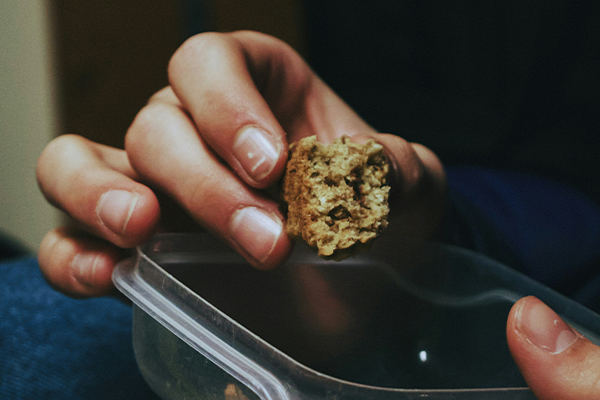
“If you struggle with eating large meals because your appetite is low, try snacking in between,” he suggests, adding that eating something small before a workout can help: “Even just a banana or piece of fruit works.” Finally, don’t forget about hydration. Water contributes to the maintenance of normal physical and cognitive functions, so aim for around six to eight glasses of fluid a day.9
If you’re finding it difficult to eat regular, balanced meals or feel consistently weak during exercise, take that as a cue to check in with your prescriber or a healthcare professional, who can tailor support to your current weight-loss plan.
Common mistakes worth skipping
Finding the right exercise routine while taking weight-loss injections can take a little trial and error, so don’t worry if you need to adjust things along the way. A few things to be mindful of include:
increasing the intensity or amount of exercise too quickly, particularly if you’re new to regular activity5
pushing through demanding workouts when you’re struggling to eat enough to support your activity and recovery1
not eating enough protein to help maintain muscle during weight loss1,3,4
ignoring signs that you may need to slow down or rest, such as fatigue, dizziness or nausea2
How to build an exercise routine you'll actually stick to
Simmons is in the business of adapting training for his clients navigating weight loss and says keeping it simple is always key. According to him, a feel-good, sustainable week might look like:
two to three full-body strength training sessions per week, at roughly 30-45 minutes each or 15 minutes of bodyweight work most days. “To stay safe, opt for around 70-80% of what you’d normally lift,” he suggests, focusing on simple moves like squats, lunges, rows and presses
daily walking plus one to two low-impact cardio sessions per week (around 20-40 minutes)
at least one to two proper rest days each week.
If you’re starting a new exercise routine, speak to a qualified fitness professional or healthcare professional for advice that takes your individual fitness level, health and any medication into account.
FAQs about exercising on weight-loss injections
“You feel more zapped because you’ve got fewer calories and less energy available,” says Simmons. “If you’re eating a lot less, your body has to find that energy from its own stores, and that can make workouts feel harder and leave you feeling underpowered.”1, 2
“If you’re new to exercise or coming back after a long time, strength training can help improve body composition4 even in a calorie deficit,” says Simmons. “Having more muscle increases your metabolic rate, which helps with long-term weight management.”
“If you’re a beginner, focus on starting small and finding something that feels manageable,” says Simmons. Start with simple activities such as a short walk or gentle bodyweight exercises like squats or lunges. As these begin to feel easier, gradually increase the length or frequency of your sessions before building up the intensity.
“If you experience persistent fatigue, dizziness or nausea during or after exercise, don’t try to push through your workout,” says Simmons. “Stop exercising rather than reducing the intensity or trying to finish the session and speak to your prescriber or doctor about your symptoms before continuing.”
The final say
However you’re approaching your weight-loss journey this year, the bottom line is that exercise doesn’t need to be extreme to be effective. Daily walks for a tasty matcha latte, a few lengths at the local swimming pool and a restorative Pilates sesh at home can all form part of a feel-good routine that supports your long-term goals.
For more inspiration on feeling your best this year, check out our guides on why rest is essential for muscle growth and how protein supports your muscles and movement.
Disclaimer – This article is intended to support general wellness and weight management only and does not provide advice for the use of GLP-1 medications. If you are prescribed a GLP-1 medicine, your dietary intake and overall health should be monitored by your prescriber or another qualified healthcare professional.
Any symptoms or side effects, including changes to appetite, digestion or bowel habits, should be discussed with your prescriber or a healthcare professional, as these may indicate that your current treatment or dosage needs review. If you are struggling to consume regular, balanced meals, this should also be reported to your prescriber.
Always check with a prescriber or healthcare professional before introducing new foods, supplements or products alongside medication, as there may be interactions or contraindications.
1 Dobbie LJ, Tolvanen L, Alves D, Baker JL, Bez NS, Birney S, et al. Nutritional, functional, and psychological considerations for incretin-based therapies in adults: an EASO, EFAD, and ECPO Consensus Statement. Lancet Diabetes Endocrinol. 2026;14(9):754-777. doi:10.1016/S2213-8587(26)00122-1.
2 Eli Lilly and Company Limited. Mounjaro KwikPen 5 mg solution for injection in pre-filled pen: Summary of Product Characteristics [Internet]. electronic Medicines Compendium; 2026 [updated 2026 Sep 8; cited 2026 Sep 18]. Available from: https://www.medicines.org.uk/emc/product/15482/smpc
3 Cava E, Yeat NC, Mittendorfer B. Preserving healthy muscle during weight loss. Adv Nutr. 2017;8(3):511-9. doi:10.3945/an.116.014506.
4 Eisa N, Barood O. Lean mass changes with incretin therapy versus lifestyle intervention: a systematic review and meta-analysis of randomised controlled trials. Diabetes Obes Metab. 2026;28(6):4818-4827. doi:10.1111/dom.70666.
5 Department of Health and Social Care. UK Chief Medical Officers' physical activity guidelines [Internet]. London: GOV.UK; 2026 [updated 2026 Jul 10; cited 2026 Sep 18]. Available from: https://www.gov.uk/government/publications/physical-activity-guidelines-uk-chief-medical-officers-report/uk-chief-medical-officers-physical-activity-guidelines
6 Akhlaghi M. The role of dietary fibers in regulating appetite, an overview of mechanisms and weight consequences. Crit Rev Food Sci Nutr. 2024;64(10):3139-3150. doi:10.1080/10408398.2022.2130160. PMID: 36193993.
7 National Institute for Health and Care Excellence. Overweight and obesity management (NG246): physical activity and diet [Internet]. London: NICE; 2025 [cited 2026 Sep 18]. Available from: https://www.nice.org.uk/guidance/ng246/chapter/Physical-activity-and-diet
8 NHS. Eating a balanced diet [Internet]. [cited 2026 Sep 18]. Available from: https://www.nhs.uk/live-well/eat-well/how-to-eat-a-balanced-diet/eating-a-balanced-diet/
9 NHS. Water, drinks and hydration [Internet]. [cited 2026 Sep 18]. Available from: https://www.nhs.uk/live-well/eat-well/food-guidelines-and-food-labels/water-drinks-nutrition/


