20% off £40 or 15% off £30
 Track an order
 Buy It Again
 Favourites
 Manage account
 Rewards
 Subscriptions
 Find a store
 Help centre
L-glutamine for gut health: what is it and what you need to know

Written byPatille Joy Madaghjian

Reviewed byHeeral Tomlinson
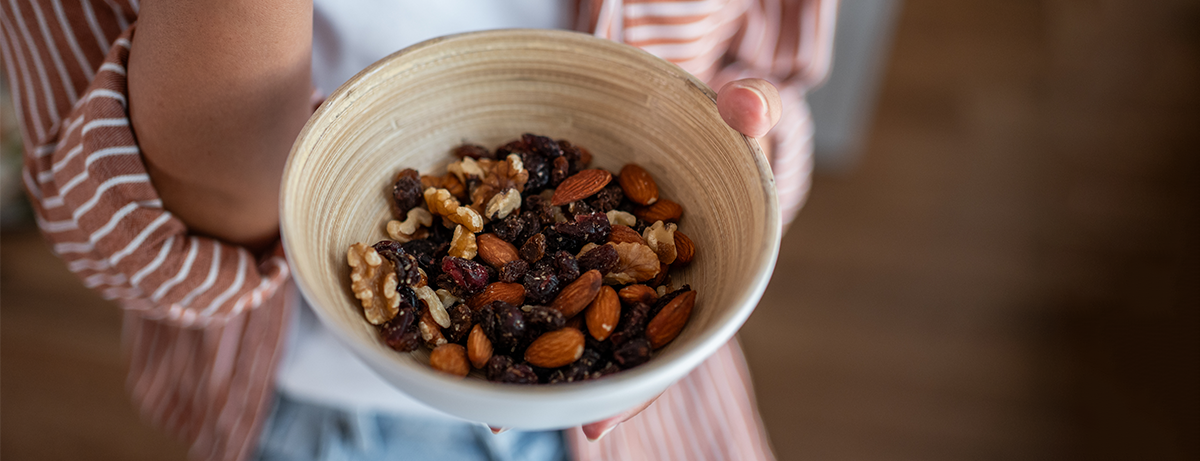
L-glutamine is everywhere right now – but does it actually help your gut? Here’s what the science really says
Summary
1What is L-glutamine?
L-glutamine plays a role in gut lining function, but evidence for supplementation in healthy people is still limited.
2Does L-glutamine help with bloating?
Current research doesn’t show a clear effect on bloating, though some people may notice improvements alongside overall symptom changes.
3Can L-glutamine support gut health?
L-glutamine plays a role in gut lining function, but evidence for supplementation in healthy people is still limited.
Thinking about trying L-glutamine, or have you seen it popping up online for gut health and wondered if it’s worth it? You’re not alone. It’s often described as a ‘gut-healing’ supplement – especially in conversations around bloating, ‘leaky gut’, Irritable Bowel Syndrome (IBS) and digestion. But as with many trending supplements, the science is a little more complex than social media might suggest. So, we asked Science Specialist Patille Madaghjian to break down what the evidence really says.
What is L-glutamine?
L-glutamine is the most abundant amino acid in the blood and muscles.1 “Under normal circumstances, it’s considered non-essential because the body can produce enough on its own – which means you don’t usually need to get it from food,” explains Patille.2
However, during certain times of physical stress – such as illness, injury, surgery, or intense training – your body may need more L-glutamine than it can produce. When this happens, it becomes ‘conditionally essential’, meaning you may need to get it from your diet. In some circumstances, supplements may be recommended, usually under guidance from a healthcare professional.3 It’s sensible to check with a healthcare professional before taking any new supplements for the first time.
In the body, L-glutamine is used to build protein or circulates as a free amino acid in the blood and tissues. In this free form, it plays several important roles, including acting as a key fuel source for cells in the gut and immune system.1,2 “Beyond this, L-glutamine is used as a precursor for the production of several important compounds in the body, such as peptides, amino acids, nucleic acids, neurotransmitters, and glutathione, one of the body’s main antioxidants”, adds Patille. Glutamine is also involved in key metabolic processes in the liver and kidneys.4,5
How much glutamine do we usually eat in a day?
Typical mixed diets (also known as ‘omnivorous diets’), which include both plant and animal foods, provide several grams of glutamine daily through normal protein intake.1
“Most adults get around 6-8g of glutamine per day from our diets, with higher or lower intakes depending mainly on total amount of protein consumed and individual food choices,” says Patille.1,6,7
What food sources contain glutamine?
Glutamine is naturally found in protein-rich foods such as:
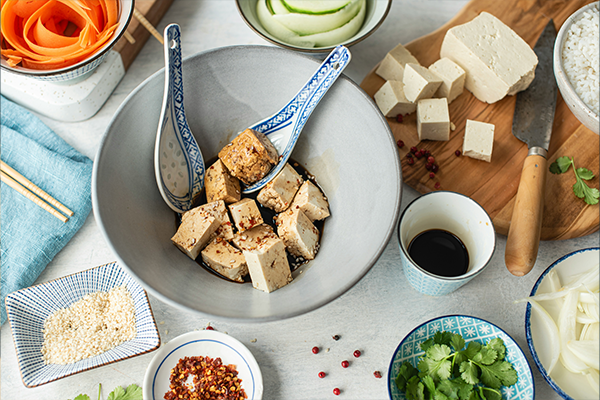
- beef, chicken and fish
- eggs, dairy products (milk, yogurt, cheese)
- non-animal foods including beans, lentils, chickpeas, tofu, soybeans
- nuts
- other sources like vegetables (including corn and red cabbage) and grains including wheat and rice1,7,8
Generally, eating enough protein from a varied diet will provide glutamine.
What’s the difference between glutamine and L-glutamine?
The terms glutamine and L-glutamine are often used interchangeably in nutrition. When you see ‘glutamine’ in health information or on a supplement label, it almost always refers to L-glutamine.9 “L-glutamine is the biologically active form used by the body and the form incorporated into proteins” says Patille. It’s the main form found circulating freely in the blood, where it plays an important role as a fuel source for intestinal cells and immune cells.1,2
Why is L-glutamine discussed in gut health conversations?
So why does L-glutamine come up so often when we talk about gut health? As mentioned earlier, L-glutamine is a key fuel source for cells that line the intestine (like enterocytes and colonocytes). These cells rely heavily on glutamine for energy, especially during times of physical stress.4
Under certain circumstances, glutamine levels can become depleted and changes in the gut lining can occur. Research shows this may lead to reduced tight junction proteins (which help hold the gut barrier together), thinning of the intestinal lining, and increased intestinal permeability – sometimes referred to as ‘Leaky Gut Syndrome’.4
Glutamine is thought to help by:
- supporting the growth and repair of intestinal cells
- reducing excessive cell breakdown (called apoptosis)
- promoting tight junction protein expression
- helping regulate inflammatory pathways
- supporting glutathione production, an antioxidant which protects gut cells from oxidative stress 4,5
Because of these effects, glutamine has been widely used in clinical settings – particularly in people experiencing major physical stress like burns, trauma, surgery, or critical illness – where gut barrier integrity may be compromised. 4,5
What does the research into L-glutamine for gut health show?
Some research has been carried out investigating IBS – particularly diarrhoea-predominant IBS (IBS-D) and post-infectious IBS.
- In one study, 15g per day of glutamine for 8 weeks significantly improved overall IBS symptom severity (IBS-SS), stool frequency and form, and intestinal permeability in people with post-infectious IBS-D who had increased gut permeability, compared with placebo.10
- In another study, 15g per day for 6 weeks improved overall IBS symptom severity and reduced dissatisfaction with bowel habits and daily life interference. However, individual symptoms such as stool frequency, stool consistency, and overall quality of life did not significantly improve compared with placebo.11
These findings suggest that glutamine may benefit certain subgroups of IBS, particularly where increased gut permeability is involved. However, the number of studies is small, and glutamine is not currently included in standard clinical guidelines for the management of IBS. More research is needed before firm conclusions can be drawn.
If you are considering L-glutamine, it’s important to speak to your GP or a qualified healthcare professional first.
What about L-glutamine for ‘leaky gut syndrome’?
Although glutamine is often discussed in relation to ‘leaky gut syndrome’, much of the research so far has been carried out in laboratory and animal studies rather than in people. In human studies, particularly in people with inflammatory bowel disease (IBD) (such as Crohn’s disease and ulcerative colitis), glutamine supplementation has not consistently shown significant improvements in gut permeability overall.12
A recent systematic review and meta-analysis including people with inflammatory bowel disease (IBD) found that, in one specific subgroup, short-term doses above 30g per day (taken for less than two weeks) were linked to reduced gut permeability. However, this result was not consistent across all studies.12
Does L-glutamine help with bloating?
While L-glutamine may support certain gut symptoms in specific populations, current research does not show a clear or specific effect on bloating itself. Although it’s sometimes mentioned in the media as a potential remedy for bloating, clinical studies have mainly found that glutamine does not typically cause or worsen bloating, rather than demonstrating a consistent bloating-reducing effect.
“Human trials in healthy individuals, athletes, and people with IBS show that glutamine rarely causes clinically significant bloating, even at relatively high doses. In most studies, bloating either did not differ from placebo or was not highlighted as a major symptom change” explains Patille.

Some research suggests that glutamine may help improve overall symptoms in certain types of IBS, particularly IBS-D (diarrhoea-predominant IBS) and post-infectious IBS. Improvements have been reported in areas such as abdominal pain and stool frequency or consistency.10,11
“Because bloating in IBS often improves alongside overall symptom relief, some people may notice a reduction in bloating when taking glutamine. However, this effect has not been clearly or specifically measured in clinical trials” she adds.
When L-glutamine may not be necessary
“In most healthy people, normal levels of glutamine are maintained by the body’s own production as well as a balanced protein-containing diet” says Patille. There is limited evidence that taking supplements containing L-glutamine benefits healthy individuals.
When L-glutamine might be appropriate to consider
“Glutamine is considered ‘conditionally essential’ during severe stress or illness, and supplementation may be appropriate under certain circumstances – however, this is usually under medical supervision or consultation with healthcare professionals” says Patille. If you are considering L-glutamine, it’s important to speak to your GP or a qualified healthcare professional first.
What types of L-glutamine are available?
Glutamine supplements are available as capsules as well as loose powder. It’s important not to exceed the recommended dose stated on the product label. If you’re unsure whether L-glutamine is right for you, or have questions about dosage and duration of use, it’s always best to speak to a qualified healthcare professional for personal advice.
L-glutamine FAQs
It’s possible for L-glutamine supplements to cause nausea, especially within the first two hours of taking it and at higher doses, but it’s usually mild.13
This depends on your individual needs and the reason for taking it. Research into L-glutamine for gut health is still evolving, and there is no one-size-fits-all. Before starting supplementation, it’s best to speak to a GP or qualified healthcare professional. They can help determine if it’s appropriate for you and advise on dosage and duration depending on your personal circumstances.
“For most purposes, there is no strong evidence that morning vs. night timing alone makes a major difference” says Patille. “It's more important why you’re taking L-glutamine” she adds.
The final say
So, feeling a bit clearer on L-glutamine? It plays an important role in supporting the gut lining, particularly during times of physical stress.3-5 While some early research suggests it may help certain subgroups of people with IBS,10-11 the evidence is still limited and it’s not currently part of standard treatment guidelines. If you’re looking to support your gut health, it’s often best to start with the basics – a balanced diet rich in fibre, staying well hydrated and managing stress. “Glutamine has a clear biological role in gut health,” says Patille, “but it’s not a magic fix. For most people, consistent dietary and lifestyle habits will have a much bigger impact.”
Still curious about gut health? Learn the difference between prebiotics and probiotics or read our guide on gut health and inflammation.
Disclaimer – This article provides informational advice and is not a substitute for medical care. Working with experts for accuracy, we take great care to ensure the information is up-to-date and relevant. However, you should always consult your GP or healthcare professional before using supplements or alternative products, particularly if you have medical conditions or are under supervision.
1. Cruzat V, Macedo Rogero M, Noel Keane K, Curi R, Newsholme P. Glutamine: Metabolism and Immune Function, Supplementation and Clinical Translation. Nutrients. 2018;10(11).
2. Pugh JN, Sage S, Hutson M, Doran DA, Fleming SC, Highton J, et al. Glutamine supplementation reduces markers of intestinal permeability during running in the heat in a dose-dependent manner. Eur J Appl Physiol. 2017;117(12):2569-77.
3. Durante W. The Emerging Role of l-Glutamine in Cardiovascular Health and Disease. Nutrients. 2019;11(9).
4. Rao R, Samak G. Role of Glutamine in Protection of Intestinal Epithelial Tight Junctions. J Epithel Biol Pharmacol. 2012;5(Suppl 1-M7):47-54.
5. Kim MH, Kim H. The Roles of Glutamine in the Intestine and Its Implication in Intestinal Diseases. Int J Mol Sci. 2017;18(5).
6. Tong TY, Li Y, Rexrode KM, Willett WC, Sun Q, Manson JE, et al. Dietary Amino Acids and Risk of Stroke Subtypes: Results from 3 Large Prospective Cohort Studies. J Nutr. 2025;155(5):1560-9.
7. Lenders CM, Liu S, Wilmore DW, Sampson L, Dougherty LW, Spiegelman D, et al. Evaluation of a novel food composition database that includes glutamine and other amino acids derived from gene sequencing data. European Journal of Clinical Nutrition. 2009;63(12):1433-9.
8. Hou Y, He W, Hu S, Wu G. Composition of polyamines and amino acids in plant-source foods for human consumption. Amino Acids. 2019;51(8):1153-65.
9. Xiao D, Zeng L, Yao K, Kong X, Wu G, Yin Y. The glutamine-alpha-ketoglutarate (AKG) metabolism and its nutritional implications. Amino Acids. 2016;48(9):2067-80.
10. Zhou Q, Verne ML, Fields JZ, Lefante JJ, Basra S, Salameh H, et al. Randomised placebo-controlled trial of dietary glutamine supplements for postinfectious irritable bowel syndrome. Gut. 2019;68(6):996-1002.
11. Rastgoo S, Ebrahimi-Daryani N, Agah S, Karimi S, Taher M, Rashidkhani B, et al. Glutamine Supplementation Enhances the Effects of a Low FODMAP Diet in Irritable Bowel Syndrome Management. Frontiers in Nutrition. 2021;Volume 8 - 2021.
12. Abbasi F, Haghighat Lari MM, Khosravi GR, Mansouri E, Payandeh N, Milajerdi A. A systematic review and meta-analysis of clinical trials on the effects of glutamine supplementation on gut permeability in adults. Amino Acids. 2024;56(1):60.
13. Ogden HB, Child RB, Fallowfield JL, Delves SK, Westwood CS, Millyard A, et al. Gastrointestinal Tolerance of Low, Medium and High Dose Acute Oral l-Glutamine Supplementation in Healthy Adults: A Pilot Study. Nutrients. 2020;12(10):2953.
Related to this article


