 Track an order
 Buy It Again
 Favourites
 Manage account
 Rewards
 Subscriptions
 Find a store
 Help centre


Half the battle of running a marathon is knowing what to do in the months leading up to the race. From leaning on gels to pacing yourself properly, seasoned run coaches share their strategies for prep
Our top picks
5g of creatine
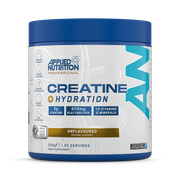
Applied Nutrition
Applied Nutrition Creatine+ Hydration Powder 300g
18+
£20.00
Added vit C
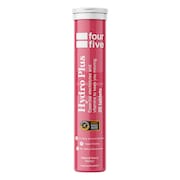
fourfive
Fourfive Hydro Plus Natural Berry 20 Tablets
Buy 1 Get 1 Half Price
£8.00
40g of carbs

SIS (SCIENCE IN SPORT)
SiS Energy Oat Bar White Chocolate & Macadamia 70g
£2.20
Feeling inspired by all the lycra-clad runners taking on marathons? Whether you’ve got a year to go, you’ve just found out you’ve got your ballot spot or you’re kickstarting your plan closer to the big day, here’s exactly how you can start training for your next one now – including all the products you need to take your performance one step further.
One year to go: your 12-month marathon training plan…
Fallen deep in the rabbit hole of euphoric race-day reels? It's time to turn that parasocial motivation into a legit training plan by setting some reasonable milestones.
"For absolute beginners, this early period is all about finding your training rhythm,” says run coach Dominic Repin-Tutton, founder of DRT Coaching. “Start slow and comfortable, aiming to run at least two to three times a week – even your shortest runs help to build the aerobic endurance you'll need to tackle 26.2 miles.
“Food-wise, I recommend fuelling all of your training runs with a carb-heavy breakfast (think a bowl of porridge, oats or toast with jam) and reaching for a protein shake afterwards,” he continues.
“Around 20-25g of protein with a 3-5g scoop of creatine can help muscles recover in between sessions and support performance. Try to drink this within 30 minutes of your cooldown to reap the maximum benefits.”
Marathon training supplements to try…
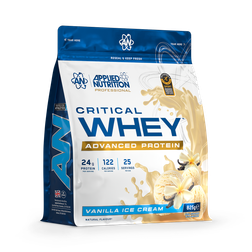
Applied Nutrition
£30.00
£36.36/1 kg

Peak Supps
£37.99
£37.99/1 kg
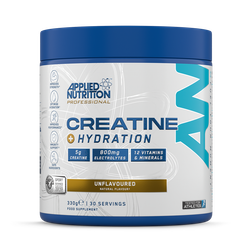
Applied Nutrition
£20.00
£66.67/1 kg
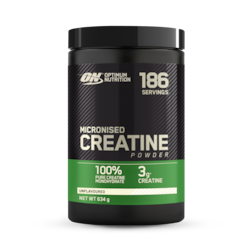
Optimum Nutrition
£40.00
£63.09/1 kg
Six months to go: your six-month marathon training plan…
Ooh, you just got your ballot spot – now's the time to put the Sunday lie-ins on ice and start upping your training volume. "At this point, you want to increase your weekly mileage by around 10% each week, with the goal of working up to half marathon distance," Dominic recommends. "I like to tack this onto my long runs so I can track my progress as I go."
With those longer runs in the diary comes a new consideration: hydration. “As well as drinking enough water before and during your runs, it’s incredibly important to take care of your electrolyte content. When you're doing longer runs, you're also sweating, and that causes a loss of essential minerals.1 So, electrolyte replacement during the run becomes as important as after it.”
Try these electrolytes supplements…
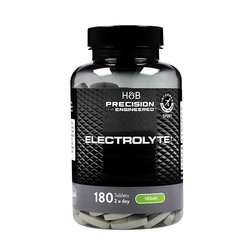
Precision Engineered
£21.00
£0.12/1 Tablet
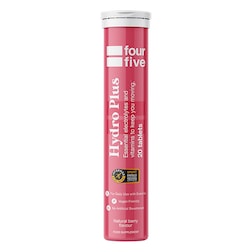
fourfive
£8.00
£0.40/1 Tablet
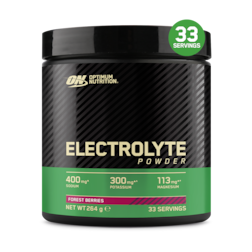
Optimum Nutrition
£10.00
£37.88/1 kg
Six weeks to go: your six-week marathon training plan
Things just got very real, very fast, and the countdown to the starting gun is officially on. This is most people’s peak training phase that’s all about ramping up the intensity and doubling down on your long runs. But everyone’s training plan is different, so yours might look slightly different.
“The focus now is on running big distances, which is the ideal time to start practising your gel strategy,” says endurance running coach Steve Hatton. “During the race, you want to be getting roughly 60 grams of carbs per hour, so try experimenting with different gels to find the type and frequency that works for you.”
Some standard gels require water to wash them down, but the isotonic varieties come pre-diluted, which many runners find are more convenient on race day. “If you’re flagging towards the end of the course, a well-timed caffeinated gel around mile 18 can give you last-minute support for the finish line,” Dominic recommends.2
Try these carb gels…
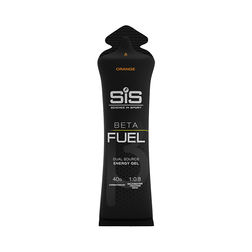
SIS (SCIENCE IN SPORT)
£2.00
£33.33/1 l
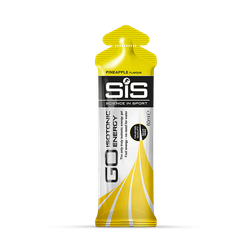
SIS (SCIENCE IN SPORT)
RRP £1.65
£1.32
£22.00/1 l
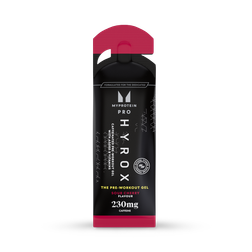
Myprotein
£2.00
£40.00/1 kg
*Not everything said above relates to these specific products, however.
One week to go: your one-week marathon training plan
Nerves are a runner’s biggest enemy in the run-up to a marathon, but there’s no need to panic and start piling on last-minute miles. Your job now is to rest where you can, resist the urge to cram in one last long run and trust the training you’ve done.
"You want to keep running during race week, but the key is drastically reducing the volume while keeping the intensity the same,” Dominic notes. “Instead of a monster session, try three times one kilometre at marathon pace; you're still doing race-specific work, but without risking fatigue.
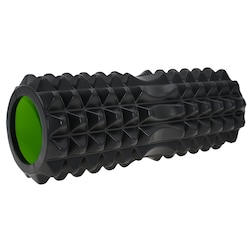
“If your legs feel tight, some people may find that a light pass over the muscles with a massage gun before a session can leave them feeling looser and bouncier,” he continues. The key word here is light, though. “Go too hard and you'll actually fatigue the muscles before you've even started, which won't do your pace any favours.”
Try some fitness products…
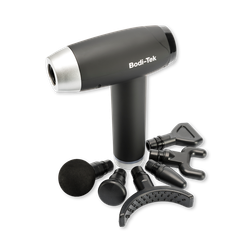
Bodi-Tek
£80.00
£80.00/1 Each
Urban Fitness
£20.00
£20.00/1 Item
One day to go: your marathon training plan ends
The finish line is almost in sight and all that’s left to do is lay out your kit, stuff your bag with some protein bars and try to get an early night.
“In the two to three days before your marathon, including the day before, you should have shifted into a proper carb load,” says Dominic. “That means aiming for roughly eight to 10 grams of carbohydrate per kilo of bodyweight per day, with meals that prioritise carbs and are lighter in fat than usual.” You should also adjust based on your tolerance.
He advises opting for low‑fibre options like white rice, pasta, bagels, potatoes and low-fibre cereals, spreading them out in regular meals and snacks, so you’re not trying to cram it all in at night. “It’s not the most comfortable way of eating, but tracking your meals means you can start race day right, which makes all the difference in the second half of the marathon.”
Try some of our favourite protein bars...
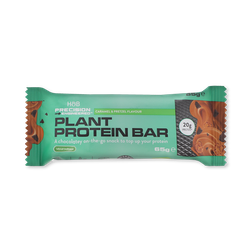
Precision Engineered
£2.20
£33.85/1 kg

SIS (SCIENCE IN SPORT)
£2.20
£31.43/1 kg
Marathon training FAQs
About a year in total for absolute beginners: several months building an easy aerobic base, then a focused training phase. The key marathon block is typically 16-18 weeks, with mileage building from around six months out.
While it’s possible to run a marathon without training, it’s not recommended. A marathon puts significant stress on your muscles, joints and cardiovascular system. Running 26.2 miles without preparation can increase your risk of injury, dehydration and exhaustion. Most runners benefit from a structured training plan that gradually builds endurance, strength and recovery over time.
A standard marathon is 26.2 miles or 42.195 kilometres, whilst a half marathon is 13.1 miles or 21.1 kilometres. This official distance has been used in major marathon events around the world, including the London Marathon and the Olympic Games. Marathon routes can vary in terrain and elevation, but the total distance always remains the same.
Marathon recovery time varies from person to person, but most runners need at least one to two weeks for initial recovery and up to a month or more for full recovery. Factors such as fitness level, race intensity, nutrition, sleep and hydration can all affect how quickly your body recovers.
The final say
Whether you're chasing a PB or just want to make it to the finish line in one piece, a solid training plan loaded with smart fuelling strategies can help you to arrive at the start line in the best possible shape.
Want to avoid making some classic race-day mistakes? We spoke to Jenny Mannion, a self-proclaimed ‘slow runner’ who went from casual 3k jogs in the park to beasting an ultramarathon. Or, interested in a different workout? Take a look at the benefits of skipping.
Disclaimer – This article provides informational advice and is not a substitute for medical care. Working with experts for accuracy, we take great care to ensure the information is up-to-date and relevant. However, you should always consult your GP or healthcare professional before using supplements or alternative products, particularly if you have medical conditions or are under supervision.
1. TANG YM, WANG DG, LI J, LI XH, WANG Q, LIU N, et al. Relationships between micronutrient losses in sweat and blood pressure among heat-exposed steelworkers. Industrial Health [Internet]. 2016 May 1;54(3):215–23. Available from: https://www.ncbi.nlm.nih.gov/pmc/articles/PMC4939859/
2. Song X, Singh M, Lee KE, Vinayagam R, Kang SG. Caffeine: A Multifunctional Efficacious Molecule with Diverse Health Implications and Emerging Delivery Systems. International Journal of Molecular Sciences [Internet]. 2024 Nov 8;25(22):12003. Available from: https://www.mdpi.com/1422-0067/25/22/12003
Related to this article


