 Track an order
 Buy It Again
 Favourites
 Manage account
 Rewards
 Subscriptions
 Find a store
 Help centre
Vegan collagen explained: is vegan collagen as good as bovine collagen?
Written byNatalie Beastall

Reviewed byPatille Joy Madaghjian
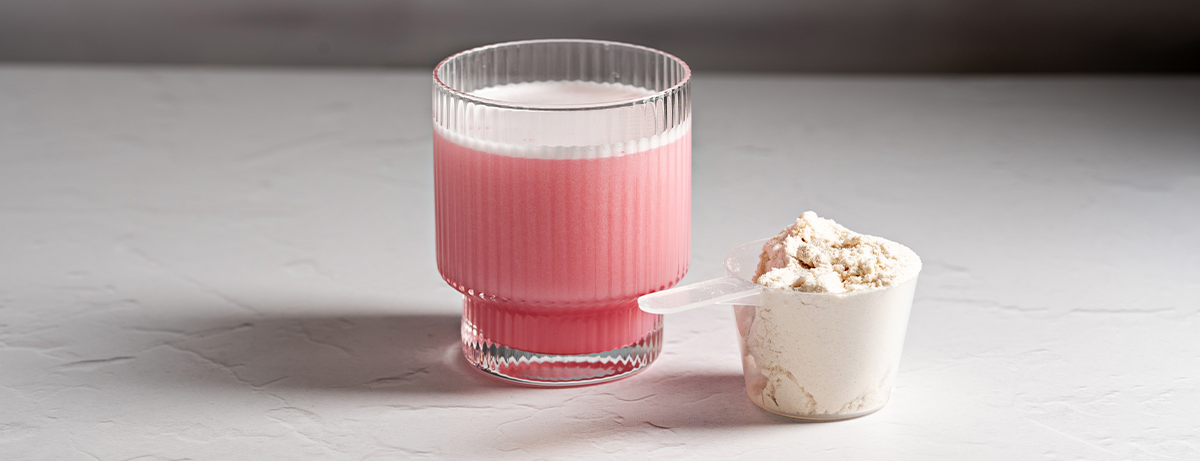
Collagen is known as the body’s building block – but what if you’re vegan or vegetarian? That’s where vegan collagen steps in. Here’s everything you need to know with expert advice
Summary
1What’s the vegan version of collagen?
“Vegan collagen products contain a variety of individual reform amino acids, either produced synthetically or from a plant source…”
2What are the benefits of vegan collagen?
“One study found an increase in firmness and elasticity, plus fewer wrinkles, smaller pores and smoother texture…”
3What does science say about vegan collagen?
“One thing nearly all scientists agree on is that vitamin C is essential for collagen production as it can help your body make more collagen…”
What’s the vegan version of collagen?
The short answer is that vegan collagen isn't quite actual collagen. Collagen, by definition, is a structural protein found in animals (skin, bones, tendons). However, scientists have gotten clever. Over the past few years, they’ve been producing 'vegan collagen' using genetically modified microorganisms (like yeast or bacteria) or plant systems. One study1 used a vegan collagen formula in a controlled human trial to test its skin effects and found it significantly decreased wrinkles, texture and pores by 27.5%, 20.1% and 12.3% compared to the placebo group.
Scientists can now “teach” friendly microbes (like yeast and bacteria) to make the building blocks of collagen. When combined with other helpful nutrients, these blocks encourage your body to make more of its own collagen. When we asked our in-house nutritionist, Alex Thompson, about plant-based collagen, he explained: “Vegan collagen products contain a variety of individual reform amino acids, either produced synthetically or from a plant source that makes them vegan and vegetarian suitable.”
“Within those blends, you’re certainly going to see glycine and proline alongside some other non-essential amino acids that work to stimulate collagen synthesis. You also tend to get vitamin C which contributes to normal collagen formation and antioxidants, which may help skin and collagen against oxidative stress/damage.”
What are the benefits of vegan collagen?
In the previously mentioned study, people taking a vegan collagen supplement for eight weeks saw skin improvements – including an increase in firmness and elasticity, plus fewer wrinkles, smaller pores and smoother texture.2
That said, our dietician and collagen enthusiast, Patille Joy Madaghjian says, “It's at very early stages with not much data or the studies to draw from. Vegan collagen isn’t technically collagen, since true collagen comes from animal sources. Instead, it’s more of a precursor that helps your body produce its own collagen.”
So, vegan collagen is a promising area but there’s more to discover.
Vegan collagen vs. bovine collagen
So, what’s the real difference between the two? And is vegan collagen as effective? Let’s break it down.
Where does collagen comes from?
Bovine collagen is one of the most well-know animal collagens that's taken from tissues like bones, skin and cartilage. Though you can get it from fish, known as marine collagen, too. Vegan collagen, on the other hand, is made in the lab using microbes that are specially engineered to create collagen-like building blocks.
How does collagen work?
Animal collagen supplements usually contain fragments of real collagen (called peptides). Vegan versions provide the ingredients your body needs to make its own collagen, often with added nutrients to help the process along.
“In vegan collagen you tend to get vitamin C and antioxidants that protect the collagen from damage.”
What the research says about bovine collagen
Some studies suggest animal collagen may help improve skin hydration and reduce wrinkles – though most are quite small. Vegan collagen is still new on the scene and while early trials show positive results for skin, the research is still limited.3
It’s worth noting though, even some trials with traditional collagen show mixed results. For example, one 16-week study4 comparing collagen plus vitamin C vs. placebo found improvements in dermal density (the thickness of your skin’s inner layer) and wrinkle severity but no significant changes in elasticity or hydration. So, collagen supplementation (even of animal origin) isn’t a guaranteed magic bullet.
Collagen consistency and tolerance
Animal collagen can vary in quality between batches and may carry a small risk of contamination or allergic reactions. Vegan collagen, because it’s produced in controlled lab conditions, tends to be more consistent and may be easier on your body.
What does science say about vegan collagen?
Many vegan collagen trials focus only on the skin, looking at things like elasticity, density and wrinkles. They don’t test effects on joints, bones or internal collagen uses.3 So, it’s still unclear how well they convert to actual functional collagen in all tissues. Patille adds, “We’re still waiting for better and higher quality studies when it comes to vegan collagen.”
However, one thing nearly all scientists agree on is that vitamin C is essential for collagen production.5 It helps your body’s enzymes do their job, keeping collagen strong and stable. Research suggests that vitamin C can help your body make more collagen, support the normal function of bones and cartilage and protect against cell damage.6 Lab studies also show it directly boosts collagen production in skin cells.7,8 Though studies on humans are still limited, it's promising.

What vegan collagen products can you get?
Luckily, you can find vegan alternatives to all the same animal-based products, whether you prefer gummies, powder, capsules or liquid. And when it comes to skincare, plant-based formulas are just as effective as any other. Be sure to check out plant-based retinol, too.
The final say
We can all agree collagen is fascinating and regular collagen supplements (animal-derived) have shown benefits in some trials, though the evidence isn’t perfect. Vegan collagen is an exciting frontier with early skin trials looking promising. But it’s not yet a replacement with robust proof in every use case.
So, is vegan collagen ‘as good as’ the traditional type? We can’t say yes or no definitively yet as the evidence is still building but that doesn’t mean you shouldn’t give it a go, especially if you’re committed to a plant-based lifestyle. We've got some great vegan collagen supplements to try and did you know you can get plant-based retinol products, too?
Disclaimer – This article provides informational advice and is not a substitute for medical care. Curated by experts for accuracy, we take great care to ensure the information is up-to-date and relevant. However, you should always consult your GP or healthcare professional before using supplements or alternative products, particularly if you have medical conditions or are under supervision.
1. Shereen R, Zhou X, Tao Q, Zhu T, Zhang J, Zhang Y. Production of human collagen by genetically engineered microorganisms: recent advances and future perspectives. ScienceDirect Topics [Internet]. Available from: https://www.sciencedirect.com/science/article/pii/S1756464623005558
2. Independent Review Board. Randomized, placebo-controlled trial of a vegan collagen supplement on skin health. Journal of Functional Foods. 2024; Available from: https://collagenmax.com/en/wp-content/uploads/sites/3/2024/10/VeCollal-IRB-publication-Journal-of-Functional-Foods.pdf
3. Pure Encapsulations. Health review: Collagen supplementation and outcomes. Pure Encapsulations White Paper [Internet]. Available from: https://www.pureencapsulations.ca/sites/default/files/2023-07/11.%20PDF%2011%20-%20PURE_HeathReview_Collagen.pdf
4. Hexsel D, Siega C, Schilling-Souza J, Schenkel F, Porto MD, Dal'Forno T, et al. Oral supplementation with collagen peptides and vitamin C improves dermal density and reduces wrinkles in women. Nutrients. 2024;16(12):1908. Available from: https://www.mdpi.com/2072-6643/16/12/1908
5. National Institutes of Health. Vitamin C Fact Sheet for Health Professionals. Office of Dietary Supplements [Internet]. Available from: https://ods.od.nih.gov/factsheets/VitaminC-HealthProfessional/
6. European Commission. Food and Feed Information Portal Database | FIP [Internet]. ec.europa.eu. Available from: https://ec.europa.eu/food/food-feed-portal/screen/health-claims/eu-register
7. Shaw G, Lee-Barthel A, Ross ML, Wang B, Baar K. Vitamin C–enriched gelatin supplementation before intermittent activity augments collagen synthesis in humans. Eur J Sport Sci. 2017;17(1):112–9. Available from: https://europepmc.org/article/MED/30386805
8. Nusgens BV, Humbert P, Rougier A, Colige A, Haftek M, Lambert CA, et al. Topically applied vitamin C increases the density of dermal papillae in aged human skin. J Am Acad Dermatol. 2001;39(5):725–30. Available from: https://www.jaad.org/article/S0190-9622(06)03027-1/fulltex


