


Sore, stiff joints slowing you down? Discover simple ways to ease discomfort, stay active and support your joints every day
Summary
1What causes joint stiffness and inflammation?
From injuries to ageing and long-term medical conditions, there are many possible causes of joint pain and stiffness.
2How to support stiff and inflamed joints
Although joint pain can be niggling and persistent, at-home cold and hot treatments, exercise and self-care can support your joints.
3Supplements that may support joint health
Making sure your body gets the nutrients it needs can help support everyday joint health and movement.
Inflamed and stiff joints can be a real pain, literally… So if you roll out of bed feeling achy, sore and stiff, or generally feel like your joints are against you, you’re not alone. Joint inflammation and stiffness can affect your day-to-day and can be tiring and frustrating to deal with. We look at some of the common causes, plus simple ways to ease discomfort and keep moving comfortably.
What are inflamed and stiff joints?
Our joints are points in our body where two bones meet or join. If your joints become inflamed, you may notice symptoms like flushed red skin, pain or tenderness, swelling and heat around the joint.1 This can lead to pain and irritation, leaving your joints feeling stiff and achy.2
Depending on the cause of your joint discomfort, you may feel most stiff in the morning, with your joints loosening up after a few hours of movement and activity.2 However, your stiffness may also get worse as the day progresses.2 While we can experience inflammation and stiffness in any joint in the body, the hands, feet, hips, knees and spine are typically the areas most commonly affected.3 If you’re experiencing stiffness, pain or swelling in your joints that doesn’t go away in a few days, the NHS recommends seeing your GP. In some cases, if you have severe pain and swelling that has come on suddenly it’s important to book an urgent appointment.4
What causes joint stiffness and inflammation?
From injuries to ageing and long-term medical conditions, there are many possible causes of joint pain and stiffness. Common examples include sprains and strains (these happen when you overstretch or twist a muscle5), tendonitis, age-related wear and tear and chronic conditions like rheumatoid arthritis and lupus.2-8 If you're concerned about rheumatoid arthritis (RA) or lupus, it's best to speak with a healthcare professional who can properly assess your symptoms and provide an accurate diagnosis. These conditions can be complex, so getting expert guidance is important.
How to support stiff and inflamed joints
Although joint pain can be niggling and persistent, at-home cold and hot treatments, exercise and self-care can support your joints.
Stretches
If your body feels stiff or tense, gentle stretching for stiff joints may help you loosen up and move more comfortably. Simple stretches like knee-to-chest stretches, hamstring stretches and gentle back or hip movements may help improve flexibility and reduce tension.9 The key is to move slowly, avoid bouncing and only stretch to a comfortable point – never pain. Regular stretching can help ease stiffness, improve mobility and help your joints feel better throughout the day.9
Hot or cold compresses
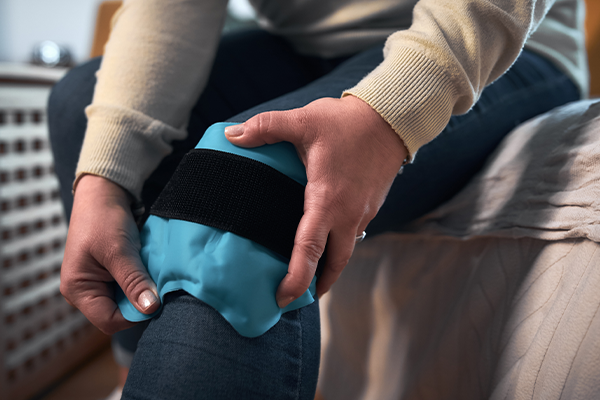
Hot and cold therapy applied to your joints may act as temporary pain relief and help reduce inflammation.10,11 Heat therapy works to reduce stiffness by increasing your body’s circulation.3 So why not try applying a heating pad or hot water bottle, or having a soak in a warm bath or shower? Though when applying a treatment, remember you could burn if the heat is too hot so don’t directly apply to your skin
For the best results, you should apply your chosen heat therapy to your affected joints for around 15 to 30 minutes every two hours.11 Always remember to wrap heating pads and hot water bottles in a towel or cloth to prevent your skin from overheating or burning.10,11
Epsom salts
If you decide to enjoy a warm bath for your heat therapy, adding a generous sprinkle of Epsom salts may help you relax and unwind further. Although the benefits of Epsom salt baths haven’t been scientifically proven, they’ve traditionally been used to help ease muscle soreness and stiff joints.12 The theory is that your body may be able to absorb small quantities of magnesium and sulphate through your skin, which could help with the relaxation and functioning of your joints.12,13 Though there's not much scientific evidence showing that meaningful amounts of magnesium are absorbed through the skin, soaking in a warm bath can still help you unwind, relax your muscles and feel more comfortable.
Supplements that may support joint health
Making sure your body gets the nutrients it needs can help support everyday joint health and movement. However, it can sometimes be difficult to get the right levels of minerals and vitamins through diet alone, especially for people on restricted diets, which is why some people choose to add supplements to their routine. Just remember to follow label guidance and check with a medical professional that supplements are suitable for you.
First up are omega-3 fatty acids. Found in oily fish, plant sources like flaxseed and chia seeds, microalgae or fish or algae oil supplements. Omega-3 is thought to have anti-inflammatory properties and in a small number of studies, has been linked to improvements in joint pain, stiffness and swelling.14–16 You can increase your intake through supplements or by eating more oily fish. Not a fan of fish? Try sprinkling flaxseed onto meals or adding chia seeds and walnuts into your diet instead. It’s worth remembering that although flaxseed contains omega-3s, it’s not the same type found in fish. It provides ALA, which your body can convert into EPA and DHA, but only a small amount gets converted. If you want the full benefits of EPA and DHA, fish oil is usually the better choice.17
Ginger extract can be a helpful natural ally for joint health. While it’s not a cure for joint conditions, ginger may be a simple and effective way to help keep your joints feeling good. Research suggests it may help reduce inflammation, ease joint pain and stiffness and support better mobility.18-20 Its active compounds, such as gingerols and shogaols, appear to influence key inflammatory pathways in the body. Studies have shown that ginger supplementation can improve joint comfort and function, particularly in people with knee osteoarthritis, while also lowering markers of inflammation.18-20 In short, ginger extract may help:18-20
- reduce joint pain and stiffness
- support healthy inflammatory responses
- improve mobility and everyday comfort
- aid recovery after physical activity
Curcumin, the active compound in turmeric, may help support joint health by reducing morning joint pain and stiffness. In one study, participants taking a specific curcumin supplement reported less joint discomfort when they woke up, making it easier to move comfortably at the start of the day. By helping to support a healthy inflammatory response, curcumin may promote greater joint comfort, flexibility and mobility over time.21
Low-impact exercise
While high-impact exercises such as running, aerobics and certain sports can be great for physical and mental wellbeing, sometimes they can put extra strain on our joints.2 If you’re experiencing stiffness or swelling in your joints, especially after exercise, it may help to switch things up with more low-impact movement like walking, cycling, swimming or stretching.22,23
Low-impact exercise can still raise your heart rate and support overall fitness, but your joints will be under less strain. They can also help strengthen the muscles around your joints and improve the range of motion of your joints (how far they bend or move), resulting in less joint pain overall.8,22
By swapping a HIIT workout for something gentler, like yoga, Pilates or swimming, it may help reduce strain on your joints.24 Exercising regularly can also help you maintain a healthy weight, which can help reduce the impact and strain put on joints in your back, hips and knees.8,25 You can also speak to a physiotherapist if you’re struggling to find an exercise that works for you, it's important that you listen to your body.23
Joint related FAQS
Your joints can hurt after exercise for a few reasons. According to the NHS, pain after intense or repetitive exercise is often caused by a sprain or strain, especially if there's swelling, bruising or stiffness.3 Overusing a joint or increasing exercise too quickly can also irritate the tissues around the joint and lead to discomfort.3 Mild soreness can be normal after exercise and usually improves within a few days but severe, worsening or persistent joint pain should be checked by a doctor.3
Dehydration may contribute to feelings of fatigue, muscle cramps and general discomfort during exercise, which some people may perceive as joint discomfort. Sweating during exercise can also reduce fluid around the joints, increasing friction and discomfort, which is why staying hydrated is important for healthy movement.
To help prevent joint discomfort when exercising, the NHS recommends warming up properly, building strength gradually, staying hydrated and allowing time for recovery after activity.26 Dynamic stretches, strength and balance exercises and wearing supportive footwear may also help reduce strain on your joints. It’s also important not to increase exercise intensity too quickly and to include rest days so your body can recover.26
The final say
Stiff or inflamed joints can make everyday movement feel more difficult, but small changes to your routine can make a real difference over time. Gentle stretching, low-impact movement, staying hydrated and nourishing your body may all help support comfortable movement day to day. If you’re looking for extra support, joint-friendly supplements may also be worth exploring alongside a balanced lifestyle. Just remember, if your discomfort has lasted more than a couple of weeks or your movement is becoming more limited, it’s important to speak to a doctor – it’s always better to be safe than sorry.
Disclaimer – This article provides informational advice and is not a substitute for medical care. Working with experts for accuracy, we take great care to ensure the information is up-to-date and relevant. However, you should always consult your GP or healthcare professional before using supplements or alternative products, particularly if you have medical conditions or are under supervision.
1. Juneja P, Munjal A, Hubbard JB. Anatomy, Joints [Internet]. Nih.gov. StatPearls Publishing; 2024 [cited 2024 Jun 10]. Available from: https://www.ncbi.nlm.nih.gov/books/NBK507893/
2. MSD Manual Consumer Version. Joint stiffness [Internet]. [cited 2024 March 11]. Available from: https://www.msdmanuals.com/en-gb/home/bone,-joint,-and-muscle-disorders/symptoms-of-musculoskeletal-disorders/joint-stiffness.
3. NHS. Joint pain. [Internet]. [cited 2024 March 11]. Available from: https://www.nhs.uk/conditions/joint-pain/.
4. NHS. Overview - Arthritis [Internet]. NHS. 2022. Available from: https://www.nhs.uk/conditions/arthritis/
5. NHS . Sprains and strains [Internet]. NHS. 2024. Available from: https://www.nhs.uk/conditions/sprains-and-strains/
6. Quintero JA, Raluchukwu Attah, Khianey R, Capitle E, Schutzer SE. Arthritis and Diagnostics in Lyme Disease. Tropical medicine and infectious disease [Internet]. 2021 Jan 29 [cited 2024 Jun 10];6(1):18–8. Available from: https://www.ncbi.nlm.nih.gov/pmc/articles/PMC7931108/
7. NHS. Bone cancer - Symptoms. [Internet]. [cited 2024 March 11]. Available from: https://www.nhs.uk/conditions/bone-cancer/symptoms/.
8. CDC. Physical Activity and Self-Management Education Programs for Arthritis [Internet]. Arthritis. 2024. Available from: https://www.cdc.gov/arthritis/programs/
9. Relieve Tension and Stiffness With Stretching | Arthritis Foundation [Internet]. www.arthritis.org. Available from: https://www.arthritis.org/health-wellness/healthy-living/physical-activity/other-activities/tension-relieving-stretches
10. Villa-Forte A. Joint Pain: Many Joints [Internet]. MSD Manual Consumer Version. MSD Manuals; 2023 [cited 2024 Jun 10]. Available from: https://www.msdmanuals.com/en-gb/home/bone,-joint,-and-muscle-disorders/symptoms-of-musculoskeletal-disorders/joint-pain-many-joints
11. NHS. Ice and Heat Therapy [Internet]. [cited 2024 March 11]. Available from: https://www.southwestyorkshire.nhs.uk/wp-content/uploads/2018/05/Ice-and-heat-therapy.pdf.
12. Damor DC, et al. A comparative study to assess the effectiveness of epsom salt with hot water versus plain water on pain and functional performance among arthritis patients at selected hospital, udaipur. Int J Health Sci Res [Internet]. 2023 Sep 12 [cited 2024 March 11];13(9):137–49. Available from: https://www.ijhsr.org/IJHSR_Vol.13_Issue.9_Sep2023/IJHSR21.pdf.
13. Gröber U, et al. Myth or reality—transdermal magnesium? Nutrients [Internet]. 2017 Jul 28 [cited 2024 March 11];9(8):813. Available from: https://www.ncbi.nlm.nih.gov/pmc/articles/PMC5579607/.
14. Kostoglou-Athanassiou, I., et al. The effect of omega-3 fatty acids on rheumatoid arthritis. Mediterr J Rheumatol. 2020];31(2):190–4. Available from: https://www.ncbi.nlm.nih.gov/pmc/articles/PMC7362115/.
15. Cordingley, DM., et al. Omega-3 fatty acids for the management of osteoarthritis: a narrative review. Nutrients. 2022;14(16):3362. Available from: https://www.ncbi.nlm.nih.gov/pmc/articles/PMC9413343/.
16. Glucosamine [Internet]. Versus Arthritis. 2018 [cited 2024 Jun 10]. Available from: https://versusarthritis.org/about-arthritis/complementary-and-alternative-treatments/types-of-complementary-treatments/glucosamine/
17. Can I eat flax seeds instead of fish or fish oil for omega-3s? [Internet]. Examine.com. 2021 [cited 2026 Jun 3]. Available from: https://examine.com/faq/can-i-eat-flax-seeds-instead-of-fish-or-fish-oil-for-omega-3s/
18. Black CD, Herring MP, Hurley DJ, O’Connor PJ. Ginger (Zingiber officinale) Reduces Muscle Pain Caused by Eccentric Exercise. The Journal of Pain. 2010 Sep;11(9):894–903.
19. Altman RD, Marcussen KC. Effects of a ginger extract on knee pain in patients with osteoarthritis. Arthritis and Rheumatism [Internet]. 2001 Nov 1;44(11):2531–8. Available from: https://pubmed.ncbi.nlm.nih.gov/11710709/
20. Broeckel J, Estes L, Leonard M, Dickerson BL, Gonzalez DE, Purpura M, et al. Effects of Ginger Supplementation on Markers of Inflammation and Functional Capacity in Individuals with Mild to Moderate Joint Pain. Nutrients [Internet]. 2025 Jul 18;17(14):2365. Available from: https://www.mdpi.com/2072-6643/17/14/2365
21. Briskey D, Roche G, Rao A. The Effect of a Dispersible Curcumin (HydroCurc®) Compared to a Placebo for Reducing Joint Pain in an Adult Population – a randomised, double-blind study. Complementary Medicine Research. 2022 Apr 27;
22. NIAMS. Exercise for Your Bone Health [Internet]. National Institute of Arthritis and Musculoskeletal and Skin Diseases. 2023 [cited 2024 Jun 10]. Available from: https://www.niams.nih.gov/health-topics/exercise-your-bone-health
23. SJH Leaflet Ref: Tpy 011 Version: 7 Leaflet title: Self-Management for Inflammatory Arthritis Self-Management for Inflammatory Arthritis Patient Information Therapy Services Self-Management of Inflammatory Arthritis [Internet]. Available from: https://www.wwl.nhs.uk/media/.leaflets/65eb647f74c1b3.40218933.pdf
24. Fishman LM. Yoga and Bone Health. Orthopedic nursing [Internet]. 2021 May 1 [cited 2024 Jun 10];40(3):169–79. Available from: https://pubmed.ncbi.nlm.nih.gov/34004616/
25. Arthritis Foundation. Fat and Arthritis. [Internet]. [cited 2024 March 11]. Available from: https://www.arthritis.org/health-wellness/about-arthritis/understanding-arthritis/fat-and-arthritis.
26. How to reduce your risk of injury from exercise or physical activity | NHS inform [Internet]. NHS inform. 2025. Available from: https://www.nhsinform.scot/illnesses-and-conditions/muscle-bone-and-joints/how-to-reduce-your-risk-of-injury-from-exercise-or-physical-activity/
Related to this article


