20% off £40 or 15% off £30
 Track an order
 Buy It Again
 Favourites
 Manage account
 Rewards
 Subscriptions
 Find a store
 Help centre
Our round-up of kids' vitamins: a parent’s guide to finding the right fit
Written byNatalie Beastall

Reviewed byH&B Regulatory Affairs
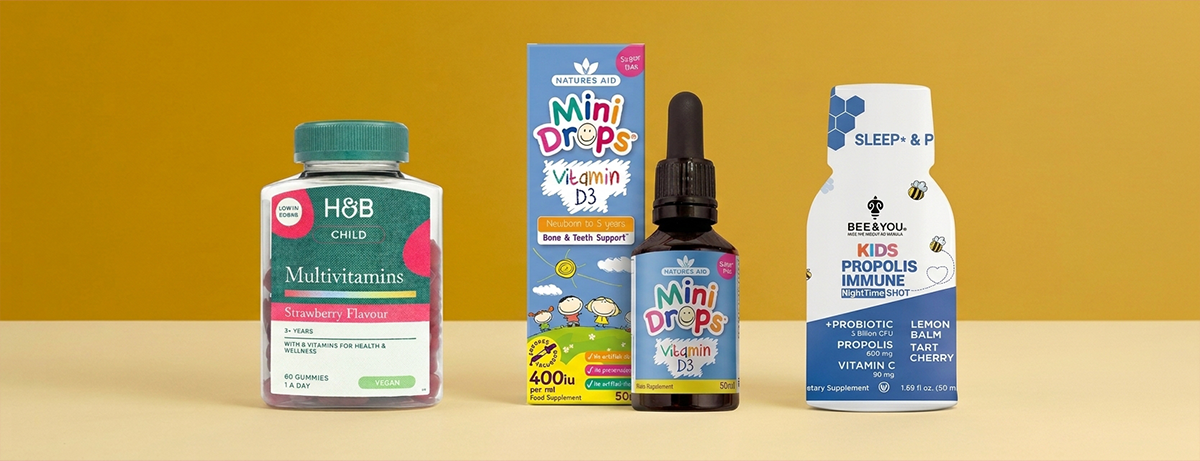
Kids’ vitamins can feel like a lot to navigate. Drops or gummies? Multivitamin or probiotic? We’ve made finding the right fit for your family simple
Our top picks
added vitamin C
Bio-Kult
Bio-Kult Infantis Kids Probiotic Gut Supplement With Vitamin C 16 Sachets
3 for 2 Mix & Match
£12.99
added vit E
Natures Aid
Natures Aid Vitamin D3 Drops for Children 50ml
FREE Calcium with £35 spend
£4.99
RRP £7.45
vegan
Holland & Barrett
Holland & Barrett Kids Multivitamin Strawberry Flavour 60 Gummies
3 for 2 Mix & Match
£10.99
One day they’re asking for seconds of broccoli, the next they’ve decided anything green is off the menu. Feeding little ones can be unpredictable – so it’s understandable to wonder whether they’re getting everything they need. A varied, balanced diet is the best place to start, but there are times when specific supplements may be recommended for babies and children, and some parents may choose others to complement their child’s diet where appropriate.
But with so many multivitamins for kids and more lining the shelves, where do you start? We’ve broken down the different options and rounded up our picks to help you find something that works for your child’s age, needs and – importantly – their routine.
7 kids' vitamins to try
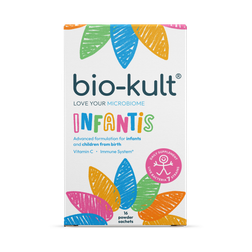
Your little one’s gut is home to a diverse community of microorganisms, including bacteria, and their gut microbiome continues to develop during their early years.1,2 If you’d like to explore live friendly bacteria for kids, Bio-Kult Infantis is an easy-to-use option to add to their routine.
Made for babies and young children, each sachet contains seven strains of live bacteria alongside fructo-oligosaccharides (FOS) and added vitamin C, which supports the normal function of the immune system.3 The powder comes in handy single-use sachets and doesn’t need to be kept in the fridge, making it easy to use at home or pop in your bag when you’re out and about. It’s also vegetarian and gluten-free, with no artificial colours or flavours.
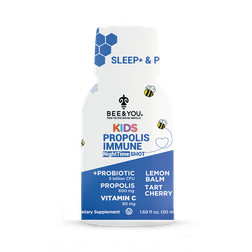
Bedtime routines can be busy enough, so why not make their supplement routine one less thing to think about? This handy 50ml night-time shot combines friendly bacteria with propolis and added vitamin C, which supports the normal function of the immune system.3
Designed with kids aged one to four in mind, the ready-to-drink format makes it an easy addition to their evening routine – especially if you’re looking for an alternative to tablets or gummies. A convenient way to bring friendly bacteria and vitamin C together in one little bottle.
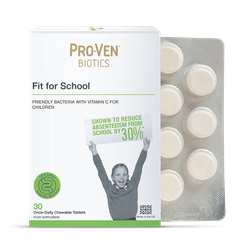
Once school mornings are in full swing, convenience can make all the difference. Pro-Ven Biotics Fit For School combines 12.5 billion friendly bacteria with vitamin C in a strawberry-flavoured chewable tablet developed for children aged four to 16. A simple one-a-day option that can slot neatly into their usual routine.
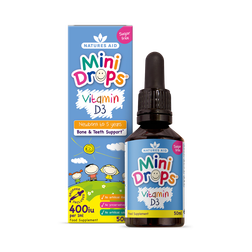
If you’re searching for baby vitamin D drops, a liquid format can be a handy option for little ones who aren’t ready for tablets or gummies. Natures Aid vitamin D3 Drops are specially formulated for newborns to children aged five, providing 10µg (400IU) of vitamin D3 in the recommended daily serving. However, babies receiving 500ml or more of infant formula daily don’t need additional vitamin D as formula is already fortified.4
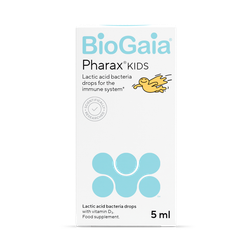
If you’re googling ‘baby probiotics’, ‘probiotics for babies’ or ‘probiotics for kids’, BioGaia Pharax offers a liquid friendly bacteria designed for babies, toddlers and children from six months old. A few little drops bring together two strains of friendly bacteria with vitamin D3, which supports the normal function of children’s immune systems.5 Easy to work into their everyday routine, it’s a handy option for kids without tablets or gummies.
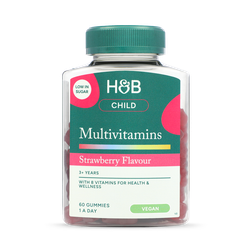
Getting children into a routine with their kid's vitamins doesn’t have to mean another battle at breakfast. These strawberry-flavoured multivitamins for kids come in an easy one-a-day gummy format, with a blend of vitamins designed with growing kids in mind. They contain B vitamins B12 and B6, which support normal energy-yielding metabolism,6,7 alongside vitamins C and D, which contribute to the normal function of the immune system.8
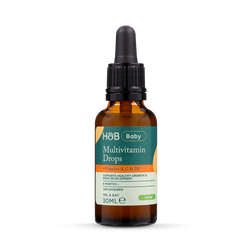
Looking for baby vitamins without the fuss of tablets or gummies? These unflavoured drops have been specially designed for babies from six months plus, combining vitamins A, C and D3 in an easy-to-dispense liquid. The drops can be mixed into food or given directly, making this baby multivitamin an easy option to fit around feeds, mealtimes and busy family routines.
Children's supplements FAQs
It depends on their age and how they’re fed. The NHS recommends that breastfed babies have a daily vitamin D supplement containing 8.5-10 micrograms from birth.9 Babies having 500ml or more of infant formula a day don’t usually need an additional vitamin supplement, as formula is already fortified. From six months to five years, the NHS recommends daily vitamins A, C and D, unless your child is having more than 500ml (about a pint) of infant formula a day or otherwise advised by a healthcare professional.4
Little ones need a range of vitamins and minerals to support them as they grow, with a varied, balanced diet helping to provide many of these. Vitamins A, C and D are particularly important during the early years. Vitamin D is needed for the normal growth and development of bones in children, while vitamin C and A support the normal function of the immune system.3,4,10,11
Some vitamin supplements are recommended from birth. The NHS recommends that breastfed babies have a daily vitamin D supplement containing 8.5–10 micrograms from birth.4 Babies having more than 500ml (about a pint) of infant formula a day don’t need an additional vitamin supplement, as formula is already fortified.4 From six months to five years, the NHS recommends daily supplements containing vitamins A, C and D, unless your child is having 500ml or more of infant formula a day.4 Always choose an age-appropriate supplement and follow the recommended dose.
The final say
When it comes to children’s supplements, the best choice isn’t necessarily the one with the longest ingredient list – it’s the one that’s appropriate for your child and fits comfortably into family life. Whether that means drops at breakfast, a chewable before school or something else entirely, finding a format they’re happy to take can make staying consistent that little bit easier. Just note that the NHS advises being careful not to give children two supplements at the same time, as ingredients can overlap and too much of some vitamins can be harmful.4
Ready to learn more? Discover how much sleep children really need or the benefits of omega-3 for kids.
Disclaimer – This article provides informational advice and is not a substitute for medical care. Working with experts for accuracy, we take great care to ensure the information is up-to-date and relevant. However, you should always consult your GP or healthcare professional before using supplements or alternative products, particularly if you have medical conditions or are under supervision.
1. Ronan V, Yeasin R, Claud EC. Childhood Development and the Microbiome: The Intestinal Microbiota in Maintenance of Health and Development of Disease During Childhood Development. Gastroenterology. 2020 Dec;160(2).
2. Suárez-Martínez C, Santaella-Pascual M, Yagüe-Guirao G, Martínez-Graciá C. Infant gut microbiota colonization: influence of prenatal and postnatal factors, focusing on diet. Frontiers in Microbiology [Internet]. 2023 [cited 2026 Aug 14];14:1236254. Available from: https://pubmed.ncbi.nlm.nih.gov/37675422/
3. Carr AC, Maggini S. Vitamin C and immune function. Nutrients [Internet]. 2017 [cited 2026 Aug 14];9(11):1211. Available from: https://www.mdpi.com/2072-6643/9/11/1211
4. NHS. Vitamins for children [Internet]. nhs.uk. 2020 [cited 2026 Aug 27]. Available from: https://www.nhs.uk/baby/weaning-and-feeding/vitamins-for-children/
5. Mailhot G, White JH. Vitamin D and Immunity in Infants and Children. Nutrients [Internet]. 2020 Apr 27 [cited 2026 Aug 17];12(5). Available from: https://www.ncbi.nlm.nih.gov/pmc/articles/PMC7282029/
6. Hanna M, Jaqua E, Nguyen Van, Clay J. B Vitamins: Functions and Uses in Medicine. The Permanente Journal [Internet]. 2022 June [cited 2026 Aug 27];26(2):89–97. Available from: https://www.ncbi.nlm.nih.gov/pmc/articles/PMC9662251/
7. European Commission. Food and Feed Information Portal Database | FIP [Internet]. ec.europa.eu. [cited 2026 Aug 27]. Available from: https://ec.europa.eu/food/food-feed-portal/screen/health-claims/eu-register
8. Gombart AF, Pierre A, Maggini S. A Review of Micronutrients and the Immune System–Working in Harmony to Reduce the Risk of Infection. Nutrients. 2020 Jan 16;12(1).
9. Baby vitamins - Best Start in Life - NHS [Internet]. nhs.uk. 2023 June [cited 2026 Aug 17]. Available from: https://www.nhs.uk/best-start-in-life/baby/baby-vitamins/
10. Bouftas F, DeVries C. Vitamin D and pediatric bone health: Important information and considerations for the pediatric orthopaedic surgeon. Journal of the Pediatric Orthopaedic Society of North America [Internet]. 2024 Apr 3 [cited 2026 Aug 17];7:100042. Available from: https://www.sciencedirect.com/science/article/pii/S276827652400868X
11. Bos A, van Egmond M, Mebius R. The role of retinoic acid in the production of immunoglobulin A. Mucosal Immunology. 2022 Apr 13;.
Related to this article


