 Track an order
 Buy It Again
 Favourites
 Manage account
 Rewards
 Subscriptions
 Find a store
 Help centre
What’s the difference between prebiotics, probiotics and postbiotics?



Prebiotics, probiotics and postbiotics... what's the difference? Our expert explores the ‘friendly bacteria’ that help keep your gut happy
Summary
1What are probiotics?
Probiotics (also called friendly bacteria) are live microorganisms that can provide a health benefit.
2What are prebiotics?
In simple terms, prebiotics are food for beneficial microbes that live on or within your body.
3Gut-friendly foods
You should aim to eat the rainbow, get enough fibre, include fermented foods and more.
Your body’s already home to trillions of friendly bacteria... but sometimes it can benefit from a little extra support. Maybe you’ve ummed and ahhed over biotic tablets, gummies or ‘friendly bacteria’ yoghurts – but what’s the truth? And what’s the difference between pre-, pro- and postbiotics? Senior Scientist Dr Erinn Quinn explains all...
“If you’re new to prebiotic fibres, introduce them gradually and drink plenty of fluids”
What are probiotics?
Probiotics (also called friendly bacteria) are live microorganisms that, when consumed in adequate amounts, can provide a health benefit.1 Some people choose to take friendly bacteria supplements to complement their diet. Others may opt for specific probiotic strains for a particular reason, like during or after a course of antibiotics.
"Probiotics are live, friendly bacteria that are supported by scientific evidence to offer a health benefit when consumed in the right amounts,” explains Erinn. "They’re most commonly found in live culture or probiotic supplements but can also occur naturally in some fermented foods such as yoghurt and kefir. Just be sure to check the label for names of the probiotics as not all fermented products contain live probiotic strains with proven health benefits.”
Thinking about choosing a friendly bacteria supplement? Not all probiotics are the same. Different products may contain different strains, which can be supported by varying levels of scientific research. When choosing a probiotic, it’s important to look for products that are backed by scientific evidence and provide clear information on the strains they contain.
Checking the label for wording such as 'contains live cultures' and clearly identified strains (for example, Lactobacillus acidophilus ABC) can help you make an informed choice. It’s also a good idea to speak to your doctor or healthcare professional before taking a supplement, particularly if you have an underlying health condition, are pregnant or are taking medication.
What are prebiotics?
“In simple terms, prebiotics are food for beneficial microbes that live on or within your body. Most prebiotics are dietary fibres, but not all dietary fibres are prebiotics,” says Erinn.2 You can find prebiotics naturally in foods like onions, leeks, garlic, oats, beans and other fibre-rich plants. They also come in different forms beyond plants: “for example, human milk is a particularly rich source of prebiotics for a nursing baby and may help support the growth of beneficial gut microbes.”3,4
If you want to treat your friendly bacteria to some good prebiotic food, look out for:
- galactooligosaccharides (GOS) – a prebiotic fibre most commonly found in supplements and some fortified foods
- fructooligosaccharides (FOS) – found in foods like onions, garlic and bananas
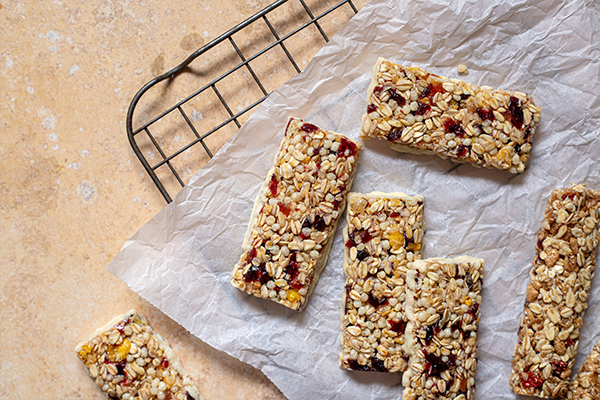
- inulin (chicory root fibre) – a well-studied prebiotic fibre commonly added to bars, cereals and drinks
- resistant starch – found in cooked-and-cooled potatoes, green bananas, oats and legumes
However, if you’re new to prebiotic fibres, introduce them gradually and drink plenty of fluids to help the gut adapt. This may help minimise temporary digestive effects like bloating or gas. If you’re sensitive to fermentable fibres, follow a low-FODMAP diet or if you have an underlying health condition, are pregnant or are taking medication, it’s a good idea to speak with your healthcare provider before making changes.
“The gut microbiome is a busy place, and scientists are still learning more about how biotics fit into the bigger picture”
What are postbiotics?
Postbiotics are beneficial compounds made from friendly bacteria that have been inactivated (non-living). This includes the helpful components they contain, such as the cell components and compounds produced during fermentation. Unlike probiotics, they don’t need to be alive to give a benefit.5
According to the International Scientific Association for Probiotics and Prebiotics (ISAPP), postbiotics must be clearly identified, intentionally inactivated and supported by scientific research showing a beneficial effect. “This means that not all foods containing non-living microbes are postbiotics,” explains Erinn. “For example, foods like sourdough contain inactive microorganisms, but they aren’t considered postbiotics, even though they may still offer nutritional value.” Postbiotics are currently less common than pre- and probiotics and are most often found in specific supplements or specialised products, rather than everyday foods.
Are biotics just for your gut?
“The gut microbiome is a busy place, and scientists are still learning more about how biotics fit into the bigger picture. It’s an evolving area of research, with new insights continuing to emerge," says Erinn. “Early studies and emerging research suggest that certain strains may be involved in areas like immunity, skin, vaginal health, weight management and the gut-brain connection. However, these effects are highly strain-specific and not all strains work in the same way.”6-10
Are prebiotics and postbiotics the same thing?
“No, they’re actually quite different,” Erinn explains. “Prebiotics are nutrients – usually types of fibre that help nourish beneficial gut bacteria already present in your gut. Postbiotics, on the other hand, are made from inactivated microorganisms and their components. While they may complement each other, they play different roles in the gut microbiome.”
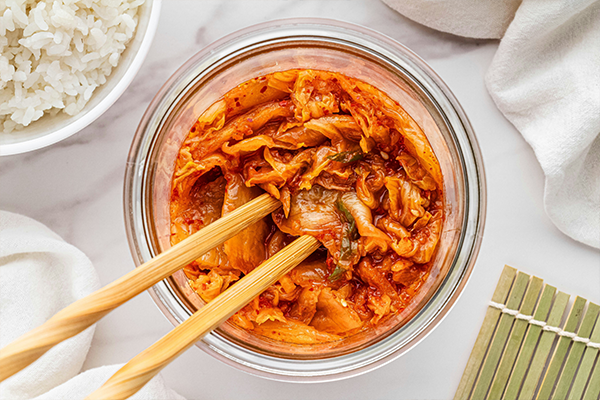
Gut-friendly foods: Erinn’s top tips
“There’s no single quick fix when it comes to looking after your gut. The key is consistency – this really matters. Aim to eat the rainbow, include a variety of plant foods, get enough fibre and enjoy fermented foods...”
Fibre’s an important part of everyday eating and staying ‘regular’, and many people don’t get enough of it. Including wholegrains such as brown rice, wholemeal bread and wholewheat pasta, alongside beans, lentils, fruit and vegetables, can help increase fibre intake across the day. Looking for foods labelled as a ‘source of fibre’ or ‘high in fibre’ can also help when making choices.
A varied, colourful diet helps ensure you’re including a wide range of plant foods. Different fruits and vegetables naturally provide different fibres and plant compounds, so aiming for variety is a simple way to add diversity to meals.
Small, everyday swaps can add up. Simple choices, like having oats for breakfast, choosing wholegrain options and pairing fruit and nuts can help increase fibre and plant foods over time.
The final say
With a diverse, well-fed community of friendly bacteria, it’s easier for your gut to do its daily work. Pre-, pro- and postbiotics, paired with other gut-friendly nutrients, could support you on your journey to a happier belly.
Speak to your GP if you’re thinking of trying them for yourself, especially if you’re sensitive to fermentable fibres or follow a low-FODMAP diet, have an underlying health condition, are pregnant or are taking medication as certain biotics may not be suitable for everyone, and your doctor can provide advice that's tailored to you. In the meantime, check out other tips for a feel-good gut – like how probiotics may support women’s health or how gut health affects your skin.
Disclaimer – This article provides informational advice and is not a substitute for medical care. Working with experts for accuracy, we take great care to ensure the information is up-to-date and relevant. However, you should always consult your GP or healthcare professional before using supplements or alternative products, particularly if you have medical conditions or are under supervision.
1. Hill C et al. The International Scientific Association for Probiotics and Prebiotics consensus statement on the scope and appropriate use of the term probiotic. Nature Reviews Gastroenterology & Hepatology [Internet]. 2014 Jun 10 [cited 2026 Jan 9]; 11(8): 506-514. Available from: https://www.nature.com/articles/nrgastro.2014.66
2. Gibson GR et al. Expert consensus document: The International Scientific Association for Probiotics and Prebiotics (ISAPP) consensus statement on the definition and scope of prebiotics. Nat Rev Gastroenterol Hepatol [Internet]. 2017 Jun 14 [cited 2026 Jan 9];14(8): 491–502. Available from: https://www.nature.com/articles/nrgastro.2017.75
3. Wiciński M et al. Human Milk Oligosaccharides: Health Benefits, Potential Applications in Infant Formulas and Pharmacology. Nutrients [Internet]. 2020 Jan 20 [cited 2026 Jan 9]; 12(1). Available from: https://www.mdpi.com/2072-6643/12/1/266
4. Dinleyici M, Barbieur J, Dinleyici DC, Vandenplas Y. Functional effects of human milk oligosaccharides (HMOs). Gut Microbes [Internet]. 2023 Jan-Dec [cited 2026 Jan 9]; 15(1): 2186115. Available from: https://www.tandfonline.com/doi/10.1080/19490976.2023.2186115?url_ver=Z39.88-2003&rfr_id=ori:rid:crossref.org&rfr_dat=cr_pub%20%200pubmed
5. Salminen S et al. The International Scientific Association of Probiotics and Prebiotics (ISAPP) consensus statement on the definition and scope of postbiotics. Nature Reviews Gastroenterology & Hepatology [Internet]. 2021 May 4 [cited 2026 Jan 9]; 18(9): 649-667. Available from: https://pmc.ncbi.nlm.nih.gov/articles/PMC8387231/
6. Lei WT et al. Effect of Probiotics and Prebiotics on Immune Response to Influenza Vaccination in Adults: A Systematic Review and Meta-Analysis of Randomized Controlled Trials. Nutrients [Internet]. 2017 Oct 27 [cited 2026 Jan 9]; 9(11): 1175. Available from: https://pubmed.ncbi.nlm.nih.gov/29077061/
7. Zhou P, Chen C, Patil S, Dong S. Unveiling the therapeutic symphony of probiotics, prebiotics and postbiotics in gut-immune harmony. Frontiers in Nutrition [Internet]. 2024 Feb 8 [cited 2026 Jan 9]; 11. Available from: https://www.frontiersin.org/journals/nutrition/articles/10.3389/fnut.2024.1355542/full
8. López-Moreno A, Aguilera M. Vaginal Probiotics for Reproductive Health and Related Dysbiosis: Systematic Review and Meta-Analysis. Journal of Clinical Medicine [Internet]. 2021 April 2 [cited 2026 Jan 9]; 10(7): 1461. Available from: https://www.mdpi.com/2077-0383/10/7/1461
9. Oudat Q, Okour A. The Role of Probiotics in Modulating Gut Microbiota and Metabolic Health for Weight Management: A Mini Review. Acta Microbiologica Hellenica [Internet]. 2025 Feb 5 [cited 2026 Jan 9]; 70(1): 5. Available from: https://www.mdpi.com/2813-9054/70/1/5
10. Chahwan B et al. Gut feelings: A randomised, triple-blind, placebo-controlled trial of probiotics for depressive symptoms. J Affect Disord [Internet]. 2019 Jun 15 [cited 2026 Jan 9]; 253: 317-326. Available from: https://www.sciencedirect.com/science/article/pii/S0165032719302873?via%3Dihub


