 Track an order
 Buy It Again
 Favourites
 Manage account
 Rewards
 Subscriptions
 Find a store
 Help centre
Train smart: our top supplements for runners to support joints and recovery

Written byEllie Hughes

Reviewed byMillicent Chapman
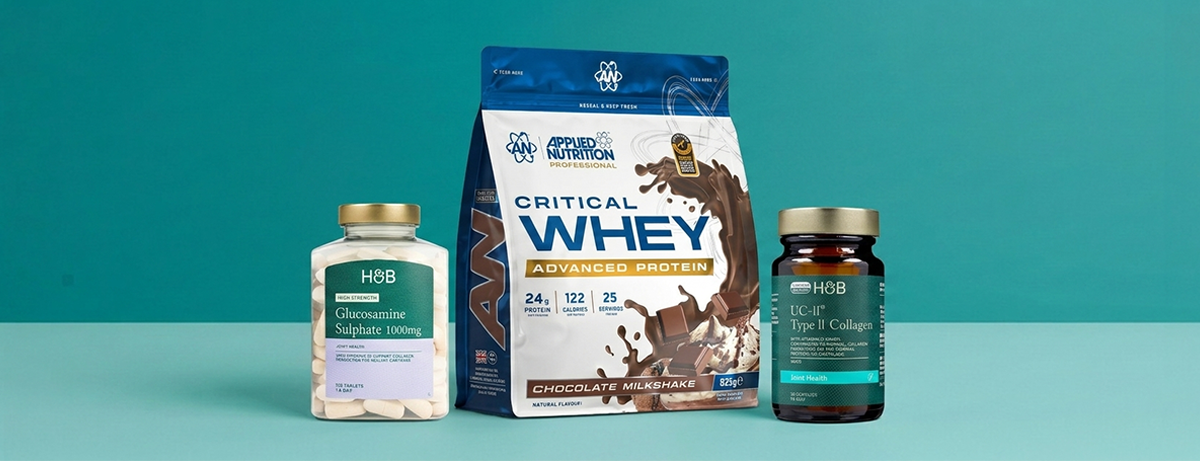
Whether you’re new to running or training for a race, we ask a nutritionist how the right supplements could support your joints, recovery and help you build a personalised supplement stack
Our top picks
For joint support
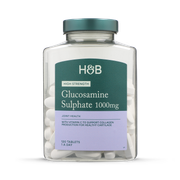
Holland & Barrett
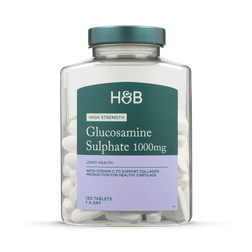
Holland & Barrett Glucosamine Sulphate 1000mg 120 Tablets
Buy 1 Get 1 Free
£19.99
For high-intensity training
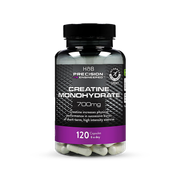
Precision Engineered
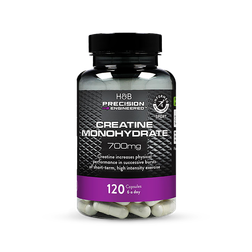
Creatine Monohydrate 700mg 120 Capsules
Buy 1 Get 1 Half Price
18+
£25.00
For recovery after long runs
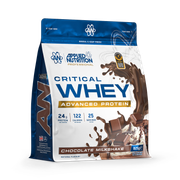
Applied Nutrition
Applied Nutrition Critical Whey Protein Powder Chocolate Milkshake 825g
£30.00
Maybe Parkrun is calling you – those 9am starts don’t sound so bad if it’s a sunny Saturday morning out there. Or perhaps you’re a marathon runner, keen to maintain some endurance fitness through to race season. Wherever you fit on the running scale, from Couch to 5k to experienced racers, the right supplement stack could be beneficial, says Holland & Barrett registered nutritionist Millicent Chapman.
“A supplement stack is a group of vitamins and supplements taken together for a specific goal, like improving health or fitness,” explains Millicent. “A stack with a particular focus on energy, endurance and recovery could be beneficial for some runners as it could ultimately improve their overall performance.” We asked Millicent to explain why, what happens when you run and what running supplements she would best recommend.
What happens to your joints when you run?
Good news. If you thought running was bad for your joints, it could be time to think again. In spite of this being a widely held belief, a recent review of 24 studies found that running could actually be beneficial for joint health in healthy adults.1 It’s not quite so clear when it comes to the impact of running on people with osteoarthritis – there are approximately 10 million UK adults in this category – or those who will go on to develop it, so more research is needed.2,3 "And when it comes to running in summer or hot weather, the picture for our joints is slightly different again," says Millicent.
“Research suggests that for some people, additional heat can sometimes make joint-related ailment symptoms worse, especially in hot, humid weather. This is because the heat may increase inflammation, including swelling and discomfort.”4
Are certain runners more prone to joint injuries?
“According to the NHS, running injuries can affect anyone,” says Millicent.5 “From experienced runners who push themselves hard, to beginners whose muscles aren't used to running. The NHS states the top five most common running injuries are knee pain (sometimes known as runner’s knee), achilles pain, shin pain, heel pain and muscle strains."
So, whether you’re feeling fit and strong, dealing with sore joints or recovering from an injury, giving your joints a little extra support can make all the difference. If you’re experiencing pain or discomfort during your runs, it’s always best to speak to your GP for professional advice first.
For those simply looking to support their wellness journey, explore our range of supplements designed to help maintain healthy joints and support training, here’s our curated roundup.
The runner’s supplement stack: key nutrients to know
When it comes to finding the best joint support supplements for runners, these are some key nutrients to know about.
- Glucosamine – a natural compound in the body that helps build and maintain joint tissues
- Collagen – a key structural protein in the body, making up nearly one-third of its total protein content. Collagen helps maintain the structure of cartilage, the tissue that cushions and protects your joints
- Turmeric + black pepper – a spice that’s rich in curcuminoids or curcumins. Taking it with black pepper can help your body absorb it better, too5
- Omega-3 – a group of polyunsaturated fatty acids that support important bodily functions. Omega-3 has known potential anti-inflammatory properties
- Creatine – a naturally occurring compound made from three amino acids: glycine, arginine and methionine. Creatine's mainly stored in the muscles, where it helps supply energy for muscle contractions, supporting overall exercise performance
Holland & Barrett
£19.99
£0.17/1 Tablet
Why? “This formula contains high-strength glucosamine sulphate – an essential building block of healthy cartilage. It also contains vitamin C, helping support natural collagen formation,” says Millicent.7
Precision Engineered
£25.00
£0.21/1 Capsule
Why? "It’s linked to creatine’s role in supporting muscle strength," says Millicent. “Creatine can support overall muscle strength and an increase in muscle strength when combined with resistance exercises and high-intensity training, which could in turn reduce additional stress on the joints, although more research is needed into this area."
Holland & Barrett
£19.99
£42.26/1 l
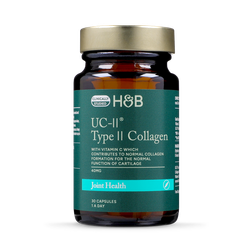
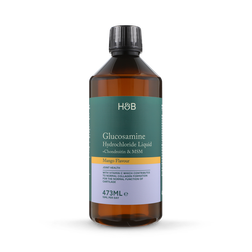
Why? “In one study, endurance athletes showed more breakdown of type II collagen (important for joints) than building it,” explains Millicent. “Glucosamine can help protect joints by blocking enzymes that break down collagen. For runners, this suggests glucosamine may help reduce joint wear and support cartilage health during long-distance training.9 Research suggests that taking chondroitin with glucosamine can increase the associated joint health.”10
Running supplement FAQs
Looking after your knees starts with the basics: warming up properly, stretching regularly and building strength in the muscles around your joints. Small habits, like easing into runs and mixing in rest days, can make a big difference over time.
Some runners also choose to support their routine with ingredients like turmeric, which contains curcuminoids. These natural compounds have been studied for their role in supporting joint comfort, making them a popular addition to an active lifestyle.11
Joint support isn’t just for seasoned runners – it can be helpful at any stage, whether you’re just starting out or clocking up regular miles. Staying consistent with mobility work, stretching and recovery is key, especially if your joints feel a little stiff after a run. Alongside these habits, some people choose supplements containing ingredients like chondroitin, which has been studied for its role in supporting joint health and comfort.12
Joint supplements are considered generally safe and well tolerated. However, people with shellfish allergies, on long-term medication including blood thinners and diabetes medication, who are pregnant or breastfeeding should always consult their doctor before taking any supplements.13
The final say
Supplements are just part of the story when it comes to supporting your running. It’s just as important to focus on good training habits, proper recovery and balanced nutrition. While there's evidence to suggest certain supplements may support long-term joint health, they work best alongside a well-rounded routine.
If you’re looking to go the extra mile, explore our guide to the best supplements for building muscle, get inspired by why run clubs are one of the easiest ways to get started, or take a more relaxed approach with our interview on embracing life as a slow runner.
Disclaimer – This article provides informational advice and is not a substitute for medical care. Working with experts for accuracy, we take great care to ensure the information is up-to-date and relevant. However, you should always consult your GP or healthcare professional before using supplements or alternative products, particularly if you have medical conditions or are under supervision.
1. Osteoarthritis and Cartilage. Association between curcuminoids and knee osteoarthritis outcomes. Osteoarthritis Cartilage. 2022. Available from: https://www.oarsijournal.com/article/s1063-4584(22)00924-4/fulltext
2. National Institutes of Health. Dietary supplements and joint health: current evidence. PMC. 2024. Available from: https://pmc.ncbi.nlm.nih.gov/articles/PMC11195863/
3. National Institute for Health and Care Excellence (NICE). Osteoarthritis: prevalence. 2023. Available from: https://cks.nice.org.uk/topics/osteoarthritis/background-information/prevalence/
4. Care SD, Plans P. Managing arthritis during summer heat: a comprehensive guide. Rheumatology. 2025.
5. NHS. Knee pain and other running injuries. 2023. Available from: https://www.nhs.uk/live-well/exercise/knee-pain-and-other-running-injuries/
6. Daily JW, Yang M, Park S. Efficacy of turmeric extracts and curcumin for alleviating the symptoms of joint arthritis: a systematic review and meta-analysis of randomized clinical trials. J Med Food. 2016;19(8):717–29.
7. Wandel S, Jüni P, Tendal B, Nüesch E, Villiger PM, Welton NJ, et al. Effects of glucosamine, chondroitin, or placebo in patients with osteoarthritis of hip or knee: network meta-analysis. BMJ. 2010;341:c4675. Available from: https://pubmed.ncbi.nlm.nih.gov/18505499/
8. Macnaughton LS, et al. The impact of dietary protein supplementation on recovery from resistance exercise-induced muscle damage: a systematic review with meta-analysis. Eur J Clin Nutr. 2023;77(6):767–83. doi:10.1038/s41430-022-01250-y
9. Nagaoka I, Tsuruta A, Yoshimura M. Chondroprotective action of glucosamine, a chitosan monomer, on the joint health of athletes. Int J Biol Macromol. 2019;132:795–800.
10. Huskisson EC. Glucosamine and chondroitin for osteoarthritis. J Int Med Res. 2008;36(6):1161–79.
11. Panahi Y, Rahimnia AR, Sharafi M, Alishiri G, Saburi A, Sahebkar A. Curcuminoid treatment for knee osteoarthritis: a randomized clinical trial. Phytother Res. 2014;28(11):1625–31.
12. Bishnoi M, Jain A, Hurkat P, Jain SK. Chondroitin sulphate: a focus on osteoarthritis. Glycoconj J. 2016;33(5):693–705.
13. Arthritis Foundation. Glucosamine and chondroitin for osteoarthritis pain. 2023. Available from: https://www.arthritis.org/health-wellness/treatment/complementary-therapies/supplements-and-vitamins/glucosamine-chondroitin-osteoarthritis-pain
Related to this article


