 Track an order
 Buy It Again
 Favourites
 Manage account
 Rewards
 Subscriptions
 Find a store
 Help centre


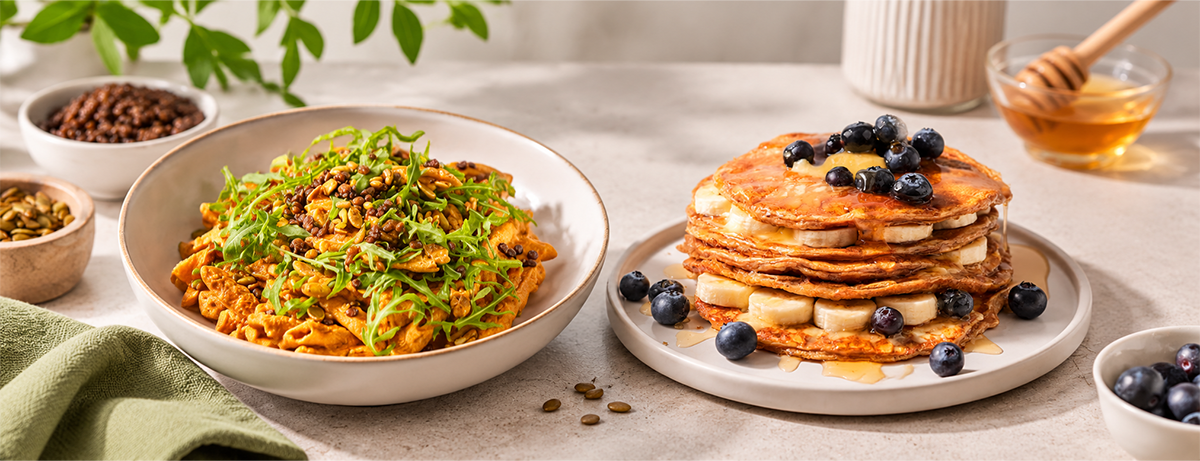
Summary
1Cottage cheese pancakes
Blended with eggs, oats and banana, it helps create a satisfying meal with around 30g of protein per serving.
2Chickpea pasta with red lentil pesto
This isn’t your average bowl of pesto pasta. It’s creamy and crunchy with around 30g of protein and 19g of fibre per serving.
3Chocolate protein baked oats
This recipe turns an everyday bowl of porridge into something closer to cake, with around 37g of protein per serving.
When your appetite is smaller, a big plate of food can feel like a big ask. So, if you’re eating less than usual, it can help to make what you do fancy count. There are lots of reasons why your appetite might change. It can happen naturally with age, during periods of illness or stress, with hormonal changes or when taking some medicines, including GLP-1 medicines.1,2
Whatever the reason, eating less can mean there are fewer opportunities to get a variety of nutrients into your day. That’s where making thoughtful food choices can help. A balanced diet still means including a mix of protein, fruit and vegetables, fibre or wholegrain carbohydrates, dairy or dairy alternatives and unsaturated fats.3
But that doesn’t have to mean bigger portions. Combining several nutrient-rich ingredients in one meal or snack can help you add more variety to what you’re eating, without piling more onto your plate.
Our high-protein recipes for a smaller appetite
Not sure where to start? We’ve pulled together simple, high-protein recipes that pack plenty into smaller portions – without making mealtimes feel like a mountain to climb.
High-protein cottage cheese pancakes
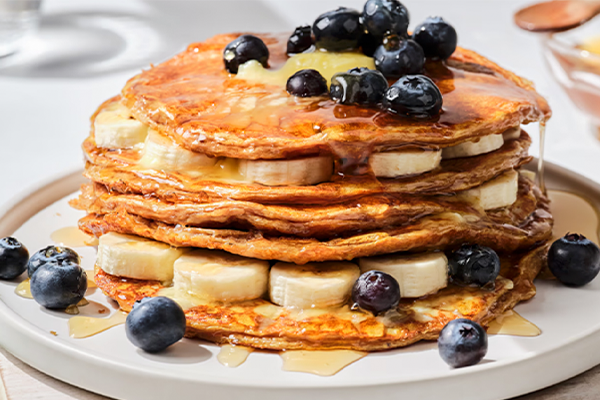
Cottage cheese in pancakes? Trust us on this one. Blended with eggs, oats and banana, it helps create a satisfying meal with around 30g of protein per serving – and you’d never know breakfast was working quite so hard. You’ll get protein from the cottage cheese and eggs, carbohydrates and fibre from the oats, plus calcium from the cottage cheese, which is needed for the maintenance of normal bones.4 Top with berries, nuts or seeds for extra texture, flavour and variety. Plus, you can always make yours a short stack and keep the rest for later.
Protein chickpea pasta with red lentil pesto
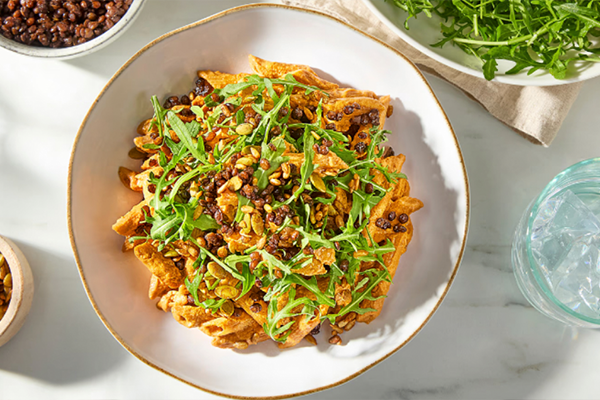
This isn’t your average bowl of pesto pasta. Chickpea pasta meets a creamy red lentil pesto, with cashews and seeds joining the party too. The result? Around 30g of protein and 19g of fibre per serving. It’s also a clever way to get plenty of plant variety onto one plate, with legumes, nuts and seeds providing nutrients including protein, fibre, magnesium and iron.3,5 And there’s no need for a mountain of pasta. Dish up what feels manageable and pop the rest in the fridge for an easy meal later.
Chocolate protein baked oats
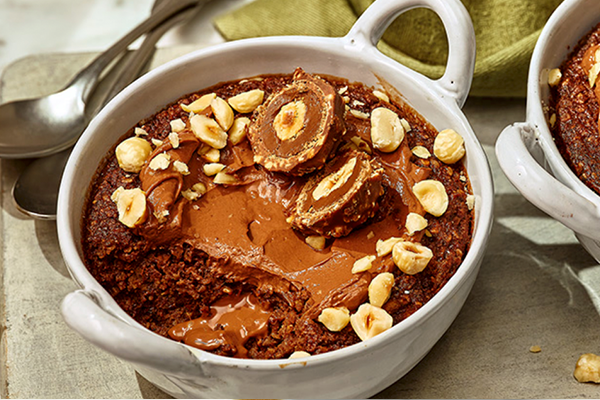
Not feeling a big savoury meal? Something sweet might be easier to get excited about. These chocolate baked oats turn an everyday bowl of porridge into something closer to cake – while providing around 37g of protein per serving. Oats provide carbohydrates and fibre, while the other ingredients bring protein and a range of nutrients to the mix.3,5,7 Add yoghurt, berries, nuts or seeds if you fancy them – or simply enjoy a smaller scoop while it’s warm and save the rest for later.
Super green protein pancakes
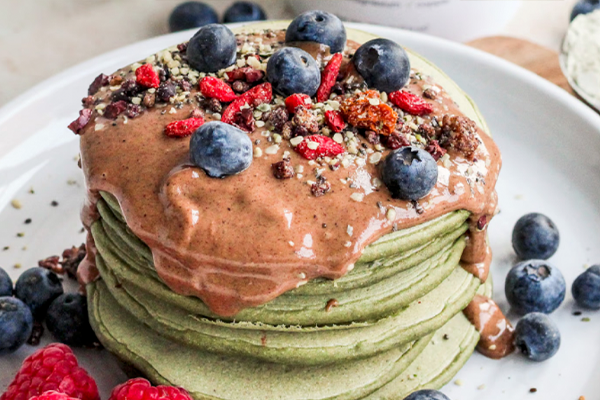
If beige breakfasts are getting boring, meet the pancakes bringing a little more colour to your morning. These combine organic greens blend with banana and peanut butter for a plant-based stack providing around 18g of protein and 18g of fibre per serving. Blueberries bring an extra burst of colour, while a spoonful of nut butter or sprinkle of seeds can add more protein, unsaturated fats, fibre and minerals.3,5 Small stack, plenty going on.
Why should I focus on protein?
When you’re eating less than usual, protein is one nutrient worth keeping on your radar. It provides amino acids – the building blocks your body uses to make and maintain muscle – and getting enough protein helps support the maintenance of muscle mass.8,9 The good news? You don’t necessarily need a big meal to get it. Protein-rich foods can work just as well in smaller meals and snacks, and many bring other useful nutrients along with them too.
But protein is only one piece of the puzzle. When your appetite is smaller, aim for variety across the foods you do eat. For example, calcium and vitamin D both help maintain normal bones, so looking at the nutritional value of your meals as a whole matters too.4,10
What are good sources of protein?
Protein doesn’t have to mean a huge chicken breast or a piled-high plate. There are plenty of ways to add it to smaller meals and snacks, including eggs, yoghurt, cottage cheese, fish, poultry, tofu, beans, lentils, nuts and seeds. Better still, many protein-rich foods bring other nutrients to the table. Dairy foods, for example, can provide calcium, while beans, nuts and seeds contain minerals including magnesium, iron, zinc and selenium.3,5
The trick is to mix and match. Think our high-fibre Nutella-style chia pudding topped with fruit, nuts and seeds, red lentil and tomato beans with poached eggs, wholegrains and vegetables, or a masala chickpea pancake with butter beans paired with vegetables. Simple combinations like these can help bring more nutritional variety to a smaller plate.
The final say
Protein might be the headline, but it’s not the only thing to think about when your appetite is smaller. And remember, meals don’t have to be big to bring plenty to the table – so start with what feels manageable for you. If a loss of appetite is persistent, you’re losing weight without trying or you’re concerned about how much you’re able to eat, speak to your GP or another healthcare professional for advice.
Recipes sorted, so what’s next? Find nutritionist-approved tips for eating with a reduced appetite or make your next food shop easier with our GLP-1 friendly food edit.
Disclaimer – This article provides informational advice and is not a substitute for medical care. Working with experts for accuracy, we take great care to ensure the information is up-to-date and relevant. However, you should always consult your GP or healthcare professional before using supplements or alternative products, particularly if you have medical conditions or are under supervision.
1 Parmar RM, Can AS. Physiology, Appetite And Weight Regulation [Internet]. PubMed. Treasure Island (FL): StatPearls Publishing; 2022 [cited 2026 Aug 18]. Available from: https://www.ncbi.nlm.nih.gov/books/NBK574539/
2 Bettadapura S, Dowling K, Jablon K, Al-Humadi AW, le Roux CW. Changes in food preferences and ingestive behaviors after glucagon-like peptide-1 analog treatment: techniques and opportunities. International Journal of Obesity [Internet]. 2024 Mar 7 [cited 2026 Oct 2];1–9. Available from: https://www.nature.com/articles/s41366-024-01500-y#:~:text=The%20study%20showed%20a%20decreased
3 NHS. The Eatwell Guide [Internet]. NHS. 2022 [cited 2026 Oct 2]. Available from: https://www.nhs.uk/live-well/eat-well/food-guidelines-and-food-labels/the-eatwell-guide/
4 European Commission. EU Register of nutrition and health claims made on foods: calcium and maintenance of normal bones. Regulation (EU) No 432/2012.
5 British Nutrition Foundation. Vitamins and Minerals - Nutritional Information [Internet]. British Nutrition Foundation. 2023 [cited 2026 Oct 2]. Available from: https://www.nutrition.org.uk/nutritional-information/vitamins-and-minerals/
6 Nutrient analysis of fruits and vegetables [Internet]. GOV.UK. [cited 2026 Oct 2]. Available from: https://www.gov.uk/government/publications/nutrient-analysis-of-fruits-and-vegetables
7 NHS. How to get more fibre into your diet [Internet]. NHS. 2022 [cited 2026 Oct 2]. Available from: https://www.nhs.uk/live-well/eat-well/digestive-health/how-to-get-more-fibre-into-your-diet/
8 Groenendijk I, van Delft M, Versloot P, van Loon LJC, de Groot LCPGM. Impact of higher dietary protein intake on body composition and physical function in older adults: a systematic review and meta-analysis. Nutrients. 2019;11(9):1–24. PMID: 31462966.
9 European Commission. EU Register of nutrition and health claims made on foods: protein contributes to the maintenance of muscle mass and normal bones. Regulation (EU) No 432/2012.
10 European Commission. EU Register of nutrition and health claims made on foods: vitamin D and maintenance of normal bones. Regulation (EU) No 432/2012.


