20% off £40 or 15% off £30
 Track an order
 Buy It Again
 Favourites
 Manage account
 Rewards
 Subscriptions
 Find a store
 Help centre
Beta carotene: benefits, uses, dosage & side effects

Written byMillicent Chapman

Reviewed byPatille Joy Madaghjian
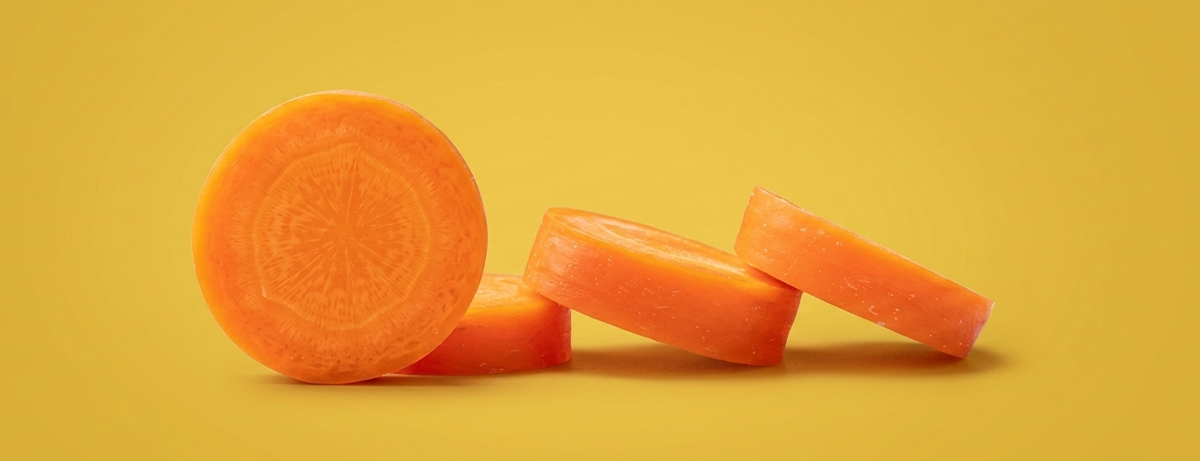
Beta carotene – what is it? Why take it? How much should you take and are there any side effects? We reveal all right here…
Summary
1What is beta carotene?
Beta carotene is a pigment found in certain plants that our bodies can convert into vitamin A. It’s mainly found in yellow and orange fruit and veg.
2Why is carrot juice trending?
High levels of beta carotene are said to give skin a ‘natural tan’... basically, the goal is to eat enough carrots to turn you orange.
3What are the benefits of beta carotene?
Carrot juice aside, beta carotene is an important part of your overall nutrition and may have its own benefits.
You’re scrolling on socials and the trend of the moment is... carrotmaxxing. Influencers are flaunting golden tans and it’s allegedly all down to drinking carrot juice every day. Like, a lot of carrot juice.
This is because carrots contain high levels of beta carotene, a pigment that can give our skin an orange tint in large amounts. But is the carrot juice trend worth it? And surely beta carotene has benefits outside of changing our skin colour? H&B nutritionist Millicent Chapman is on hand to explain the benefits of beta carotene, from immune function to eye and skin health – plus whether you should hop aboard the carrot juice trend...
What is beta carotene?
Beta carotene is a pigment found in certain plants that our bodies can convert into vitamin A. It’s mainly found in yellow and orange fruit and veg (unsurprisingly, carrots) and some green leafy veg too.1 Beta carotene makes up part of our daily vitamin A intake, which we need for the normal maintenance of our skin, vision and immune health, plus it helps us metabolise iron properly.2-5
Why is carrot juice trending?
Some social media stars are swapping trendy ginger shots and matcha for carrot juice... but why? Well, the high levels of beta carotene are said to give skin a ‘natural tan’ or a ‘healthy glow’. Basically, the goal is to eat enough carrots to turn you orange: “consuming large amounts of carrots or carrot juice for a long time can increase the risk of carotenemia, where the skin has a yellow-orange pigment caused by high levels of beta carotene in the blood,” explains Millicent.6
Carotenemia isn’t dangerous, so no need to worry if you’ve gone slightly overboard on your favourite veg.6 But as with any food or drink, it’s not recommended for one thing to take over your diet. “We wouldn’t recommend unsustainable dietary changes like the ‘carrot juice trend’ as it could be considered a restrictive diet or fad diet, which the British Dietetic Association (BDA) discourages.”7
Some people have got involved because it’s a nutrient-rich drink or they simply like the taste. Carrot juice is fine to enjoy as you would any other juice, in moderation – we just wouldn’t recommend getting carotenemia on purpose.
What are the benefits of beta carotene?
Carrot juice aside, beta carotene is an important part of your overall nutrition and may have its own benefits...
1. Beta carotene may help reduce the risk of age-related macular degeneration (AMD)
OK, the claim that carrots can help you see in the dark is a myth. But beta carotene is part of a vitamin and mineral combination that may play a part in long-term protection against certain eye conditions. A seven-year study conducted by the US National Eye Institute called AREDS concluded that taking beta carotene, vitamin C, vitamin E and zinc may have long-term effects against age-related macular degeneration (AMD), the biggest cause of vision loss in older people in the UK.8,9,10 The study followed over 3,500 participants over five years and found that those who had taken the supplement had a 25% lower risk of developing AMD than those who didn’t.
2. Beta carotene may support long-term brain health
Since oxidative stress can contribute to brain ageing, it’s believed that beta carotene and its antioxidant properties may play a part in counteracting this activity. A study ranging from 1982-1998 saw over 22,000 male physicians take either beta carotene, aspirin or a placebo. At the end of the study, those taking beta carotene showed a higher mean cognitive score (including verbal memory and immediate and delayed recall) than the placebo group.11 While promising, this study did have some limitations and more recent research is needed before drawing any conclusions on brain health.
3. Beta carotene may support immune health
Our bodies convert beta carotene into vitamin A, which is needed for normal immune function.4 Vitamin A is also important for the maintenance of mucous membranes in the nose and throat, which is one way our bodies try to keep infection out.12 That’s not to say that beta carotene can get rid of coughs and colds, but it’s worth including as part of a balanced diet to keep your immune system at its individual best.
Beta carotene for skin: does it work?
Some research suggests that long-term carotenoid supplementation may slightly reduce skin’s sensitivity to the sun.13 However, there’s no guidance to say this works and eating carrots, drinking carrot juice or taking beta carotene supplements shouldn’t be a replacement for proper sun safety and wearing SPF. Taking beta carotene won’t help you get a better tan in the sun either.
Some people have anecdotally reported ‘glowier’ skin, but this is likely due to carotenemia and self-perceived skin health – many people find a tan makes them look ‘healthier’ – rather than any actual benefit to skin condition, texture or overall health. According to Millicent, “some research suggests that eating antioxidants daily, especially from fruits and vegetables, may help protect the skin from ageing and light damage.”14 So getting a balanced diet might support skin appearance overall, but beta carotene specifically or ‘carrotmaxxing’ doesn’t have a particular role in healthier skin.
Best food sources of beta carotene
It’s a good idea to get some variety in the beta carotene sources you eat. The main sources are yellow, red and green leafy veg (like red peppers, sweet potatoes, carrots and spinach) and yellow fruit such as mango, papaya and apricots.1 Broccoli, peas, romaine lettuce and butternut squash are all sources of beta carotene too.15 Most people can get enough beta carotene from a balanced diet including plenty of fruit and veg.16 Beta carotene is fat soluble, so consider pairing your beta carotene foods with a source of healthy fats like oily fish or avocado to help your body better absorb it.6,17
How much beta carotene do you need?
There’s no official daily recommendation for beta carotene, though the NHS says that most people can get all they need from a balanced diet without taking a supplement. They also advise not to take supplements with more than 7mg beta carotene per day unless advised by a doctor.16 If you’re interested in taking supplements, speak to your GP for advice first.
Does beta carotene have any side effects?
Consuming large amounts of beta carotene over a long time, whether through supplements or diet, can cause carotenemia. This gives the skin an orange or yellow tint – however it’s harmless and can be reversed by consuming less beta carotene.18
Unlike preformed vitamin A (retinol), beta carotene is generally considered safe to take during pregnancy because the body only converts as much as it needs into vitamin A.19 You might see beta carotene as a vitamin A substitute in certain pregnancy supplements. People with certain conditions, for example hypothyroidism (underactive thyroid), can’t convert beta carotene to vitamin A as normal, so too much beta carotene could be a problem for them.18
Beta carotene FAQs
Yes and no. Carrots and carrot juice are high in beta carotene, which the body uses to make vitamin A. Vitamin A is important for the maintenance of normal skin – but it won’t necessarily clear blemishes or improve skin texture.2 However, carrot juice is rich in antioxidants, which some research suggests may support overall skin appearance and healthy ageing.20
Technically, yes – consuming lots of beta carotene over a long time can give your skin an orange tint that resembles a tan in some skin colours. But it’s not recommended to consume a lot of beta carotene just for this reason.
The final say
While chugging carrot juice isn’t advised, beta carotene still plays an important role in helping keep us healthy as it’s converted into vitamin A in the body. Get your beta carotene by eating the rainbow and speak to your GP before taking beta carotene supplements.
Not convinced by carrotmaxxing? Support glowing skin with these foods instead or make this pineapple ‘superfood’ smoothie your feel-good drink of the summer...
Disclaimer – This article provides informational advice and is not a substitute for medical care. Working with experts for accuracy, we take great care to ensure the information is up-to-date and relevant. However, you should always consult your GP or healthcare professional before using supplements or alternative products, particularly if you have medical conditions or are under supervision.
1. NHS. Vitamin A [Internet]. NHS [reviewed 2020 Aug 3; cited 2026 Jun 10]. Available from: https://www.nhs.uk/conditions/vitamins-and-minerals/vitamin-a/
2. European Commission. Characteristics [Internet]. European Commission [cited 2026 Jun 10]. Available from: https://ec.europa.eu/food/food-feed-portal/screen/health-claims/eu-register/details/POL-HC-6478
3. European Commission. Characteristics [Internet]. European Commission [cited 2026 Jun 10]. Available from: https://ec.europa.eu/food/food-feed-portal/screen/health-claims/eu-register/details/POL-HC-6479
4. European Commission. Characteristics [Internet]. European Commission [cited 2026 Jun 10]. Available from: https://ec.europa.eu/food/food-feed-portal/screen/health-claims/eu-register/details/POL-HC-6480
5. European Commission. Characteristics [Internet]. European Commission [cited 2026 Jun 10]. Available from: https://ec.europa.eu/food/food-feed-portal/screen/health-claims/eu-register/details/POL-HC-6476
6. National Institutes of Health (NIH). Vitamin A and Carotenoids [Internet]. NIH [reviewed 2025 Mar 10; cited 2026 Jun 11]. Available from: https://ods.od.nih.gov/factsheets/VitaminA-HealthProfessional/
7. The Association of UK Dietitians (BDA). Fad diets [Internet]. BDA [reviewed 2024 Sep; cited 2026 Jun 11]. Available from: https://www.bda.uk.com/resource/fad-diets.html
8. AREDS Report No.8. A Randomized, Placebo-Controlled, Clinical Trial of High-Dose Supplementation With Vitamins C and E, Beta Carotene, and Zinc for Age-Related Macular Degeneration and Vision Loss. Arch Ophthalmol [Internet]. 2001 Oct [cited 2026 Jun 11]; 119(10): 1417-36. Available from: https://pmc.ncbi.nlm.nih.gov/articles/PMC1462955/
9. NHS. What is AMD? [Internet]. NHS [reviewed 2025 Jan 22; cited 2026 Jun 11]. Available from: https://www.nhs.uk/conditions/age-related-macular-degeneration-amd/
10. Macular Society. What is macular degeneration? [Internet]. Macular Society [reviewed 2025 Jun; cited 2026 Jun 11]. Available from: https://www.macularsociety.org/macular-disease/macular-conditions/macular-degeneration/
11. Grodstein F, Kang JH, Glynn RJ et al. A Randomized Trial of Beta Carotene Supplementation and Cognitive Function in Men (The Physicians' Health Study II). JAMA Internal Medicine [Internet]. 2007 May 14 [cited 2026 Jun 11]; 167(20). Available from: https://jamanetwork.com/journals/jamainternalmedicine/fullarticle/413413
12. European Commission. Characteristics [Internet]. European Commission [cited 2026 Jun 10]. Available from: https://ec.europa.eu/food/food-feed-portal/screen/health-claims/eu-register/details/POL-HC-6477
13. Schagen SK, Zampeli VA, Makrantonaki E, Zouboulis CC. Discovering the link between nutrition and skin aging [Internet]. DermatoEndocrinology [Internet]. 2012 Jul 1 [cited 2026 Jun 11]; 4(3): 298-307. Available from: https://pmc.ncbi.nlm.nih.gov/articles/PMC3583891/
14. Fam VW et al. Plant-Based Foods for Skin Health: A Narrative Review. Journal of the Academy of Nutrition and Dietetics [Internet]. 2022 Mar [cited 2026 Jun 11]; 122(3): 614-29. Available from: https://www.sciencedirect.com/science/article/pii/S2212267221014337
15. MyFoodData. Top 10 Foods Highest in Beta Carotene [Internet]. MyFoodData [reviewed 2024 Nov 10; cited 2026 Jun 11]. Available from: https://www.myfooddata.com/articles/natural-food-sources-of-beta-carotene.php#beta-carotene-foods
16. NHS. Vitamins and minerals – others [Internet]. NHS [reviewed 2020 Aug 3; cited 2026 Jun 11]. Available from: https://www.nhs.uk/conditions/vitamins-and-minerals/others/
17. National Cancer Institute (NIH). Definition of fat-soluble vitamin [Internet]. NIH [cited 2026 Jun 11]. Available from: https://www.cancer.gov/publications/dictionaries/cancer-terms/def/fat-soluble-vitamin
18. University of Rochester Medicine. Health Encyclopedia – Beta-Carotene [Internet]. University of Rochester Medicine [cited 2026 Jun 11]. Available from: https://www.urmc.rochester.edu/encyclopedia/content?contenttypeid=19&contentid=betacarotene#
19. NHS Whittington Health Trust. Vitamin A (NLOSS) [Internet]. NHS Whittington Health Trust [reviewed 2026 Apr 15; cited 2026 Jun 11]. Available from: https://www.whittington.nhs.uk/document.ashx?id=1958
20. Hama amin Hussen N et al. Role of antioxidants in skin aging and the molecular mechanism of ROS: A comprehensive review. Aspects of Molecular Medicine [Internet]. 2025 Jun [cited 2026 Jun 11]; 5. Available from: https://www.sciencedirect.com/science/article/pii/S2949688825000012


