 Track an order
 Buy It Again
 Favourites
 Manage account
 Rewards
 Subscriptions
 Find a store
 Help centre
Folic acid deficiency: symptoms, causes and treatment explained

Written byAnnabel Francis

Reviewed byHeeral Tomlinson

Feeling a little off your usual energy? Learn the signs of low folic acid, what might be causing it and simple ways to support your levels
Summary
1What is folic acid?
Folic acid (vitamin B9) helps your body make red blood cells and supports energy, cell health and pregnancy development.
2What is folic acid deficiency?
A deficiency happens when your levels are too low, which can lead to fatigue, weakness and, in some cases, anaemia.
3What foods are rich in folate?
Leafy greens, lentils, beans, citrus fruits, eggs and fortified cereals are all good sources of folate.
Feeling more tired than usual or a little run down? It might not just be your routine – your folic acid levels could be one part playing a role. Folic acid (vitamin B9) supports things like energy levels to red blood cell production and more, yet it’s something many people don’t think about until symptoms appear. So, how do you know if you’re low – and what can you do about it?
Here’s what to look out for, what might be causing it and how you can support your levels.
What is folic acid?
Folic acid is a type of B vitamin (vitamin B9) that helps keep your body functioning as it should. You’ll often hear both folate and folic acid mentioned – folate is the natural form found in foods, while folic acid is the man-made version used in supplements.2 It’s also a water-soluble vitamin, meaning your body doesn’t store it for long and any excess is passed out in your urine.3
Folic acid supports a range of essential processes in the body, including:4-5
- supporting normal development of the baby’s brain, skull and spinal cord during pregnancy
- helping your body make red blood cells, which carry oxygen around the body
- contributing to amino acid production
- supporting the creation and maintenance of healthy new cells
Most adults need around 200mcg of folic acid per day.6
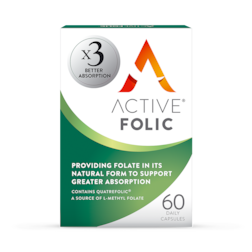
Active Iron
£12.99
£0.22/1 Capsule
Folate vs folic acid: what’s the difference?
You’ll often see both folate and folic acid mentioned – but they’re not exactly the same.
- Folate is the natural form of vitamin B9 found in foods like leafy greens, beans and citrus fruits
- Folic acid is the synthetic form used in supplements and fortified foods
Both help support your body in the same way, but folic acid is often used in supplements because it’s more stable and easier to absorb in consistent amounts.2
What is folic acid deficiency?
Folic acid deficiency (or folate deficiency) happens when your levels of vitamin B9 are too low. Folic acid is needed to make healthy red blood cells, which carry oxygen around your body. When levels drop, your body may struggle to transport oxygen efficiently, which can leave you feeling tired and run down.7
Folic acid deficiency symptoms
Low folic acid levels can affect people in different ways, but common symptoms include:1
- fatigue or low energy
- muscle weakness
- numbness or tingling in hands and feet
- a sore tongue
- diarrhoea
- changes in mood, including low mood
What is folic acid deficiency anaemia?
If folic acid levels stay low over time, it can lead to folate deficiency anaemia. This condition means your body doesn’t have enough healthy red blood cells, which can lead to symptoms such as:1

- fatigue and weakness
- breathlessness
- pale skin
- headaches
- heart palpitations
- loss of appetite or weight loss
If you’re experiencing these symptoms, it’s worth checking in with your GP to rule anything else out, and you may also consider a blood test.
What causes folic acid deficiency?
There isn’t always a single cause – it’s often a combination of factors.7,8 Some of the most common include:
- a low-folate diet: if you don’t regularly eat folate-rich foods, levels can drop within weeks
- digestive conditions: conditions like coeliac disease, Crohn’s or IBD can affect how well your body absorbs nutrients7
- excess alcohol: alcohol can interfere with how your body absorbs and uses folate7
- certain medications: some medications can reduce folate absorption9
- pregnancy: folate needs increase during pregnancy, as both your body and your baby require more2,7
- older age: folate levels can naturally decline with age1
- kidney conditions: people undergoing dialysis may be more likely to experience deficiency10
- genetics: rare genetic conditions can affect how your body processes folate11
What are the right folic acid levels?
Your body stores a small amount of folate, but because it’s water-soluble, it isn’t stored for long periods.3 Most adults need around 200mcg per day to maintain healthy levels.6,8 You won’t know your exact levels without a blood test, so if you’re concerned, it’s best to speak to your GP.
If you’re pregnant or trying to get pregnant, your folic needs are especially important. It’s recommended you take folic acid until you’re 12 weeks pregnant as it helps your baby grow normally.2
Can you have too much folic acid?
Folic acid is generally considered safe when taken at recommended levels.2 Higher doses may be recommended under medical supervision, for example when treating folate deficiency anaemia.2 For most people, following the recommended daily intake or guidance from a healthcare professional is the best approach.
What can you do if your folic acid is low?
If you think you might have low folic acid levels, the first step is to speak to your GP. They may recommend a blood test and suggest ways to improve your levels, which could include:
- increasing folate-rich foods
- taking a folic acid supplement
- addressing any underlying conditions
Foods rich in folate
One of the easiest ways to support your folate levels is by making small changes to your diet. Some of the best sources include:4-8
- leafy green vegetables – such as spinach, kale, broccoli and spring greens
- lentils and beans – a particularly rich source, especially for plant-based diets
- citrus fruits – including oranges and grapefruit
- wholegrains – like brown rice, wholemeal bread and wheat bran
- eggs – an easy, everyday source
- fortified cereals – many breakfast cereals in the UK are enriched with folic acid
- other sources – including mushrooms, peas, Brussels sprouts, walnuts and kiwis
Eating a balanced diet with a variety of these foods can help keep your folate levels topped up. While most people can focus on getting folate from their diet, supplements are generally recommended if you're trying to conceive or are pregnant.13
Folic acid FAQs
You won’t be able to confirm your levels without a blood test. If you’re experiencing symptoms like fatigue or weakness, it’s best to speak to your GP, who can arrange testing if needed.
This can vary depending on the cause, but in many cases, levels can improve within a few months with the right dietary changes or supplementation.8
People with a low-folate diet, certain digestive conditions, older adults and those who are pregnant may be more at risk of low folic acid levels.1,7–9 In fact, around 10% of women of childbearing age have intakes below recommended levels for folate, and approximately 83% have folate levels below those linked with a reduced risk of neural tube defects.13 Good sources of folate include broccoli, Brussels sprouts and leafy greens (think kale, cabbage and spinach), as well as chickpeas and kidney beans. Breakfast cereals in the UK are also often fortified with folic acid.
The final say
Folic acid plays an important role in everything from energy levels to cell health and pregnancy support – so it’s worth keeping an eye on your intake. If you’re feeling unusually tired or run down, it may be worth checking your levels.
The good news is that, in many cases, low folic acid can be supported through simple changes to your diet or the addition of a supplement. Curious to learn more? Read our guide on folic acid for men or discover tips to help avoid the dreaded 3pm energy slump.
Disclaimer – This article provides informational advice and is not a substitute for medical care. Working with experts for accuracy, we take great care to ensure the information is up-to-date and relevant. However, you should always consult your GP or healthcare professional before using supplements or alternative products, particularly if you have medical conditions or are under supervision.
1. NHS. Vitamin B12 or folate deficiency anaemia [Internet]. NHS. NHS; 2023. Available from: https://www.nhs.uk/conditions/vitamin-b12-or-folate-deficiency-anaemia/
2. NHS. About folic acid [Internet]. nhs.uk. 2022. Available from: https://www.nhs.uk/medicines/folic-acid/about-folic-acid/
3. PubChem. Folic acid [Internet]. pubchem.ncbi.nlm.nih.gov. 2025. Available from: https://pubchem.ncbi.nlm.nih.gov/compound/Folic-acid
4. National Institutes of Health. Folate [Internet]. Nih.gov. 2022. Available from: https://ods.od.nih.gov/factsheets/Folate-Consumer/
5. Watanabe H, Miyake T. Folic and Folate Acid [Internet]. www.intechopen.com. IntechOpen; 2017. Available from: https://www.intechopen.com/chapters/55722
6. Public Health England. Government Dietary Recommendations Government Recommendations for Energy and Nutrients for Males and Females Aged 1 - 18 Years and 19+ Years [Internet]. GOV.UK. Public Health England; 2016 Aug p. 6–11. Available from: https://assets.publishing.service.gov.uk/government/uploads/system/uploads/attachment_data/file/618167/government_dietary_recommendations
7. NICE. Anaemia - B12 and folate deficiency [Internet]. NICE. 2023. Available from: https://cks.nice.org.uk/topics/anaemia-b12-folate-deficiency/
8. Khan KM, Jialal I. Folic Acid (Folate) Deficiency [Internet]. Nih.gov. StatPearls Publishing; 2023. Available from: https://www.ncbi.nlm.nih.gov/books/NBK535377/
9. Lambie DG, Johnson RH. Drugs and Folate Metabolism. Drugs. 1985 Aug;30(2):145–55.
10. Manns B, Hyndman E, Burgess E, Parsons H, Schaefer J, Snyder F, et al. Oral vitamin B12 and high-dose folic acid in hemodialysis patients with hyper-homocyst(e)inemia. Kidney International. 2001 Mar;59(3):1103–9.
11. Homocystinuria due to MTHFR deficiency | Genetic and Rare Diseases Information Center (GARD) – an NCATS Program [Internet]. Nih.gov. 2018. Available from: https://rarediseases.info.nih.gov/diseases/2734/homocystinuria-due-to-mthfr-deficiency
12. CDC. Folic Acid: Facts for Clinicians [Internet]. Folic Acid. 2024. Available from:
13. Derbyshire E, Aslam N, Mason P. Where Are We up to with Vitamin, Mineral and Omega-3 Polyunsaturated Fatty Acid Gaps? Intake and Status Findings from the UK National Diet and Nutritional Survey 2019 to 2023. Food and Nutrition Sciences [Internet]. 2025;16(10):1502–27. Available from: https://www.scirp.org/journal/paperinformation?paperid=146610
Related to this article


