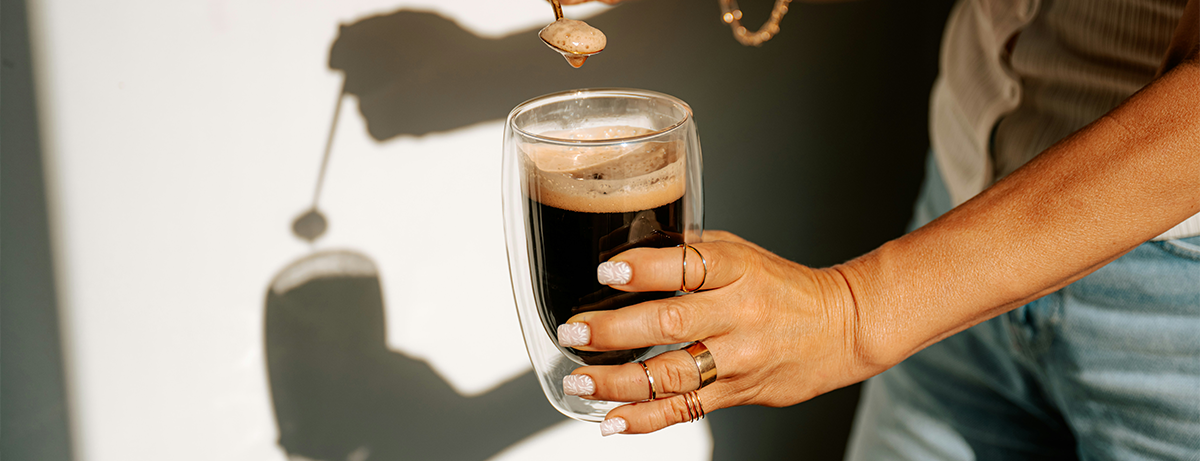
Love your daily coffee? You’re not alone. But is caffeine affecting how your body absorbs key vitamins and minerals? Understanding this can help you make smarter choices
Summary
1Does caffeine affect the absorption of vitamins?
Too much caffeine can start to work against you. Overdoing it can contribute to anxiety, trouble sleeping and high blood pressure.
2The impact of caffeine on vitamins and minerals
Caffeine has a mild diuretic effect, meaning it can increase how often you pee. When this happens, your body may lose more fluid.
3Smarter caffeine-free swaps for lasting energy
Bananas are a natural energy supporter that are loaded with carbs, potassium and vitamin B6.
We all need a little pick-me-up from time to time, especially after a long, challenging week. For many of us, that pick-me-up comes in the form of a morning coffee or a comforting cuppa. A daily caffeine fix can feel like a small, soothing ritual that helps us wake up, focus and power through the day. Caffeine can definitely give your mind and body a lift, sharpening your focus and even supporting physical performance.1
But here’s the thing: too much caffeine can start to work against you. Overdoing it can contribute to anxiety, trouble sleeping, high blood pressure and even fatigue.2 On top of that, research shows it can sometimes interfere with how your body absorbs important vitamins and minerals – something we definitely want to avoid. The good news? With a little awareness and balance, you can enjoy your favourite caffeinated drinks while keeping your body happy and healthy.
“Research has also shown that higher caffeine intake may interfere with vitamin D absorption”
The impact of caffeine on vitamins and minerals
Caffeine has a mild diuretic effect, meaning it can increase how often you pee.3 When this happens, your body may lose more fluid than usual, along with water-soluble vitamins like B vitamins and vitamin C. Over time, this can contribute to lower levels if you’re not replenishing them through food or hydration.4 Research has also shown that higher caffeine intake may interfere with vitamin D absorption because caffeine can reduce the number of vitamin D receptors on osteoblasts (the cells responsible for building and maintaining strong bones). Fewer receptors can mean your body isn’t using vitamin D as efficiently as it could.5
Calcium absorption may also be affected. Studies have found that even a single cup of coffee can slightly decrease how much calcium your body absorbs, while also increasing calcium loss through urine. While this effect is small, it can add up if calcium intake is already low.6
Iron is another nutrient to be mindful of. Research suggests that drinking coffee or tea with meals can significantly reduce iron absorption by nearly 40–60% with a meat-based meal, and even more when paired with plant-based foods or bread. 7,8 This is especially important for anyone who’s prone to low iron levels.
Smarter caffeine-free swaps for lasting energy
Don’t worry, you don’t need to give up caffeine to stay nourished. Simple habits like spacing coffee away from meals, staying well hydrated and eating a nutrient-dense diet can help you enjoy your favourite drinks while still supporting your body’s vitamin and mineral needs.7,9 That said, one of the healthiest shifts you can make is replacing highly caffeinated drinks with nutrient-dense foods. With the right choices, you can feel energised and focused without needing cup after cup of coffee. Here are some energising swaps worth trying instead:
- bananas: a natural energy supporter, loaded with carbs, potassium and vitamin B6. Plus, they help fuel your body and keep your energy up.10 In fact, studies have shown that eating a banana before a long cycling ride can support endurance just as well as a sports drink10
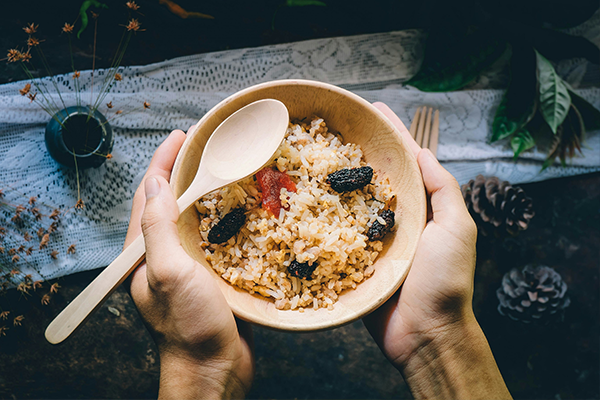
- brown rice: switching from white rice to brown can be a simple win for your energy. Brown rice keeps more of its natural fibre, vitamins and minerals, which helps slow digestion, balance blood sugar and deliver steady, long-lasting energy throughout the day11
- water: staying hydrated can do wonders for your energy. Drinking enough water helps your body function at its best and can ease that sluggish, tired feeling – keeping you more refreshed and focused throughout the day12
- oatmeal: try starting your morning with oatmeal instead of that first cup of coffee. It’s packed with B vitamins, iron and manganese – key nutrients that support your body’s natural energy production and help you feel fueled as the day begins13
- green tea: tea lovers, this one’s for you. If you’re not ready to give up caffeine, green tea is a great middle ground. It contains L-theanine, a natural compound that helps balance caffeine’s effects – so you get calm, steady energy support with less of the jitters14
- dark chocolate: good news for chocolate lovers. Dark chocolate does contain a little caffeine but it delivers a gentler, more natural buzz. Thanks to compounds like theobromine and caffeine, it can help support mental energy and even support a better mood 15
The final say
Caffeine doesn’t have to be the enemy and you can find out more about this in is caffeine bad for you? The truth behind your coffee fix. But by becoming more mindful of when and how you consume it – and choosing nourishing alternatives – you can support your energy, protect your nutrients and feel good daily. Inspired to support your body? Head over to vitamins explained: what they are and why we need them.
Disclaimer – This article provides informational advice and is not a substitute for medical care. Curated by experts for accuracy, we take great care to ensure the information is up-to-date and relevant. However, you should always consult your GP or healthcare professional before using supplements or alternative products, particularly if you have medical conditions or are under supervision.
1. Lieberman HR, Wurtman RJ, Emde GG, Roberts C, Coviella ILG. The effects of low doses of caffeine on human performance and mood. Psychopharmacology. 1987 Jul;92(3):308–12.
2. Rauf MQ, Sharma L, Essiet E, Elhassan O, Fahim R, Irem-Oko F, et al. Caffeine Consumption Patterns, Health Impacts, and Media Influence: A Narrative Review. Cureus [Internet]. 2025;17(6):e86215. Available from: https://pubmed.ncbi.nlm.nih.gov/40677435/
3. Zhang Y, Coca A, Casa DJ, Antonio J, Green JM, Bishop PA. Caffeine and diuresis during rest and exercise: A meta-analysis. Journal of Science and Medicine in Sport [Internet]. 2015 Sep;18(5):569–74. Available from: https://www.ncbi.nlm.nih.gov/pmc/articles/PMC4725310/
4. Ulvik A, Vollset SE, Hoff G, Ueland PM. Coffee consumption and circulating B-vitamins in healthy middle-aged men and women. Clinical chemistry [Internet]. 2008;54(9):1489–96. Available from: https://www.ncbi.nlm.nih.gov/pubmed/18606630
5. Rapuri PB, Gallagher JC, Nawaz Z. Caffeine decreases vitamin D receptor protein expression and 1,25(OH)2D3 stimulated alkaline phosphatase activity in human osteoblast cells. The Journal of Steroid Biochemistry and Molecular Biology. 2007 Mar;103(3-5):368–71.
6. Massey LK, Whiting SJ. Caffeine, Urinary Calcium, Calcium Metabolism and Bone. The Journal of Nutrition. 1993 Sep 1;123(9):1611–4.
7. Morck TA, Lynch SR, Cook JD. Inhibition of food iron absorption by coffee. The American journal of clinical nutrition [Internet]. 1983;37(3):416–20. Available from: https://www.ncbi.nlm.nih.gov/pubmed/6402915
8. Rf H, M R, Jd C. Inhibition of Non-Haem Iron Absorption in Man by Polyphenolic-Containing Beverages [Internet]. The British journal of nutrition. 1999. Available from: https://pubmed.ncbi.nlm.nih.gov/10999016/
9. R H, I E. Iron Bioavailability and Dietary Reference Values [Internet]. The American journal of clinical nutrition. 2010. Available from: https://pubmed.ncbi.nlm.nih.gov/20200263/
10. Nieman DC, Gillitt ND, Henson DA, Sha W, Shanely RA, Knab AM, et al. Bananas as an Energy Source during Exercise: A Metabolomics Approach. Lucia A, editor. PLoS ONE. 2012 May 17;7(5):e37479.
11. Panlasigui LN, Thompson LU. Blood glucose lowering effects of brown rice in normal and diabetic subjects. International Journal of Food Sciences and Nutrition [Internet]. 2006 May 1 [cited 2020 Apr 27];57(3-4):151–8. Available from: https://www.ncbi.nlm.nih.gov/pubmed/17127465
12. Popkin BM, D’Anci KE, Rosenberg IH. Water, hydration, and health. Nutrition Reviews [Internet]. 2010;68(8):439–58. Available from: https://www.ncbi.nlm.nih.gov/pmc/articles/PMC2908954/
13. Katarzyna Zabłocka-Słowińska, Grajeta H. The role of manganese in etiopathogenesis and prevention of selected diseases. Postępy Higieny i Medycyny Doświadczalnej. 2012 Aug 6;66:549–53.
14. A Y, M M, S M, H Y. Effects of L-theanine or Caffeine Intake on Changes in Blood Pressure Under Physical and Psychological Stresses [Internet]. Journal of physiological anthropology. 2012. Available from: https://pubmed.ncbi.nlm.nih.gov/23107346/
15. Franco R, Oñatibia-Astibia A, Martínez-Pinilla E. Health Benefits of Methylxanthines in Cacao and Chocolate. Nutrients. 2013 Oct 18;5(10):4159–73.
Related to this article